
ACE Shoulder Health Series — Part 2 of 3
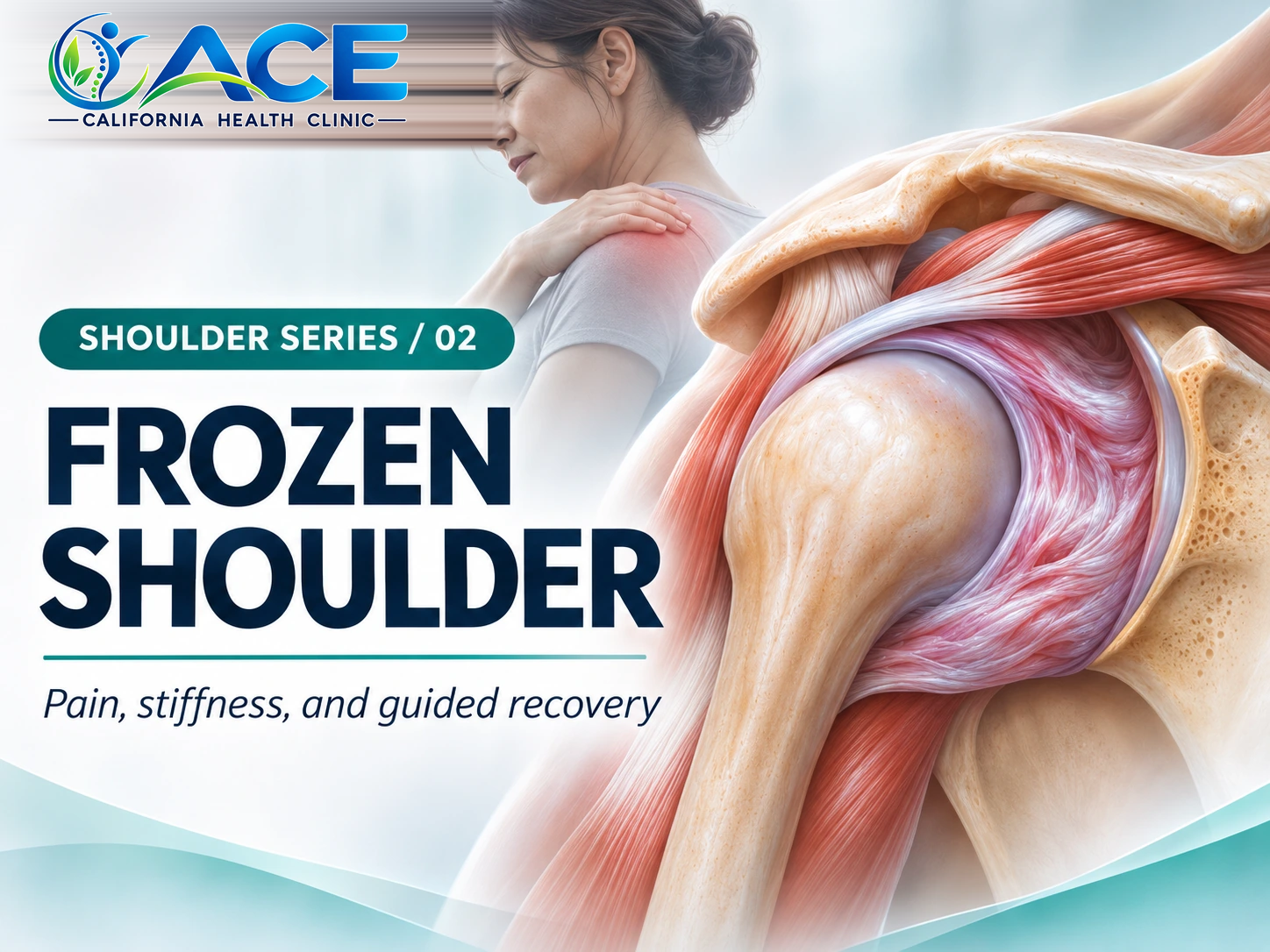
When your shoulder feels stuck
Have you ever reached for something on a shelf and found your shoulder simply would not go any farther? Maybe washing your hair or putting on a jacket has become a struggle. Or perhaps you wake at night because the shoulder aches, even without an obvious injury.
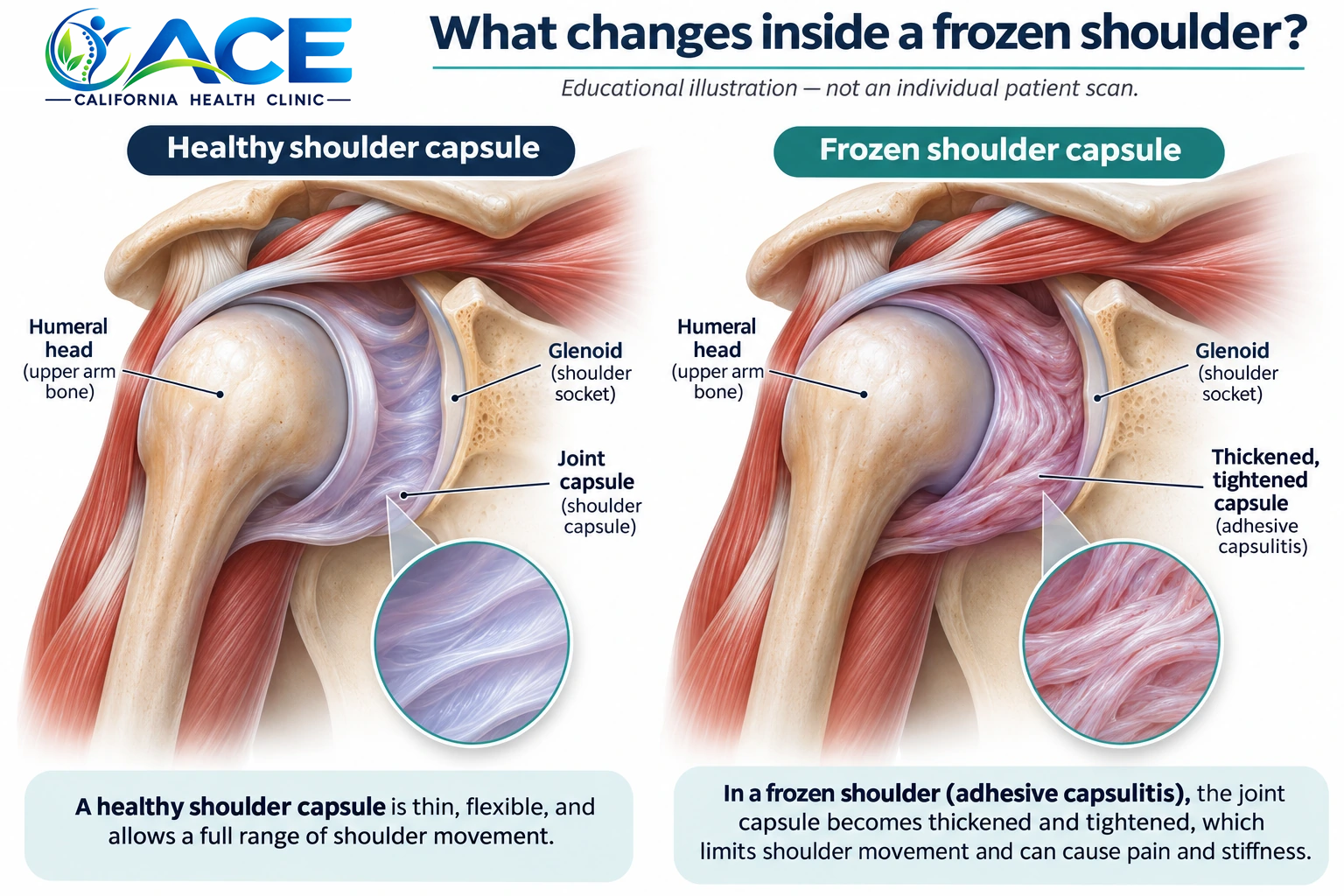
Those experiences can occur with frozen shoulder, also called adhesive capsulitis. The joint capsule surrounding the shoulder becomes painful, thickened, and less flexible. Moving the arm can become difficult, including when someone gently helps you move it. This is more than an ordinary feeling of muscle tightness. [1] [2]
This second article in the ACE Shoulder Health Series focuses on what patients can do about the pain and stiffness: a careful examination, gentle chiropractic/manual care where appropriate, acupuncture as a possible symptom-management adjunct, and a realistic rehabilitation plan. A detailed comparison with rotator cuff conditions is reserved for Part 3.
Common symptoms and everyday frustrations
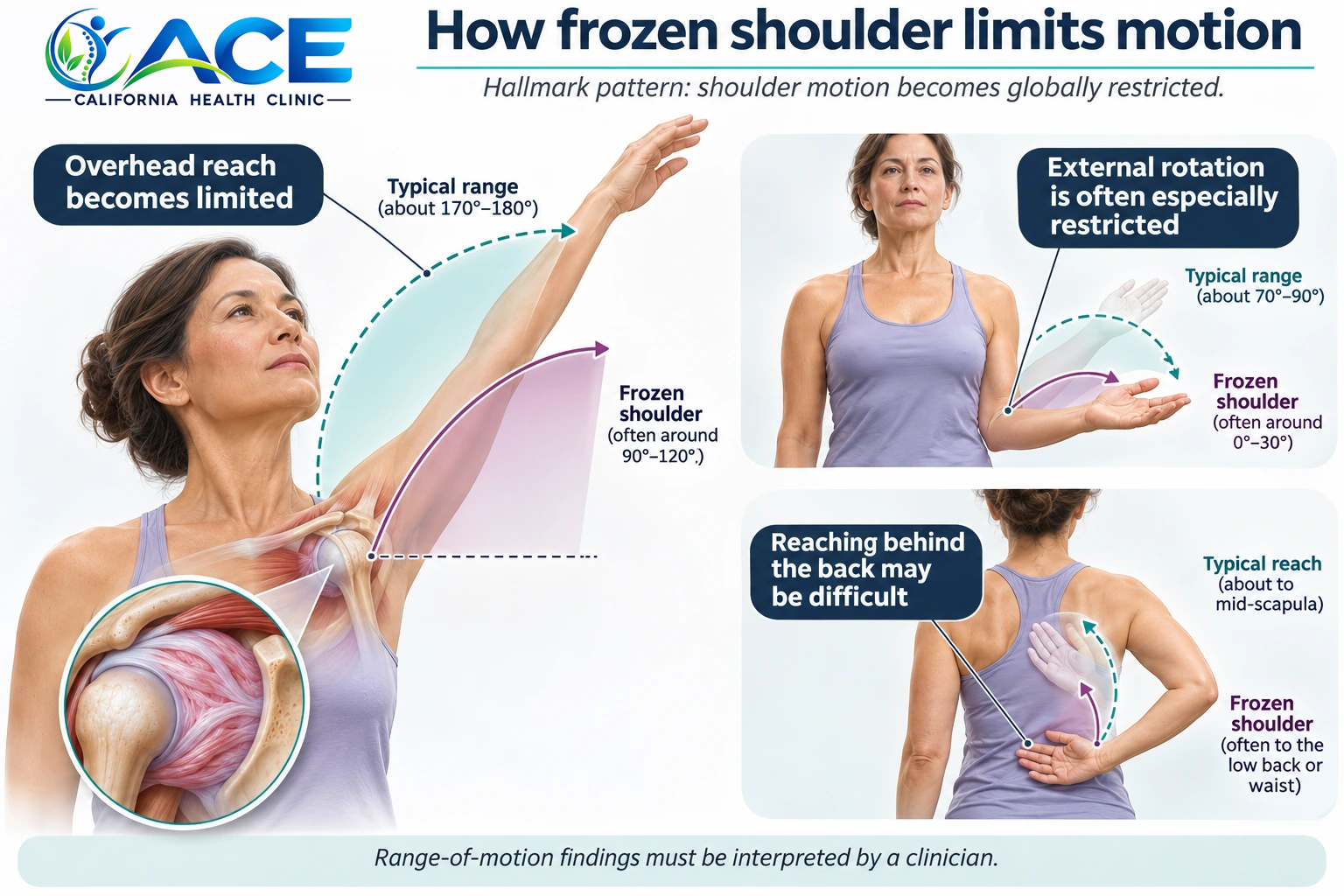
Frozen shoulder often develops gradually. Pain may be felt deep in the shoulder or upper arm, especially at night. As stiffness increases, everyday movements such as reaching a seat belt, dressing, lifting an arm to wash hair, or reaching behind the back may become harder.
Some people first notice pain; others notice the loss of motion. It is common to compensate by leaning the body or lifting the shoulder blade to complete an activity. A clinician looks for the overall movement pattern rather than relying on one symptom alone.
Why treatment should change as the shoulder changes
Clinicians commonly describe three overlapping phases. They are useful for planning care, but no two patients move through them on exactly the same schedule. [1] [2]
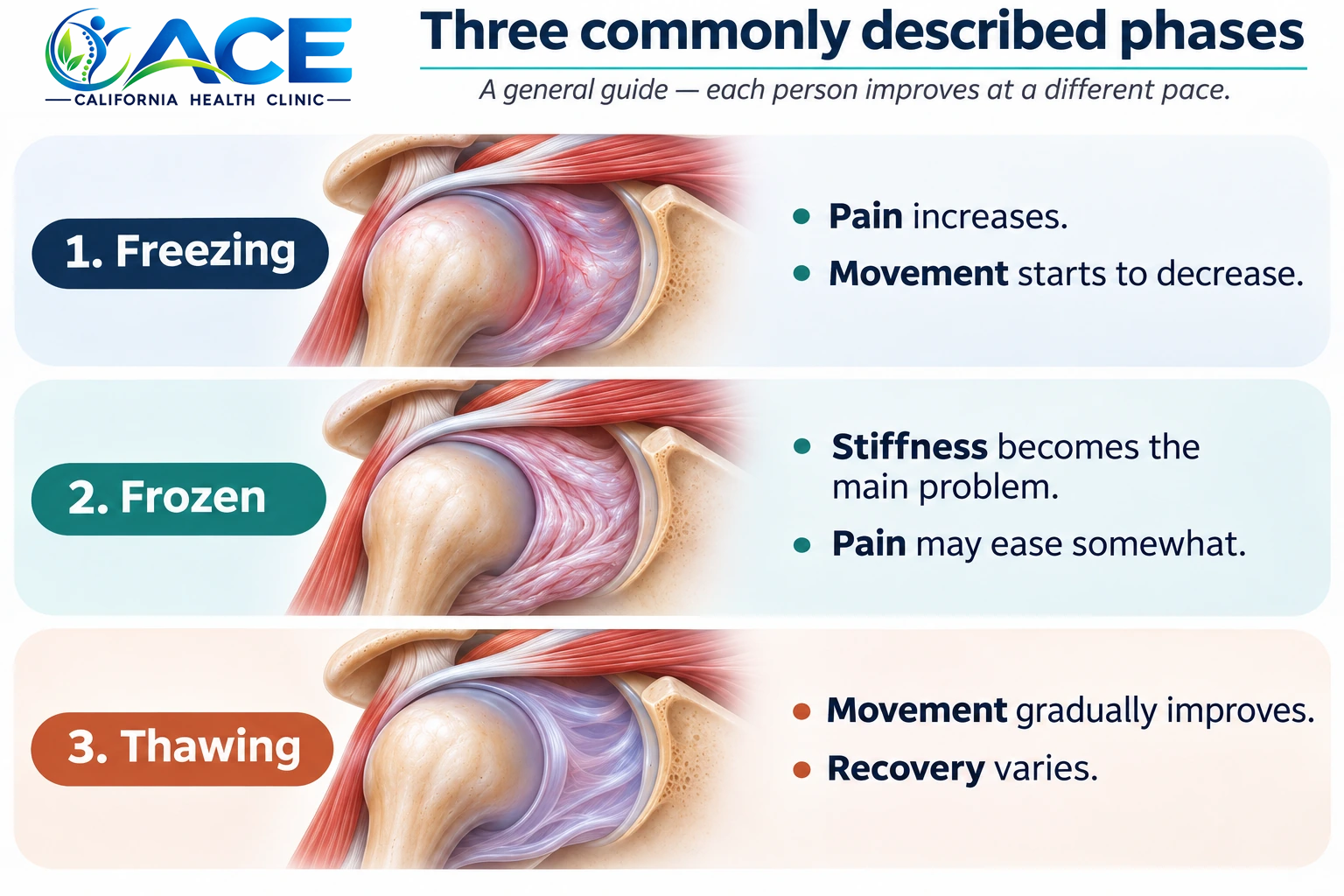
Freezing: protect a painful, irritable shoulder
Pain and nighttime discomfort may dominate while motion is starting to decline. A reasonable early goal is to make everyday movement tolerable, protect sleep, and avoid repeatedly provoking severe pain. High-intensity stretching can be counterproductive when the shoulder is very irritable.
Frozen: work gradually on mobility
Stiffness becomes more prominent and pain sometimes settles. This may be a better time to steadily progress supervised mobilization, assisted movement, and functional activities according to tolerance.
Thawing: rebuild comfortable function
Movement begins to return. Rehabilitation can progress toward strengthening, endurance, reaching tasks, and the physical activities the patient wants to resume. Full recovery is not immediate or guaranteed, and some people continue to have residual restriction.
Who is more likely to develop frozen shoulder?
Frozen shoulder is more common in middle adulthood and can be associated with diabetes, thyroid conditions, prolonged immobilization, or recovery after another painful shoulder event. Sometimes no clear trigger is found. A history of recent injury, illness, or surgery changes how the clinician approaches the examination and treatment plan. [1] [3]
A careful examination comes before treatment
Before recommending any adjustment, needling treatment, or exercise, a clinician should ask when the symptoms started, which activities are limited, what improves or worsens pain, and whether other health conditions may be relevant.
The shoulder examination includes watching how you move the arm and then gently assessing passive range of motion with assistance. It may also include testing strength, sensation, and nearby neck and upper-back movement. Many cases are diagnosed primarily from the history and physical examination; imaging is considered when needed to exclude another condition rather than automatically ordered for everyone. [1] [3]
Why this matters: treatment should address the actual source of the limitation. Painful muscle guarding, a stiff shoulder capsule, a neck-related complaint, and an acute injury do not all call for the same approach.
A conservative treatment plan: what each part may contribute
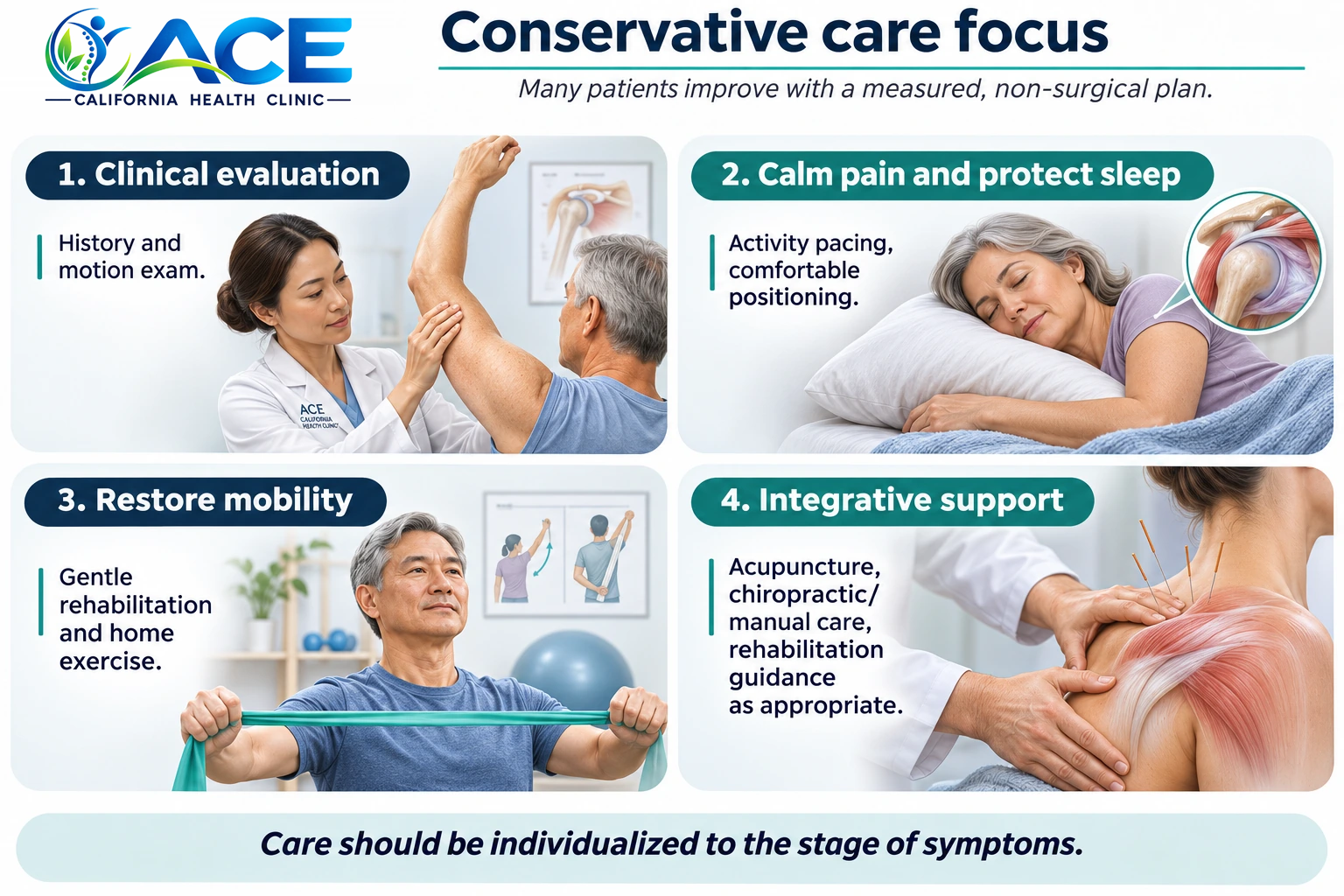
Conservative care often starts by easing pain and restoring usable movement, then gradually builds strength and confidence for daily activities. A 2025 clinical practice guideline, drawing on randomized studies, supports considering manual therapy combined with range-of-motion exercise to improve shoulder movement and upper-limb function. Individually prescribed home exercise helps continue progress between visits. [3]
Chiropractic and manual therapy: gentle movement support
Chiropractic care may involve assessing shoulder, upper-back, and neck mechanics; addressing surrounding muscle guarding; and using appropriately selected gentle mobilization or soft-tissue techniques. The aim is to support comfortable movement and participation in rehabilitation—not to force a painful joint into a normal position.
Chiropractic treatment may be paired with shoulder mobility exercises and soft-tissue care to reduce guarding and help people move with greater comfort. Published chiropractic cases describe improvements in both pain and shoulder range of motion. Treatment techniques and intensity should be tailored to the stage of stiffness and the patient's examination. [3] [4] [5]
Acupuncture: a potential adjunct for pain and movement tolerance
Clinical research has reported pain-relief and functional benefits from selected acupuncture and acupuncture-related approaches for frozen shoulder. A randomized trial found better immediate pain outcomes with active press-tack acupuncture than placebo, while a later research synthesis identified promising results for certain acupuncture-related combinations. Acupuncture can be integrated with gentle movement work when appropriate for a patient's goals and symptoms. [8] [11]
At an integrative clinic, chiropractic/manual care, acupuncture, and guided exercise may be coordinated when clinically appropriate. Each treatment should have a clear purpose, be adjusted to the patient's response, and be reassessed rather than automatically repeated.
Rehabilitation: the work that connects symptom relief to everyday function
The long-term goal is not just a less painful appointment; it is easier dressing, reaching, sleeping, working, and exercising. A plan may start with very gentle assisted movement, progress to controlled mobility, and later add resistance and task-specific exercises. Dosing depends on pain irritability, movement limitations, medical history, and goals. [3]
What published chiropractic and acupuncture cases suggest
Published clinical experiences offer practical examples of how chiropractic care, acupuncture, and rehabilitation have been used to help people with frozen shoulder. The cases below describe reported changes in pain, shoulder motion, and daily function; they are useful alongside the larger clinical studies and guidelines.
Chiropractic case series: 50 patient records
A 2012 Journal of Chiropractic Medicine report reviewed 50 consecutive patients receiving a specific cervical/thoracic chiropractic approach for frozen shoulder. At the final recorded assessment, 16 patients had complete resolution of the measured pain and shoulder-abduction limitations, and 25 more were rated 75–90% improved. Median pain scores improved from 9/10 to 2/10 across the series. These encouraging outcomes provide an example of chiropractic care reported in a clinical setting. [4]
Chiropractic rehabilitation case: a recreational athlete
In a 2000 case report, a 47-year-old recreational squash player with secondary adhesive capsulitis received a combination of chiropractic care and rehabilitation. Over approximately four months, the author reported that the patient regained full, pain-free shoulder motion and returned to his activities. The case illustrates a gradual, function-oriented conservative-care approach. [5]
Acupuncture case: a 24-session course
A 2021 clinical case report described a 45-year-old patient with a painful, restricted shoulder treated through 24 acupuncture sessions over six weeks. At follow-up, the report documented pain-free full active and passive shoulder movement. The case is a useful example of a favorable response recorded during acupuncture treatment. [7]
What do better-controlled studies add?
In a 2017 randomized, double-blind trial of 60 people with adhesive capsulitis, active press-tack acupuncture achieved greater immediate pain improvement than placebo press-tacks. Patients who later received classical acupuncture alongside conservative care also had encouraging results during clinical follow-up. A 2025 network meta-analysis of 84 randomized trials involving 7,125 participants found promising outcomes for several acupuncture-related approaches, including combinations with mobilization, massage, and moxibustion. Because the trials evaluated different techniques, treatment choices should be individualized. [8] [11]
What this means for patients: The most useful measure of treatment response is whether pain, sleep, shoulder movement, and everyday activities are improving. A clinician can help choose and adjust the combination of care that fits your progress.
Three gentle mobility exercises to discuss with your clinician
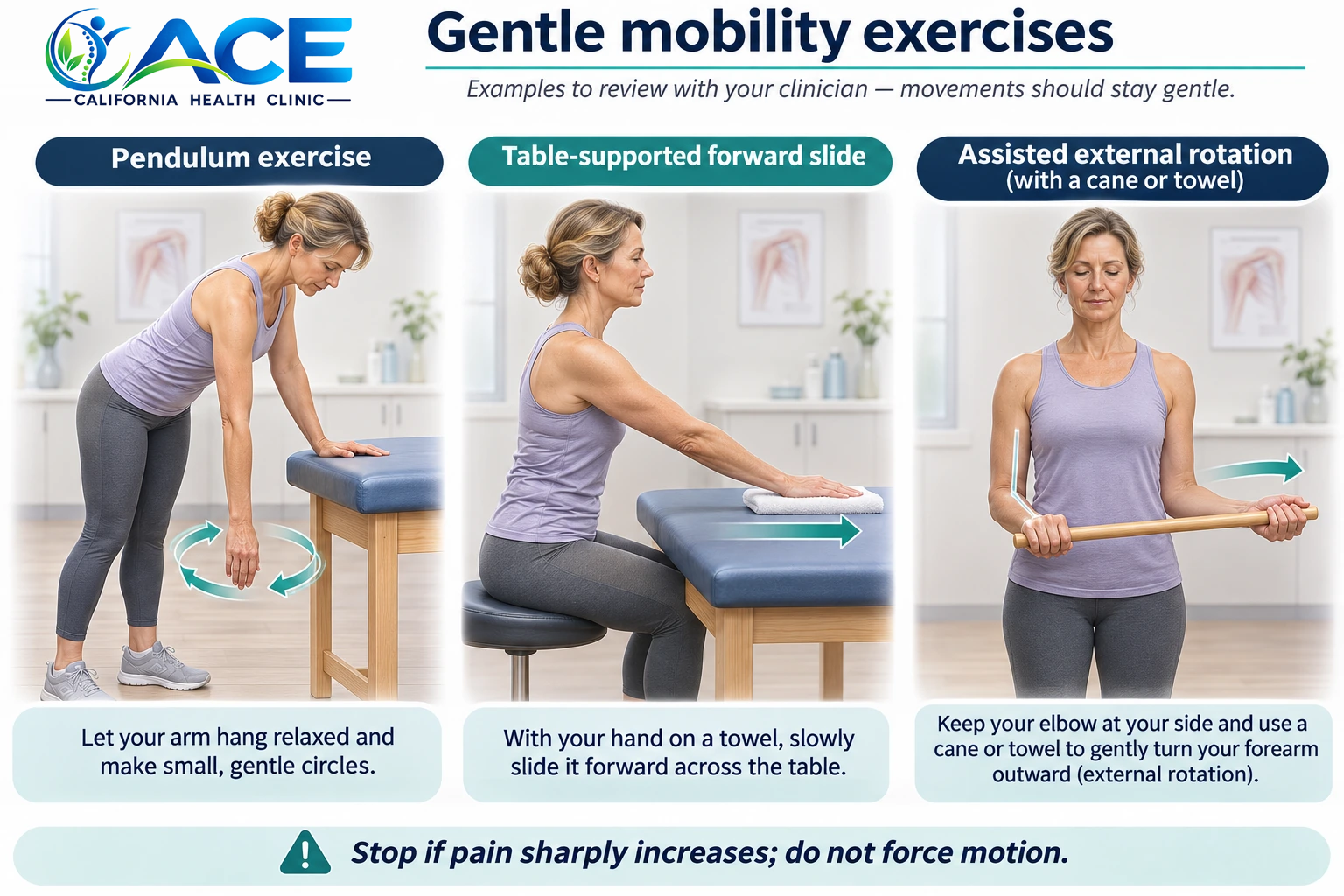
A home program is often one of the most practical parts of care. The exercises below are illustrative examples, not a prescription for everyone. Start only after a clinician confirms they fit your condition, and use a comfortable range rather than forcing through sharp pain. [3]
1. Pendulum movement
Support yourself with the unaffected hand on a sturdy surface. Lean slightly forward and let the affected arm hang loosely. Gently shift your body weight to allow small circles or back-and-forth motions. The movement should come mostly from body sway, not from actively lifting the sore arm.
2. Table-supported forward slide
Seated or standing at a sturdy table, rest your hand on a smooth towel. Slowly slide the arm forward as your trunk moves gently toward the table. Stop before a sharp increase in pain, then return to the starting position.
3. Assisted external rotation
With the elbow close to your side and bent comfortably, a cane or dowel held in both hands may be used to guide the affected forearm outward within a clinician-approved range. Do not push into a hard or painful end range.
How much should you do? There is no single safe set-and-repetition schedule for every phase. Your clinician can help set frequency and progress based on symptoms during exercise and the hours afterward. Stop and seek advice if pain sharply increases, weakness develops, or function suddenly worsens.
Everyday strategies for sleep, work, and recovery
- Keep the shoulder gently active. Total avoidance can increase fear of movement and make daily tasks more difficult. Choose activities that remain tolerable.
- Protect sleep. Try a comfortable pillow position supporting the forearm or elbow rather than letting the arm hang awkwardly. Avoid prolonged pressure directly on the painful shoulder.
- Break up demanding tasks. Divide overhead work, housework, and lifting into smaller periods, especially when pain is prominent.
- Track function, not just pain. Notice changes in dressing, reaching a shelf, washing hair, and sleeping through the night.
- Expect gradual progress. A few better days do not necessarily mean the condition has resolved; a temporary flare does not always mean treatment failed.
How to recognize progress—and when to reassess
Useful measures include shoulder motion in the directions that were initially limited, pain during daily activities, sleep quality, and the ability to complete specific tasks. The plan should be revisited if symptoms plateau, repeatedly flare after treatment, or interfere with essential activities despite a reasonable trial of care.
Some patients need co-management or referral for additional diagnostic evaluation or other treatment options. Medical procedures are not the focus of this article, but conservative care should never prevent someone from getting appropriate medical assessment when needed.
When shoulder pain needs urgent attention
Seek urgent medical care if pain follows major trauma; you cannot move the arm after injury; there is visible deformity, marked swelling, redness, or fever; you develop new significant weakness or numbness; or the pain is associated with chest pain, shortness of breath, or another emergency symptom. A gradually stiff shoulder should not be assumed to explain every new or severe symptom. [10]
What a shoulder-care visit at ACE may involve
At ACE California Health Clinic in Santa Clara, a visit can begin with a history, examination of active and assisted motion, and a discussion of what makes everyday tasks painful or difficult. Depending on the findings, a conservative plan may include chiropractic/manual care, acupuncture, rehabilitation exercises, and practical activity guidance—each selected according to clinical judgment rather than used automatically.
Our goal is functional progress: more comfortable movement, better sleep, a manageable home program, and informed decisions about when to modify care or seek further evaluation. Call (408) 984-6000 or visit ACE California Health Clinic for clinic information.
Frequently asked questions
Will frozen shoulder resolve on its own?
Many people improve over time, but recovery is often gradual and some retain limitations. An individualized plan can address pain, movement, and daily activities along the way. [1] [2]
How can chiropractic and acupuncture fit into my recovery?
Chiropractic/manual care can help address surrounding stiffness and support guided movement; acupuncture may help manage pain and make activity more comfortable for some patients. Many people benefit from combining these services with a personalized rehabilitation plan, with progress checked over time. [3] [8]
Should I push hard to stretch the shoulder?
Not necessarily. The approach should reflect the phase of symptoms. Aggressive stretching that triggers significant pain can be inappropriate, especially early in the painful phase.
Do I need an X-ray or MRI?
Not everyone does. A clinician decides whether testing is warranted after the history and examination, particularly if findings suggest a different condition or an injury requiring further assessment. [3]
How is frozen shoulder different from a rotator cuff injury?
They can share pain and difficulty reaching. A clinician considers the broader examination pattern, including active and passive motion. A more detailed discussion is coming in Part 3 of our Shoulder Health Series.
The bottom line
Frozen shoulder can turn routine activities into daily challenges, but recovery does not have to be a guessing game. A thoughtful conservative plan starts with an appropriate diagnosis, uses pain management to support tolerable movement, and progresses gradually toward better function.
Chiropractic/manual care, acupuncture, and rehabilitation can each contribute to a thoughtful plan for selected patients. At ACE, the emphasis is on personalized care, practical home guidance, and measurable progress in activities that matter to each patient.
Medical references and editorial notes
- American Academy of Orthopaedic Surgeons. Frozen Shoulder (Adhesive Capsulitis).
- National Health Service. Frozen shoulder.
- Lee BC et al. Clinical Practice Guidelines for Diagnosis and Non-Surgical Treatment of Primary Frozen Shoulder. Annals of Rehabilitation Medicine. 2025.
- Murphy FX et al. Chiropractic management of frozen shoulder syndrome using a novel technique: a retrospective case series of 50 patients. Journal of Chiropractic Medicine. 2012.
- Kazemi M. Adhesive capsulitis: a case report. Journal of the Canadian Chiropractic Association. 2000.
- Valli J. Chiropractic Management of a 46-Year-Old Type 1 Diabetic Patient with Upper Crossed Syndrome and Adhesive Capsulitis. Journal of Chiropractic Medicine. 2004.
- Kim YJ. Acupuncture management for the acute frozen shoulder: A case report. Clinical Case Reports. 2021.
- Schröder S et al. Immediate Pain Relief in Adhesive Capsulitis by Acupuncture—A Randomized Controlled Double-Blinded Study. Pain Medicine. 2017.
- Trinh K et al. The Efficacy of Acupuncture on Shoulder for Pain Intensity, Functional Status, and General Quality of Life in Adults: A Systematic Review. Medical Acupuncture, issue dated 2026.
- NHS. Shoulder pain: when to get help.
- Ji R et al. Comparative effectiveness of acupuncture-related therapies for frozen shoulder: a systematic review and network meta-analysis. Frontiers in Medicine. 2025.
Research context: The featured chiropractic reports are observational clinical cases; the 50-patient series used an author-affiliated proprietary method without a comparison group. The 2017 acupuncture study randomized its initial press-tack comparison, while later follow-up was observational. Research reviews include several different acupuncture-related techniques and report varying certainty across outcomes. These details help readers interpret findings appropriately.
Image notice: Six approved medical-style educational illustrations; these are not diagnostic scans or photographs of actual patients. The original ACE California Health Clinic logo has been inserted into the branding area of each image; the clinical illustration artwork is otherwise unchanged.
Medical disclaimer: This article is for general education, not diagnosis or a substitute for personalized medical advice.
More in the Shoulder Health Series
Part 1: Rotator Cuff Injury — published.
Part 2: Frozen Shoulder — the current article.
Part 3: Rotator Cuff Injury vs. Frozen Shoulder — planned.