
ACE California Health Clinic | Santa Clara, California
Have you noticed pain on the inside of your elbow when gripping a golf club, lifting weights, carrying groceries, or opening a jar? You may be experiencing a condition commonly called golfer’s elbow.
Despite its name, golfer’s elbow does not affect only golfers. It can develop in anyone whose activities repeatedly place stress on the muscles and tendons of the forearm. The medical term is medial epicondylitis. Although the name ends in “-itis,” suggesting inflammation, many persistent cases involve tendon changes rather than inflammation alone. [1][2]
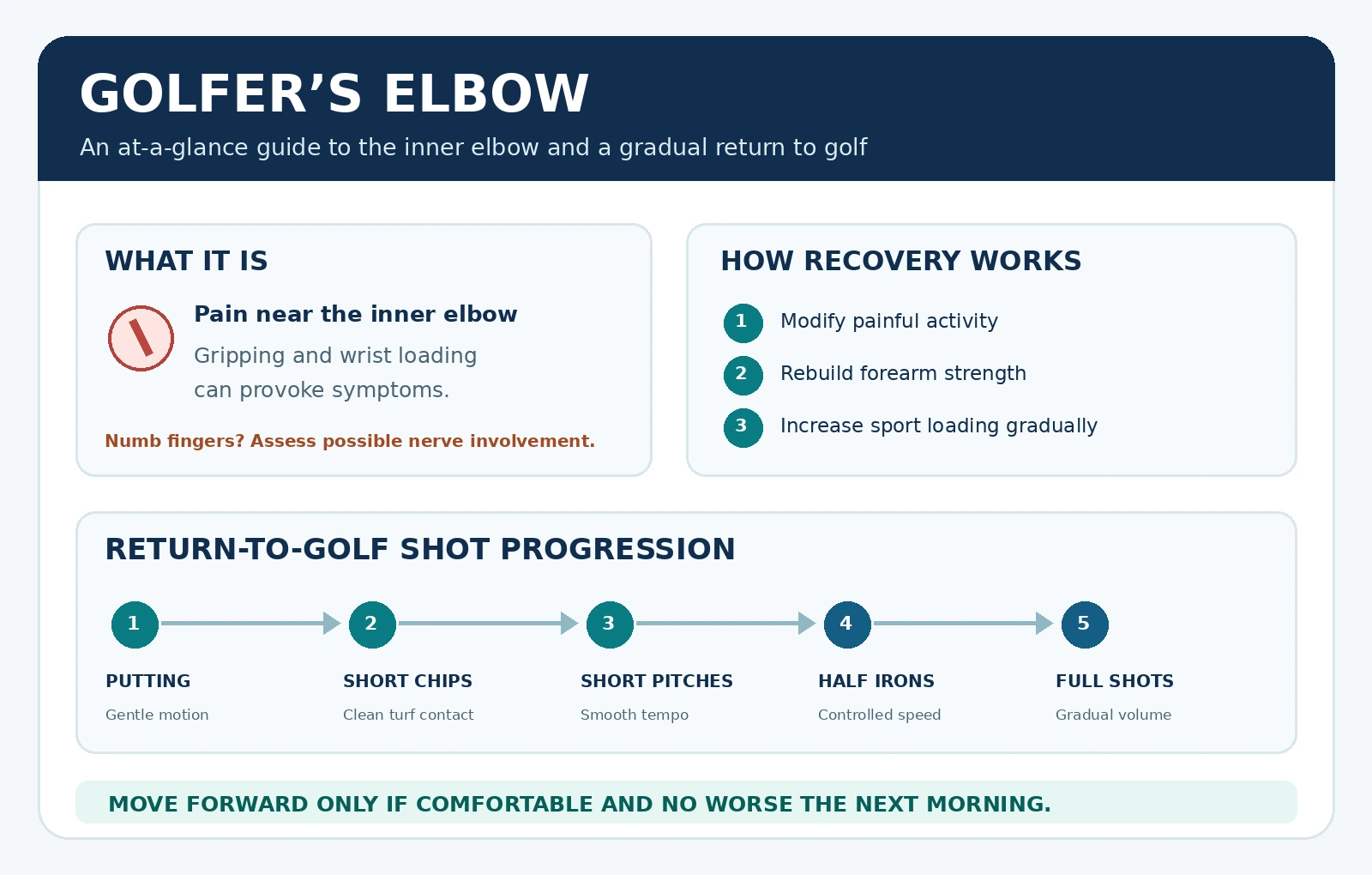
Most cases can be managed without surgery. Understanding what causes the pain, modifying aggravating activities, and gradually rebuilding strength are important parts of recovery. For golfers, recovery also raises a practical question: Can you continue practicing while your elbow heals, and which shots should you try first?
The short answer: When symptoms have settled sufficiently, and a more serious injury has been excluded where appropriate, a gradual return may start with comfortable putting, then controlled chips and pitches, partial iron swings, and eventually fuller swings. No shot is universally safe. Advance according to your elbow’s response, not a fixed calendar. [2][3]
What Exactly Is Golfer’s Elbow?
Golfer’s elbow affects the tendons that attach certain forearm muscles to the medial epicondyle, the small bony prominence on the inside of the elbow. Those muscles help bend the wrist, grip objects, and rotate the forearm. Repeated or excessive loading can irritate or injure the common tendon attachment. [1]
Imagine lifting a grocery bag. Your elbow may not move much, but the forearm muscles must contract to maintain your grip. That transfers force through the tendon near the inner elbow. When that tendon is sensitive, even simple tasks can hurt.
Unlike a fracture or sudden muscle tear, golfer’s elbow often develops gradually. Mild discomfort after activity can progress to pain that interferes with everyday tasks.
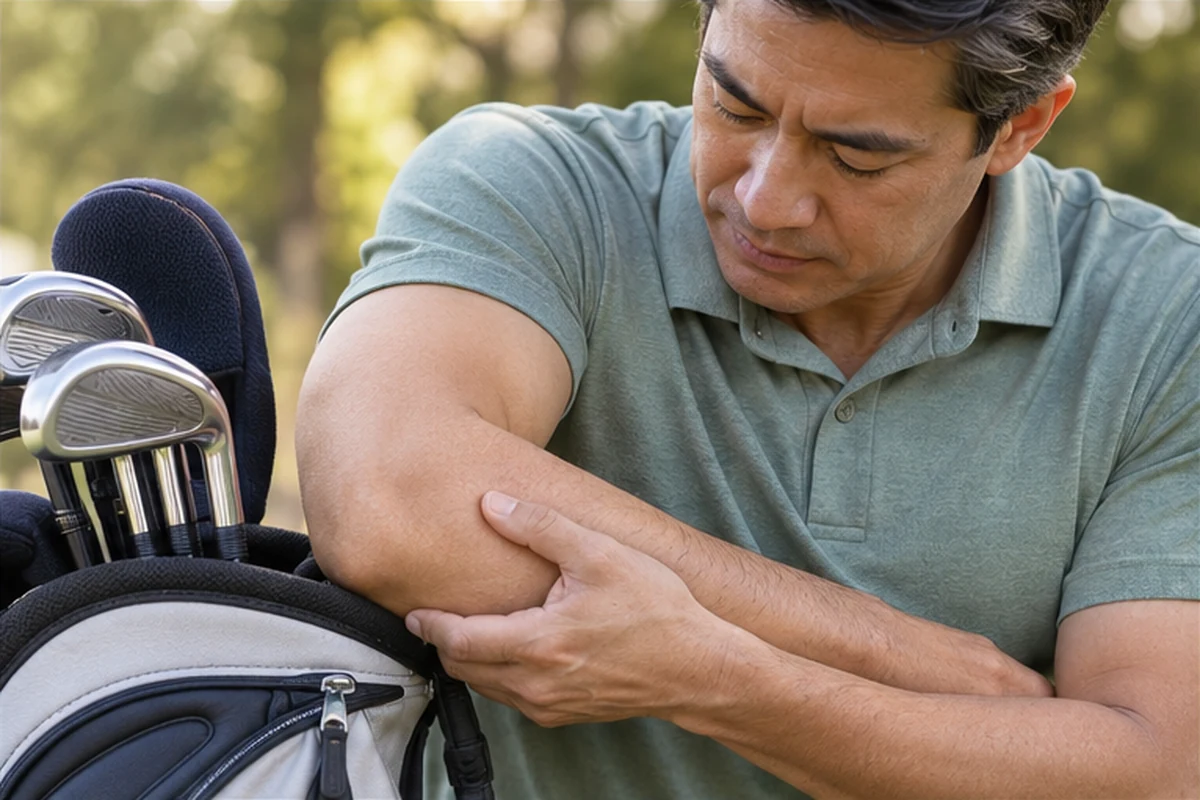
Why Does It Happen Even If You Don’t Play Golf?
The issue is not golf alone. Tendons may become painful when the amount and type of loading exceed what they can currently tolerate.
- Golf and racket sports: Repeated swings, forceful gripping, technique problems, or suddenly increasing practice time may overload the forearm.
- Weightlifting: Rows, curls, pull-ups, and deadlifts can aggravate symptoms because they require sustained gripping.
- Manual work: Repetitive twisting, tool use, pulling, and lifting place demands on the same tendons.
- Office activities: Some prolonged or repetitive hand and wrist tasks can aggravate existing symptoms, although computer use does not explain every case.
There is not always a single identifiable injury. Often, the combination of repeated loading and insufficient recovery is more relevant. [1][2]
Common Symptoms—and Symptoms That May Mean Something Else
The most characteristic symptom is pain or tenderness over the bony area on the inside of the elbow, sometimes extending down the inner forearm. Pain may occur when gripping a club, lifting weights, opening a jar, making a fist, or bending the wrist against resistance. Some people notice stiffness or reduced grip strength. [1]
Numbness or tingling in the ring and little fingers may indicate ulnar nerve involvement. The nerve passes close to the inner elbow, but nerve symptoms should not automatically be attributed to tendon irritation. Weakness, significant injury, or persistent neurologic symptoms warrant assessment. [1][4]
Golfer’s Elbow vs. Tennis Elbow
| Golfer’s elbow | Tennis elbow |
|---|---|
| Pain typically on the inside of the elbow | Pain typically on the outside of the elbow |
| Medial epicondylitis | Lateral epicondylitis |
| Common flexor-pronator tendon region | Common extensor tendon region |
| Often aggravated by gripping and wrist flexion | Often aggravated by gripping and wrist extension |
Neither condition is limited to the sport in its name. Nerve, ligament, joint, and referred pain can also affect the elbow; pain location alone does not confirm a diagnosis. [1]
How Is Golfer’s Elbow Diagnosed?
An evaluation usually starts with when symptoms began, what aggravates them, whether there was an injury, and how pain affects everyday function. A clinician may assess tenderness, motion, grip, forearm strength, and pain during resisted movements. Nerve function may also be checked when numbness or tingling is reported.
Do you need an X-ray or MRI? Not necessarily. The diagnosis is often made from history and examination. X-rays may help rule out fractures or arthritis; ultrasound or MRI may be considered when symptoms persist, findings are atypical, or another injury is suspected. [2]
What Treatments Can Help?
1. Modify activities without abandoning all movement
Temporarily reducing forceful gripping, heavy lifting, or repetitive wrist movements may settle symptoms. For golf, that may mean limiting practice sessions and avoiding painful full swings. For lifting, it may involve modifying exercises, load, or grip position. Prolonged complete rest is not usually the end goal: tendons need appropriately graded loading as recovery progresses. [2][3]
2. Manage discomfort when appropriate
A cold pack wrapped in a towel for about 15–20 minutes may temporarily ease discomfort after aggravating activity. Some patients find that a forearm strap or wrist brace helps specific tasks; braces are not substitutes for rehabilitation. Over-the-counter medicines may be appropriate for some individuals, but they can have risks and interactions. Ask a medical clinician or pharmacist if you are unsure. [2]
3. Rebuild strength gradually
Progressive exercise is a central part of rehabilitation. Early work may focus on comfortable motion, followed by strengthening of wrist-flexor and forearm-rotator muscles. A clinician may use isometrics, controlled resistance, and eccentric exercises, in which a muscle controls a load while lengthening. The choice and progression should be individualized. [1][3][5]
4. Address the original overload
For golfers, swing mechanics, grip tension, equipment fit, and practice volume may matter. For weightlifters, wrist position and training progression are common considerations. For manual workers, tools, task variation, and breaks may help. Managing pain without changing the provoking demands can lead to repeated flare-ups.
5. Discuss additional care when needed
Physical or occupational therapy, selected manual techniques, and other conservative approaches may be considered. Acupuncture may be considered an adjunct for symptom management in selected patients, but evidence specific to golfer’s elbow is limited; it is not a proven method of repairing the tendon and does not replace progressive rehabilitation.
For persistent symptoms, medical specialists sometimes discuss injections, dry needling or tenotomy, shockwave therapy, or other procedures. Benefits and risks vary, and the evidence remains uncertain for several interventions. Corticosteroid injections can give short-term relief in some cases but are not routinely favored because of concerns about longer-term results and tendon weakening. Surgery is uncommon and usually considered only after prolonged unsuccessful nonsurgical care. [1][2]
How Long Does Recovery Take?
There is no universal timeline. Mild cases may improve over weeks, while persistent problems can take several months or longer. Recovery depends on symptom duration, tendon demands, work and sport activities, and response to rehabilitation. Pain relief does not necessarily mean grip strength and endurance have returned. A golfer who feels fine at rest may still not tolerate a large bucket of range balls or a full round. [2]
Return to Golf: Which Shots Can You Practice While Healing?
A painful early stage may require stopping swings or other motions that aggravate symptoms. Resume golf-specific practice only once symptoms have sufficiently settled, movement is comfortable, and your clinician has ruled out a more serious injury if indicated. New weakness, numbness, significant trauma, or atypical pain should be evaluated before advancing. [2][4]
The progression below is a practical illustration—not a fixed rehabilitation prescription or a validated hierarchy of shots. Actual elbow loading depends on your technique, grip pressure, contact, and individual response.
Stage 1: Comfortable putting
Begin with a few short, controlled putts on a flat green, if even light gripping is comfortable. Putting often uses less swing speed and impact than a full golf swing, but it can still hurt a sensitive tendon.
- Use relaxed but secure grip pressure; avoid unnecessary squeezing.
- Keep the wrists quiet and make a small, smooth movement.
- Work on alignment and distance control rather than the number of repetitions.
- Take breaks, and stop if gripping or motion is painful.
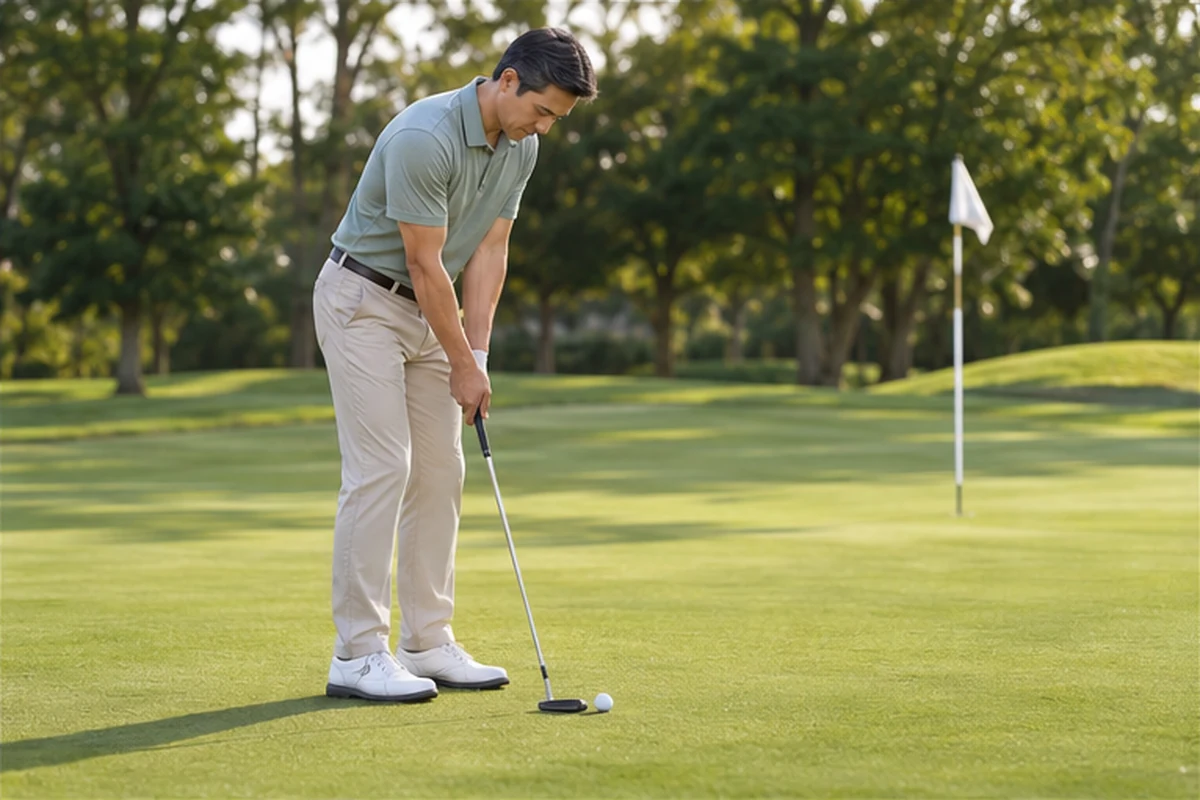
Move on only if practice is comfortable and your usual symptoms are no worse the next morning. [3]
Stage 2: Controlled bump-and-run chips
When putting is consistently comfortable, consider short bump-and-run chips with an 8-iron, 9-iron, or pitching wedge. Start from predictable, closely mown turf. Choose a compact motion that lets the ball roll rather than a forceful lofted shot.
- Keep the backswing short and grip pressure controlled.
- Prioritize clean contact, without digging the club into the ground.
- Avoid hardpan, deep rough, buried lies, and other situations demanding heavy impact.
- Start with only a few shots, then check how your elbow responds later and the following day.
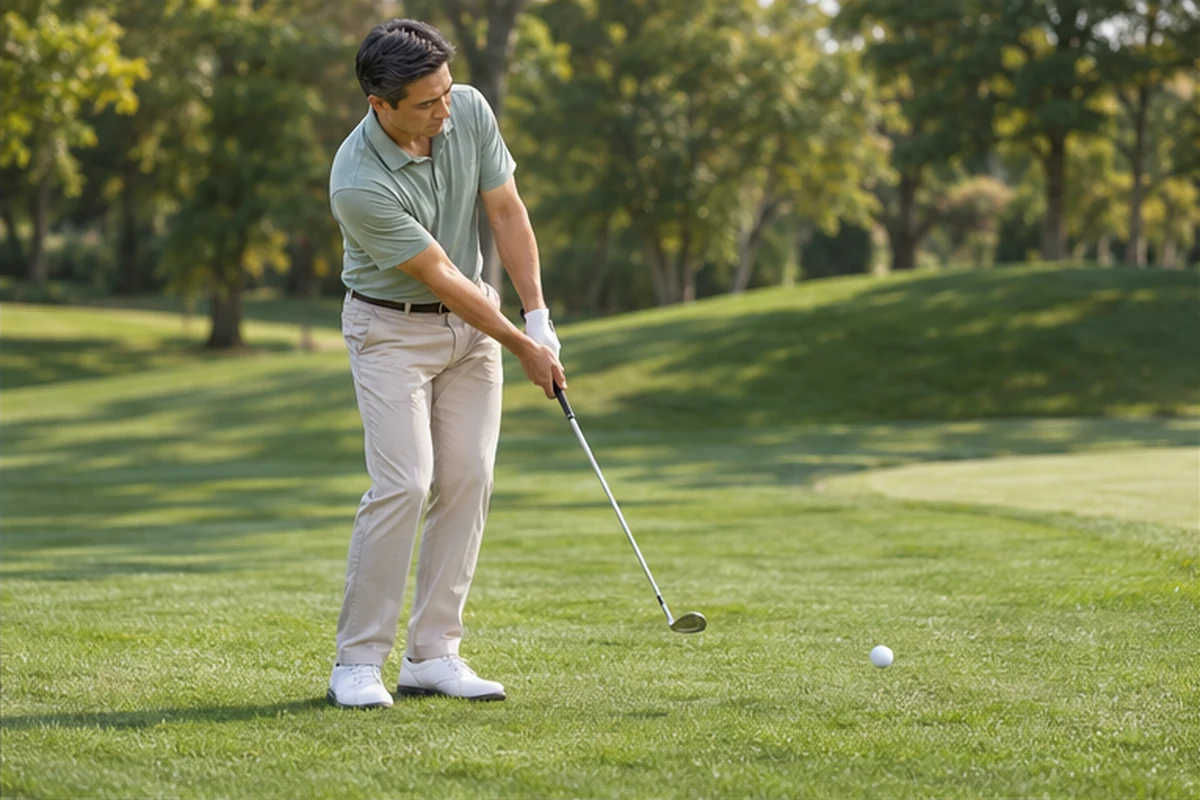
Avoid repeated fat chips or heavy ground strikes. Sudden resistance against the club can aggravate an already sensitive forearm.
Stage 3: Short, smooth pitch shots
Once controlled chips are comfortable, gradually try short pitches using a pitching wedge or gap wedge. Favor smooth tempo and clean contact over high trajectory or maximum spin.
- Use short swing lengths first.
- Avoid forceful wrist hinging or aggressive release.
- Choose an easy lie rather than deep grass or hard ground.
- If adding swing length provokes discomfort, return to an easier level.
Save flop shots and other demanding specialty shots for later, once the elbow tolerates greater loading.
Stage 4: Half swings with short irons
When short-game shots are comfortable, try relaxed half swings with a pitching wedge, 9-iron, or 8-iron. A low tee may help minimize accidental turf strikes initially, though it differs from normal playing conditions.
- Concentrate on rhythm, balance, and clean contact—not distance.
- Use a short practice session with breaks.
- Avoid repeated deep divots or heavy mat strikes.
- Increase either swing length or speed first, rather than both at once.
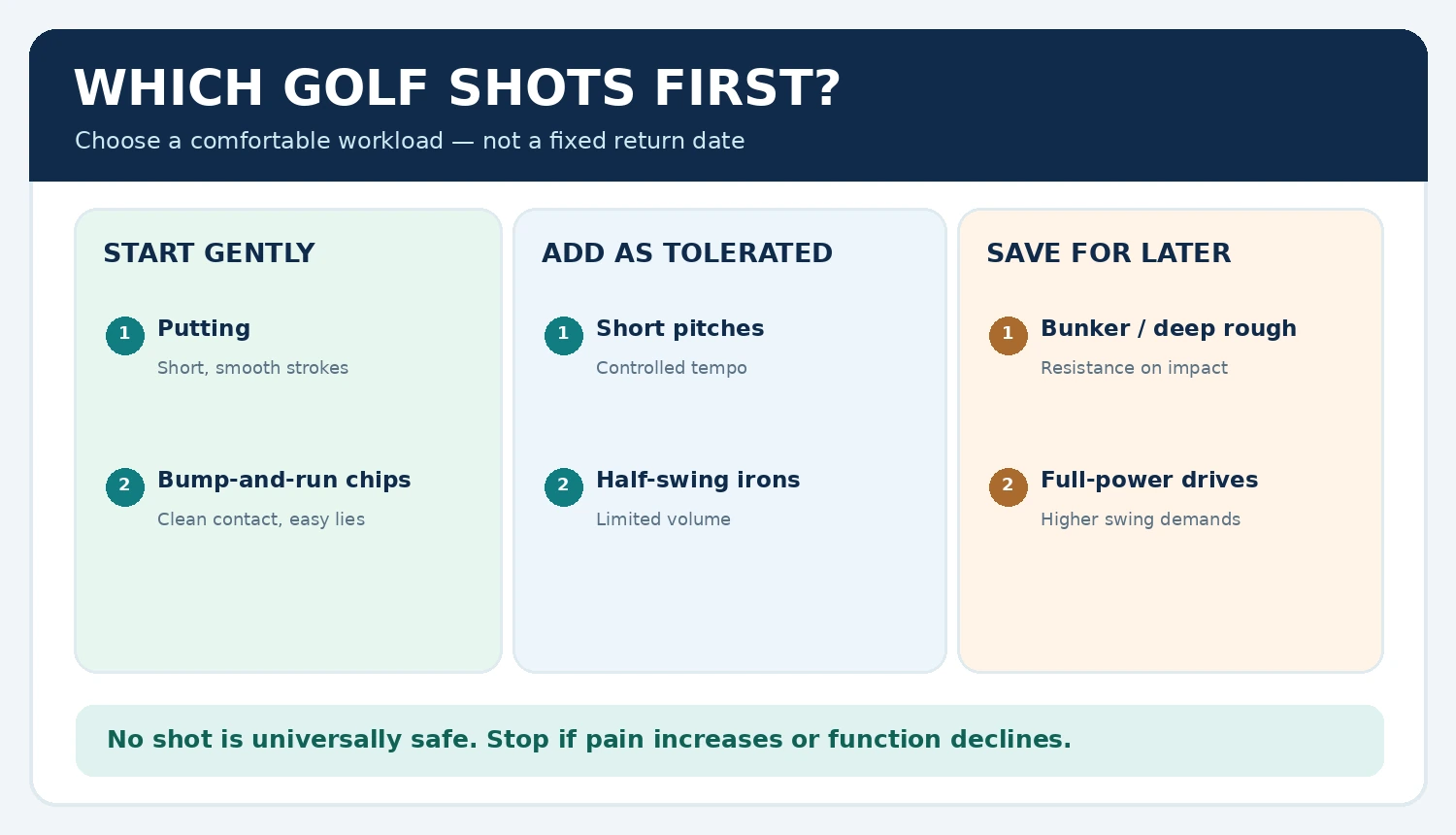
Stage 5: Three-quarter and full iron shots
Gradually lengthen the swing with short irons; then consider mid-irons when the earlier steps remain comfortable. A successful few shots do not mean the tendon can tolerate a full bucket of balls. Let practice volume rise gradually and check next-day symptoms. Avoid trying to regain distance by simply swinging harder.
Stage 6: Longer clubs and return to the course
Hybrids, fairway woods, and driver can come later as comfortable full-swing tolerance improves. Their effect on the elbow varies with swing speed, contact, and technique. Start with limited controlled shots rather than maximum-effort drives. It may be sensible to play fewer holes before returning to an entire round.
Do not assume that tolerating several drives proves readiness for a full tournament, long range session, or 18 holes.
Shots and Situations That May Be Harder on a Recovering Elbow
| Shot or condition | Reason for added caution |
|---|---|
| Bunker explosion shot | The club intentionally travels through resisting sand. |
| Deep-rough recovery | Grass may twist or resist the club during impact. |
| Punch shot from a poor lie | Can require forceful gripping and abrupt contact. |
| Hardpan or rocky ground | Contact may be unforgiving. |
| Aggressive flop shot | May involve substantial wrist action and turf interaction. |
| Maximum-power drive | Often involves greater swing speed and effort. |
| Repeated fat iron shots | Sudden turf or mat resistance can aggravate symptoms. |
These are practical cautions—not evidence that a particular shot is inherently unsafe for everyone. Hard range mats can be especially uncomfortable for players who repeatedly hit the mat before the ball.
Five Practical Tips Before Your Next Practice Session
- Warm up first. Walk a little, move the shoulders, elbows, and wrists gently, and begin with easy practice motions—not a powerful driver swing.
- Ease unnecessary grip tension. Use enough pressure to control the club without excessive squeezing. A golf professional may help evaluate grip size or technique.
- Check equipment fit. Grip size, club characteristics, and fitting may affect comfort, although changing equipment does not replace rehabilitation.
- Practice quality over volume. Pick one skill, use a short session, and avoid increasing speed, ball count, and club length at the same time.
- Use a next-morning check. Exercise-related soreness can occur, but the elbow’s usual pain should not be worse the following morning. If it is, reduce the load and get advice if symptoms persist. [3]
A Practical Return-to-Golf Checklist
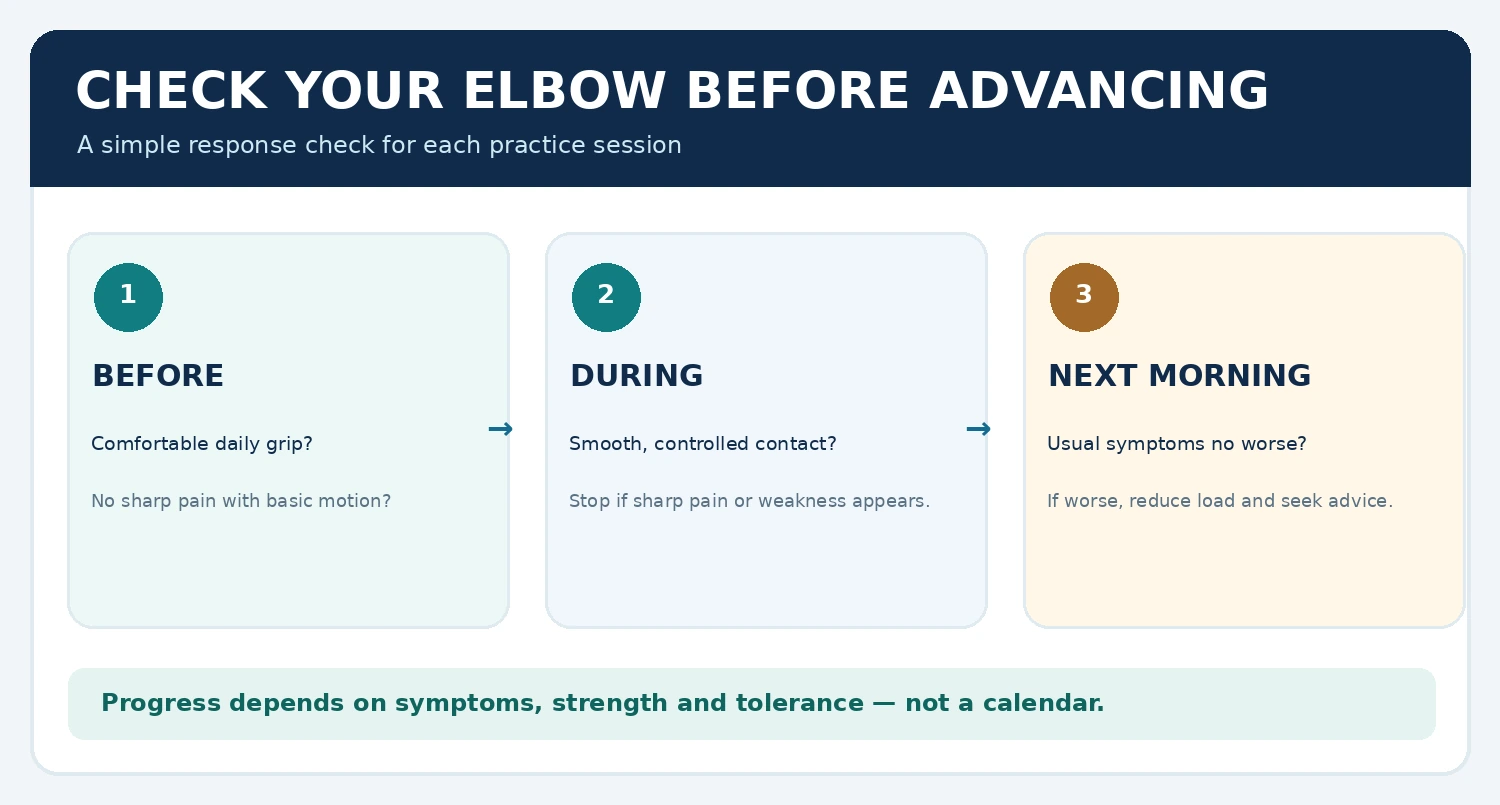
Before progressing, ask yourself: Can I grip the club comfortably? Are normal daily activities manageable? Does the current shot level avoid sharp pain? Are symptoms no worse the next morning? Am I rebuilding forearm strength? Am I keeping turf impact and practice volume under control? Have I addressed important technique or equipment factors?
If several answers are no, it may be too early to advance. If participation on the course is appropriate, modifications such as fewer holes, fewer practice swings, and avoiding difficult lies may be better than jumping into a full round. Do not take pain medicine simply to mask warning signs so you can finish playing.
When to Seek Professional or Urgent Care
Consider an evaluation when pain persists despite appropriate changes, keeps returning, reduces grip strength, or disrupts work or daily activities. Arrange prompt assessment after significant trauma or when numbness, tingling, or new weakness accompanies symptoms. [4]
Seek urgent medical care for severe pain after injury, an obvious deformity, inability to move the elbow normally after trauma, or an elbow that is hot and swollen with fever. [1]
What to Expect at ACE California Health Clinic
At ACE California Health Clinic in Santa Clara, an evaluation of possible golfer’s elbow may include discussion of symptoms and activities, testing of forearm and wrist movement, grip and strength assessment, and consideration of conditions that can mimic tendon pain.
Depending on the findings, conservative care may incorporate corrective exercises and rehabilitation, appropriate soft-tissue therapies, and other modalities within our chiropractic and acupuncture services. Acupuncture or manual therapy is considered an adjunct where appropriate, not a replacement for progressive strengthening and activity modification.
For golfers, planning may include a gradual return to putting, short-game practice, controlled iron shots, and normal rounds. A referral may be recommended if findings suggest nerve involvement, ligament injury, or another condition requiring additional evaluation.
Frequently Asked Questions
Can golfer’s elbow go away on its own?
Some mild cases improve after modifying aggravating activities, although persistent cases may need structured rehabilitation rather than rest alone.
Can I practice putting with golfer’s elbow?
Putting may be one of the first golf activities to reintroduce once symptoms have settled, but it may still be inappropriate when even light gripping hurts.
Is chipping safer than hitting a driver?
Controlled short chips usually involve less swing speed than full drives, but ground strikes can still overload the forearm. No specific shot is universally safe.
Can I use an elbow brace while golfing?
A counterforce strap may help some people, but it does not eliminate tendon loading or replace rehabilitation. Ask a clinician whether it fits your situation.
Should I practice on grass or driving-range mats?
Either can provoke symptoms if ball contact is poor. Some golfers find hard mats uncomfortable when they repeatedly strike the mat before the ball. Choose comfortable, predictable conditions and clean contact.
When can I use my driver again?
Consider longer clubs only after shorter clubs and lower-intensity swings remain comfortable during and after practice, including the following day. Strength, total practice load, and individual guidance matter.
Is stretching enough to treat golfer’s elbow?
Stretching may improve comfortable motion, but strengthening and gradual return to loading are important for restoring capacity. [1][3]
Final Thoughts
Golfer’s elbow is not simply a problem for golfers. It can affect work, exercise, and everyday life. Recovery generally combines activity modification, comfort measures, and progressive strengthening. For golfers, returning to the game is a progression, not a single event: begin with manageable movements when appropriate, increase workload gradually, and pay attention to your elbow's response.
If inner-elbow pain interferes with your routine or your golf game, identifying the cause is the first step.
ACE California Health Clinic
345 Saratoga Avenue, Santa Clara, CA 95050
Phone: 408-984-6000
Contact ACE California Health Clinic to discuss an evaluation.
References
- American Academy of Orthopaedic Surgeons. Medial Epicondylitis (Golfer’s Elbow). OrthoInfo. Accessed October 22, 2026.
- Mayo Clinic. Golfer’s Elbow—Diagnosis and Treatment. Updated May 23, 2026.
- NHS Inform. Exercises to Help with Golfers Elbow. Accessed October 22, 2026.
- Mayo Clinic. Golfer’s Elbow—Symptoms and Causes. Updated May 23, 2026.
- American Academy of Orthopaedic Surgeons. Therapeutic Exercise Program for Epicondylitis. OrthoInfo. Accessed October 22, 2026.
Educational disclaimer: This material provides general educational information and is not a diagnosis or substitute for individualized medical care. The proposed shot progression is illustrative and is not a validated rehabilitation protocol, return-to-play clearance, or a guarantee of safety or outcome. Seek professional assessment for persistent, concerning, or worsening symptoms.