
1. What are knock knees?
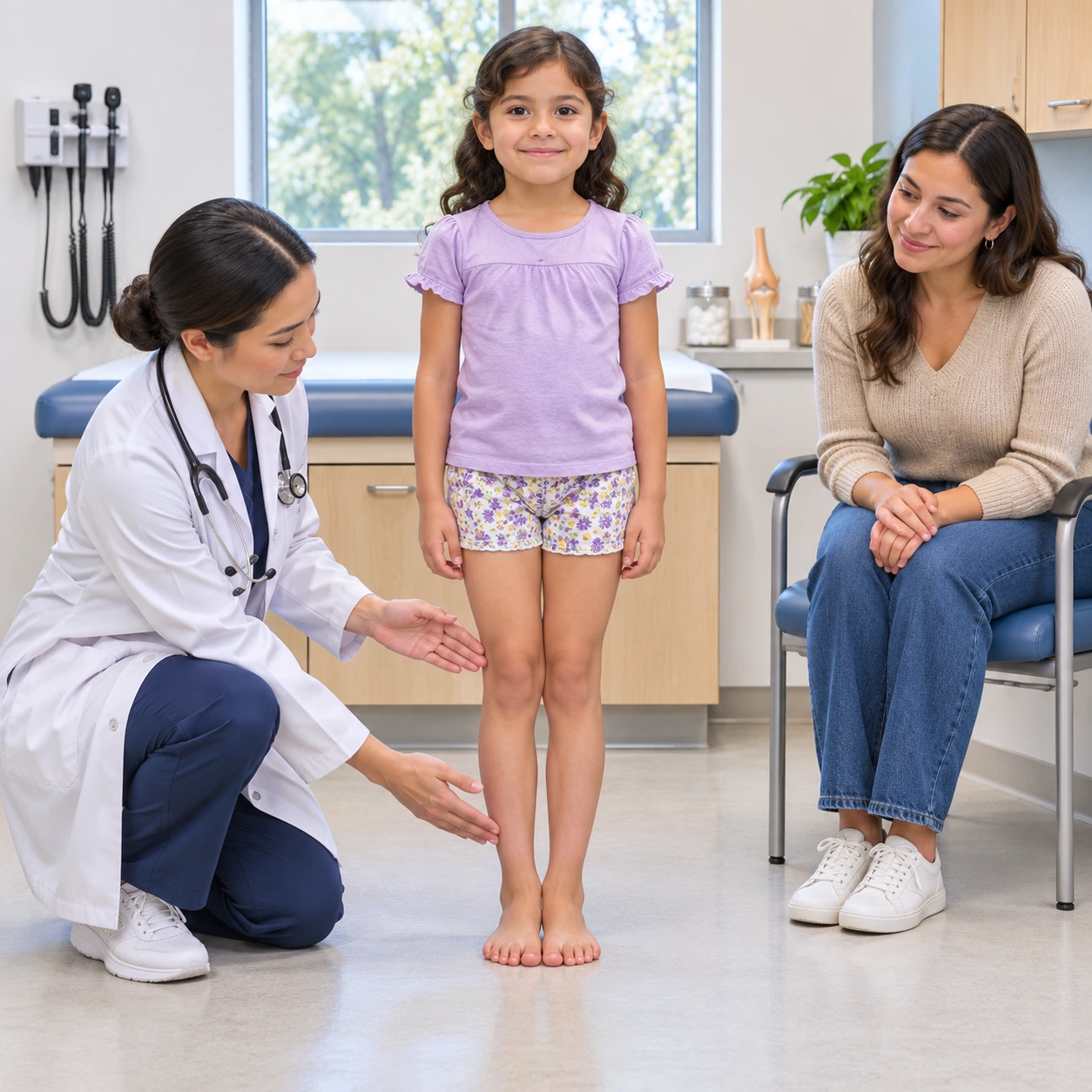
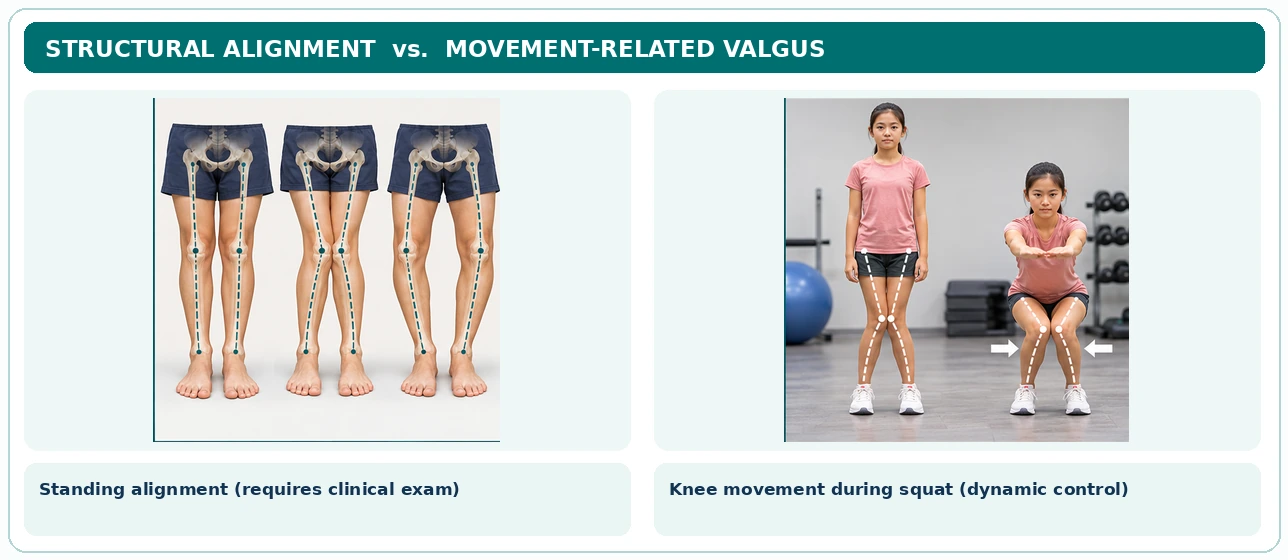
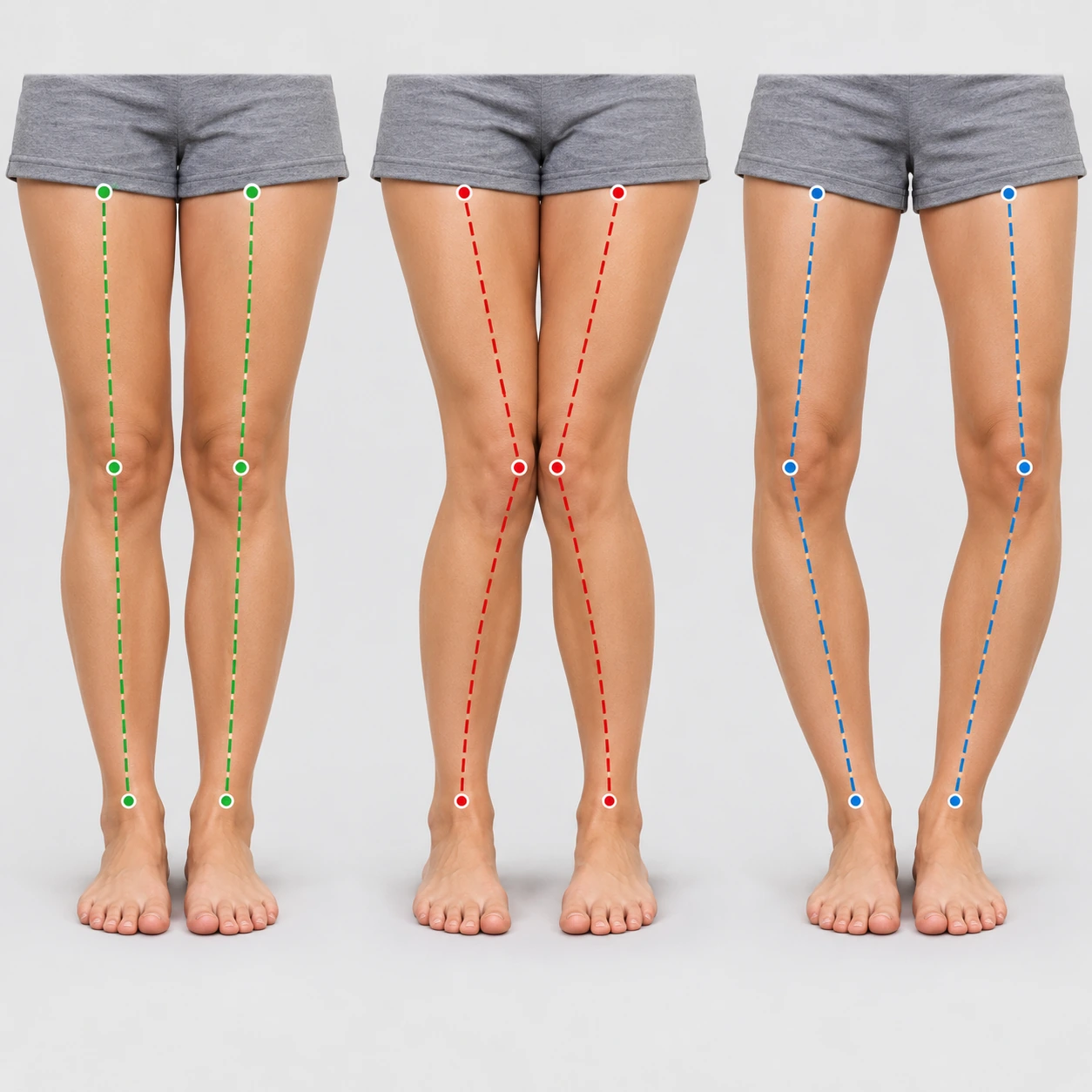
Knock knees, or genu valgum, describe an inward angulation of the legs at the knees. When a child stands with knees together, their ankles may remain apart. The appearance can come from normal growth, structural alignment of the thighbone or shinbone, or movement patterns that become noticeable only during activity.
| Type | What it means | Typical next step |
|---|---|---|
| Physiologic knock knees | Common, generally symmetrical knee angulation during early childhood. | Reassurance and observation when age-appropriate and painless. |
| Structural genu valgum | Persistent or progressive bony alignment involving the femur, tibia, or both. | Clinical evaluation and pediatric orthopedic referral when indicated. |
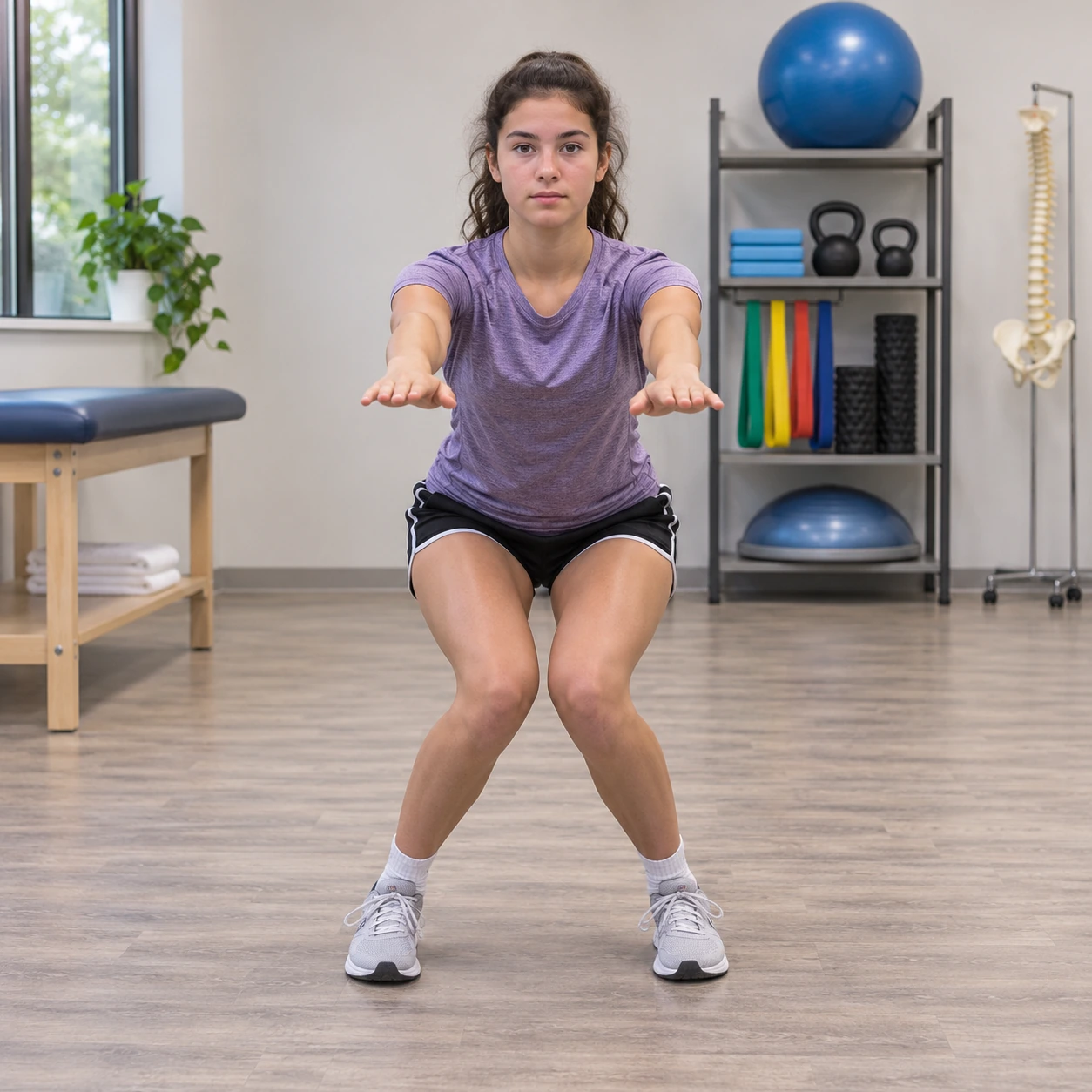
| Dynamic knee valgus | The knee moves inward during squatting, landing, cutting, or other activity. | Evaluate strength, technique, mobility, and neuromuscular control. |
2. Normal growth: why a knock-kneed stage is expected
Leg alignment changes substantially as children grow. Bowlegged appearance often occurs in infancy and toddlerhood. The knees commonly angle inward around preschool age, with the greatest knock-knee appearance often seen around ages 3–4. Alignment typically trends toward a more mature pattern by about 7–8 years. Children vary, so age alone does not establish a diagnosis. [1] [2] [3]
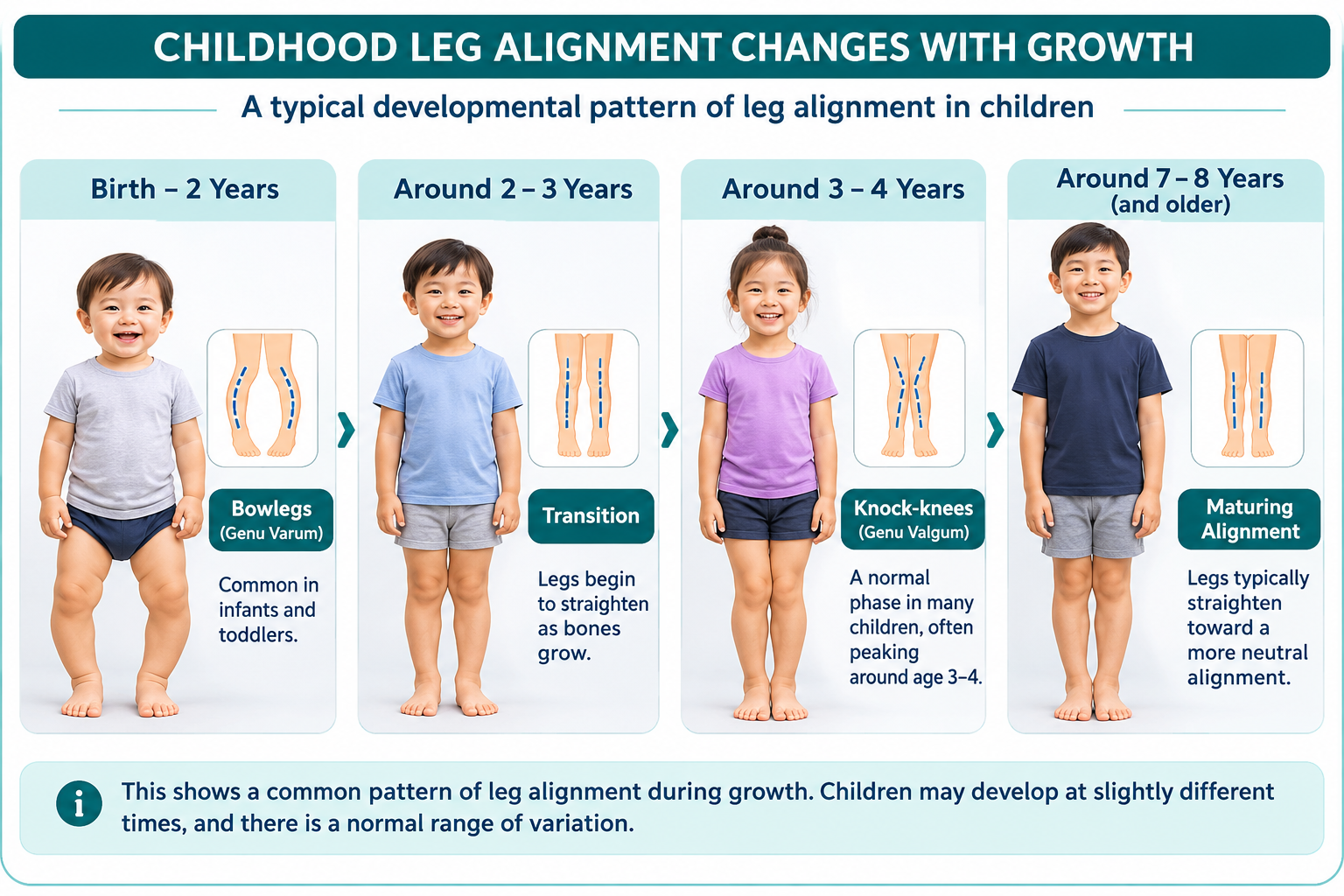
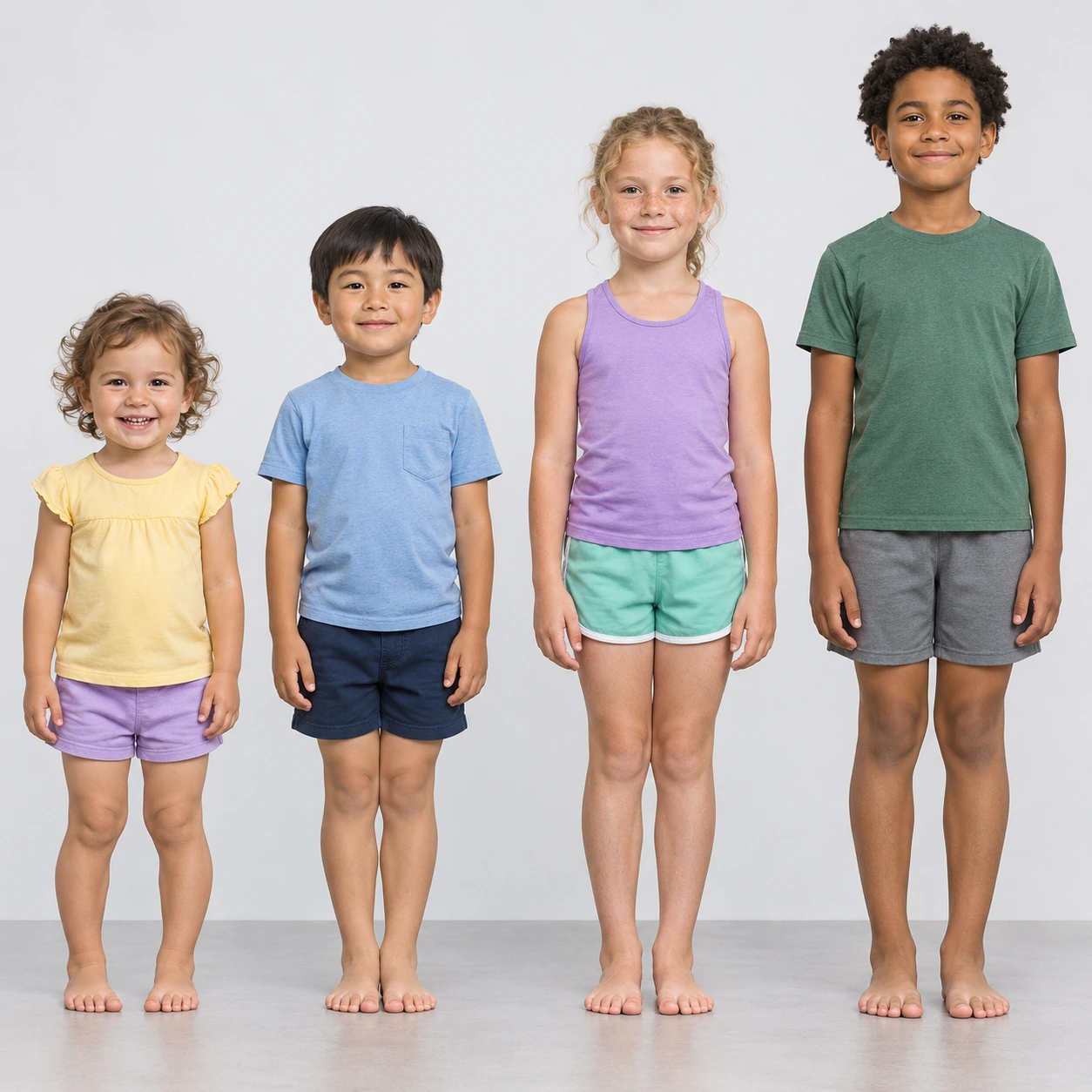
Early recognition is not the same as early manipulation. Most otherwise healthy children with painless, symmetrical physiologic knock knees do not need specialized exercises, corrective shoes, bracing, or chiropractic adjustments to straighten the legs. [2]
3. Why early evaluation can matter
When a curve is pronounced, worsening, painful, or distinctly asymmetric, an earlier assessment can detect conditions that do not follow normal growth. Timing also matters because selected structural cases may be treated with guided growth while growth plates remain open. Once growth is complete, treatment choices may differ. [1]
Signs that deserve a professional evaluation
- Pronounced knock knees persisting or worsening after about age 7–8.
- One leg noticeably more affected than the other.
- Pain, limp, recurrent falls, instability, or reduced activity.
- A history of growth-plate injury, infection, or other bone disease.
- Unusual short stature, worsening deformity, or other concerning physical findings.
What the clinician may examine
- Standing alignment and walking pattern.
- Hip rotation, foot progression, leg length, and joint movement.
- Single-leg balance, squat control, strength, and symptoms.
- Whether pediatric evaluation or imaging is warranted.
For suspected pathological genu valgum, a specialist may recommend standing, full-length hip-to-ankle radiographs to assess the mechanical axis; they are not routinely necessary in typical painless developmental cases. [1] [3]
4. Chiropractic care and rehabilitation: where they fit
A chiropractic musculoskeletal assessment may help identify joint discomfort, restricted mobility, muscle weakness, gait compensation, and movement-control issues associated with knee symptoms. When appropriate, conservative care can combine symptom-focused manual treatment with rehabilitation exercises and activity coaching. A clinician may also coordinate with a pediatrician or pediatric orthopedic specialist.
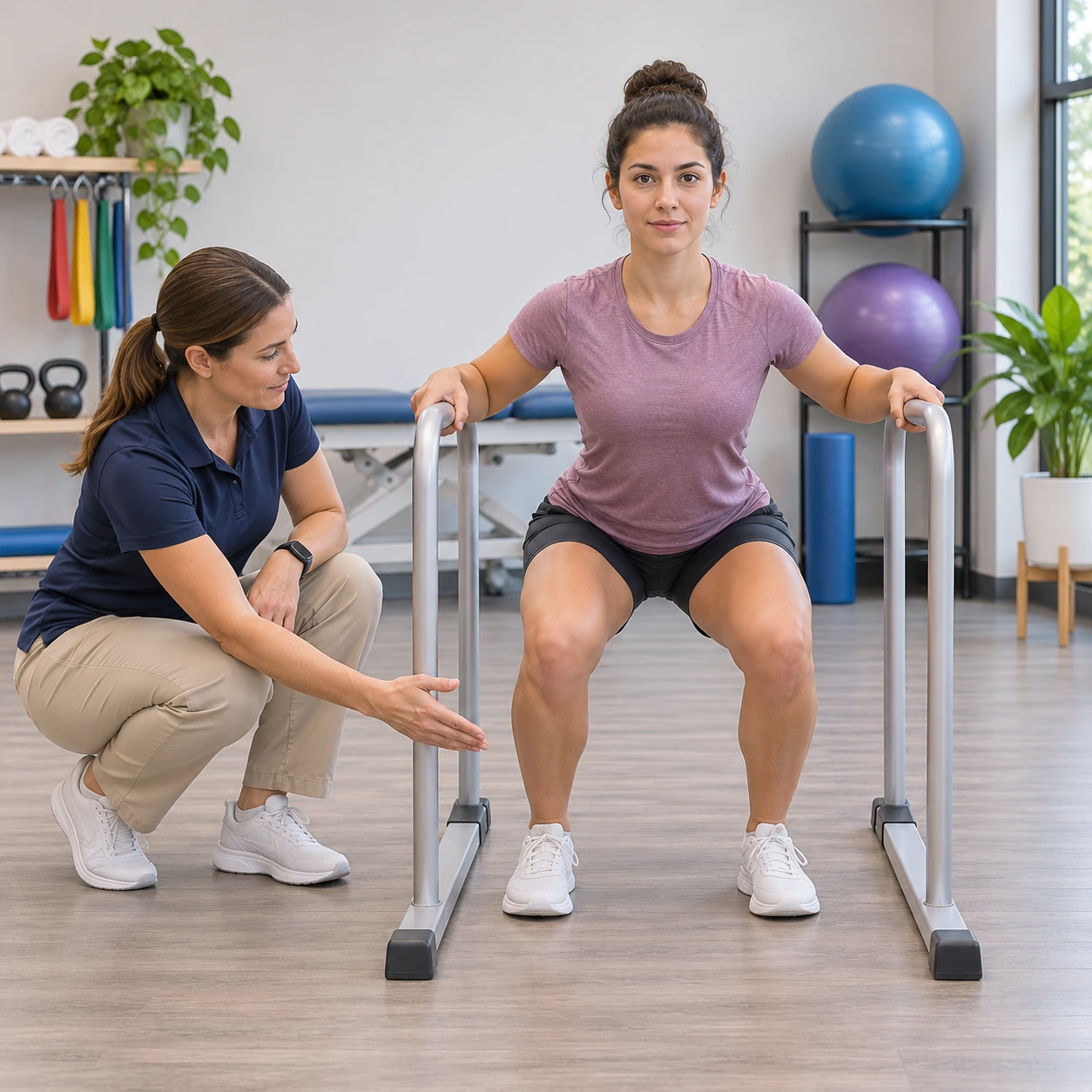
Assess
Distinguish bone alignment from hip, knee, ankle, and movement-control contributors.
Rehabilitate
Develop strength, balance, mobility, and confidence for daily activity or sports.
Refer when needed
Structural or progressive cases may require pediatric orthopedic evaluation.
5. Five illustrated home exercises for knee control
These examples are for school-age children able to follow instructions, adolescents, or adults who have been cleared for exercise. They are not a correction program for toddlers and do not replace evaluation of structural deformity. A therapist may select different exercises depending on the person's needs.
When a knee moves inward during a squat or landing, strengthening and neuromuscular retraining may improve control; research on dynamic knee valgus supports this type of training in selected participants. [4] [5]
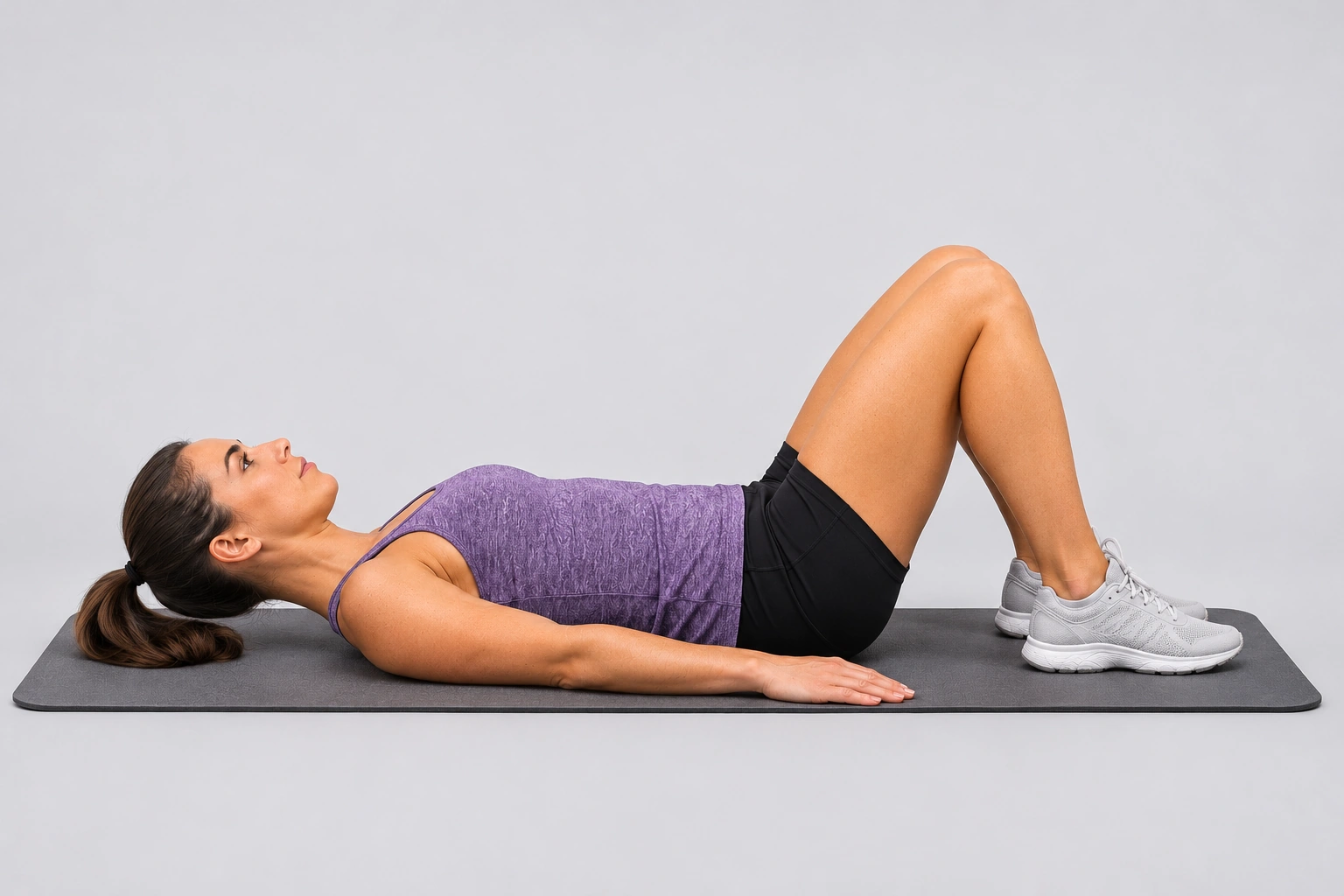
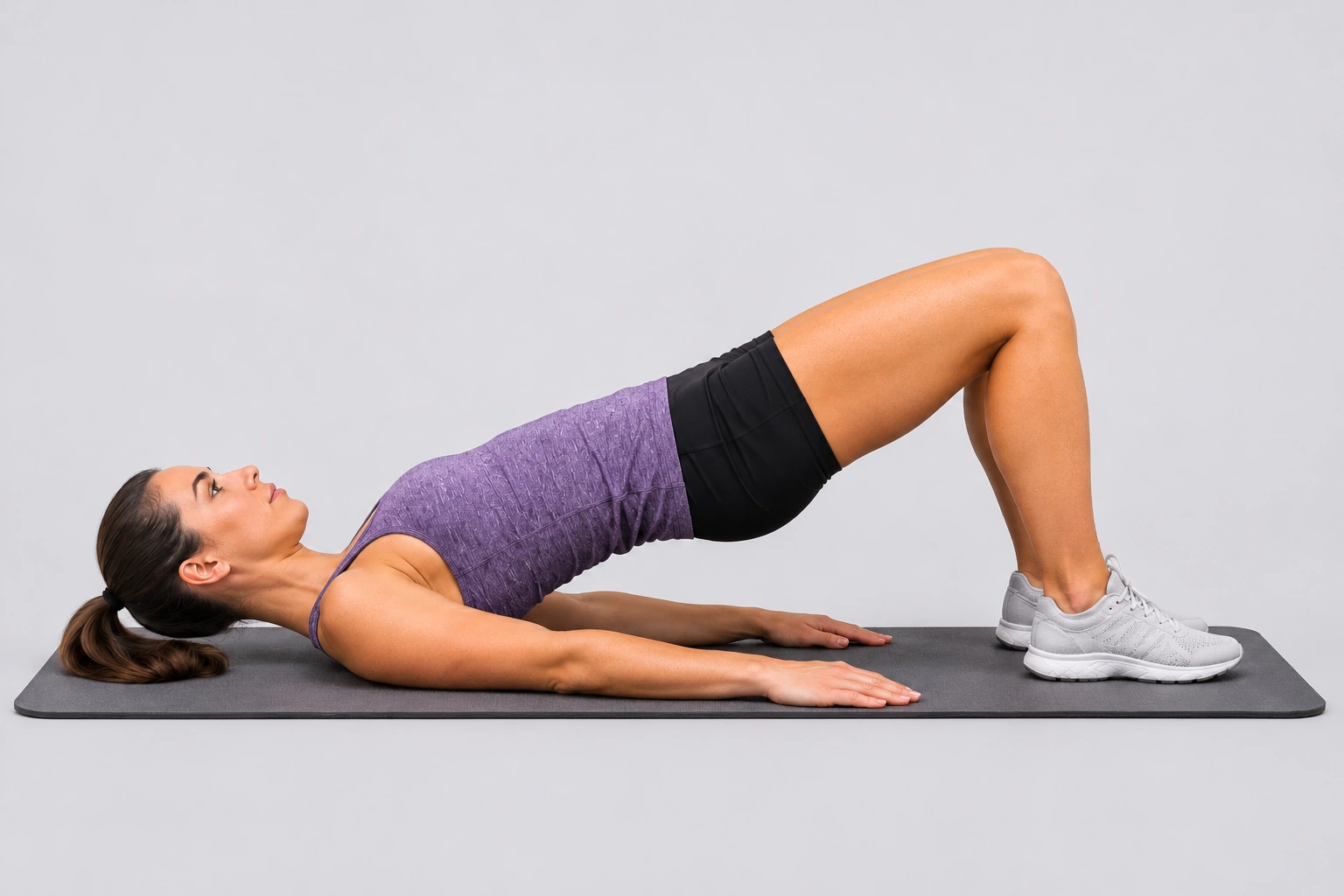
Glute bridge
Hip and trunk strength
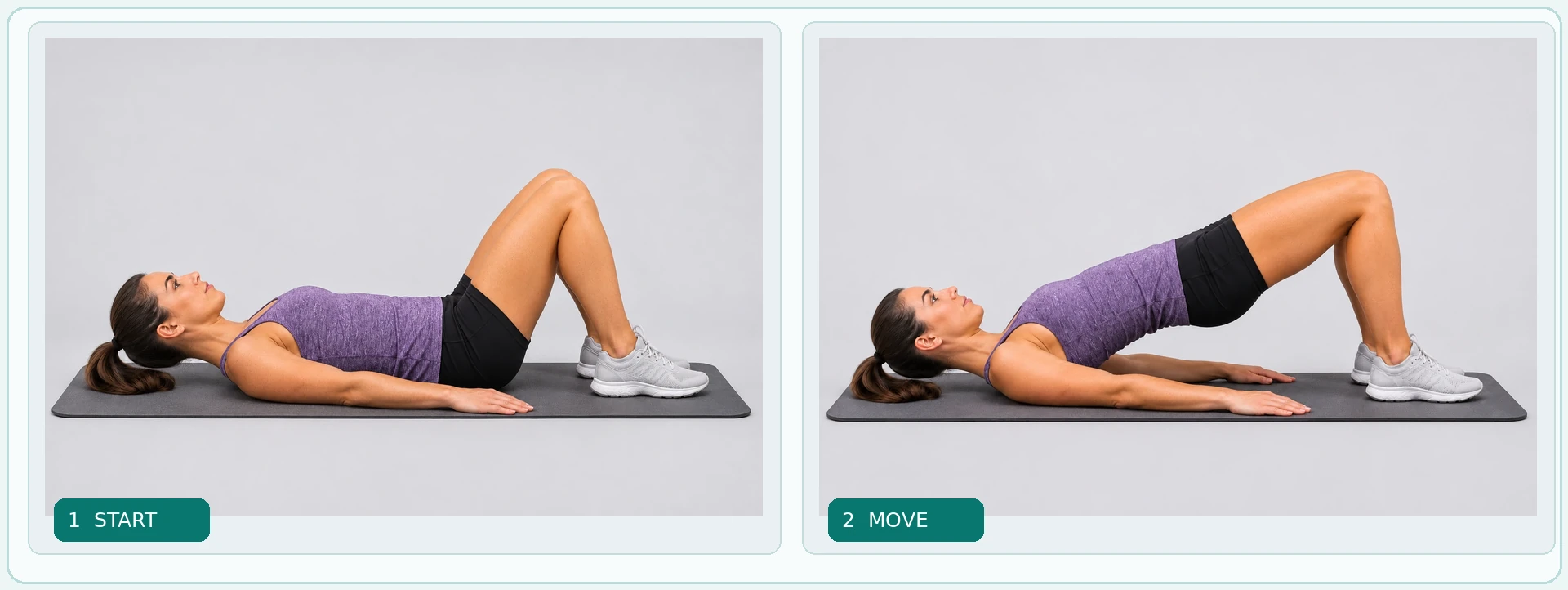
Lie on your back with knees bent and feet planted. Tighten the abdominal and buttock muscles; lift your hips until your trunk feels supported. Lower slowly without arching your lower back.
View each exercise position separately
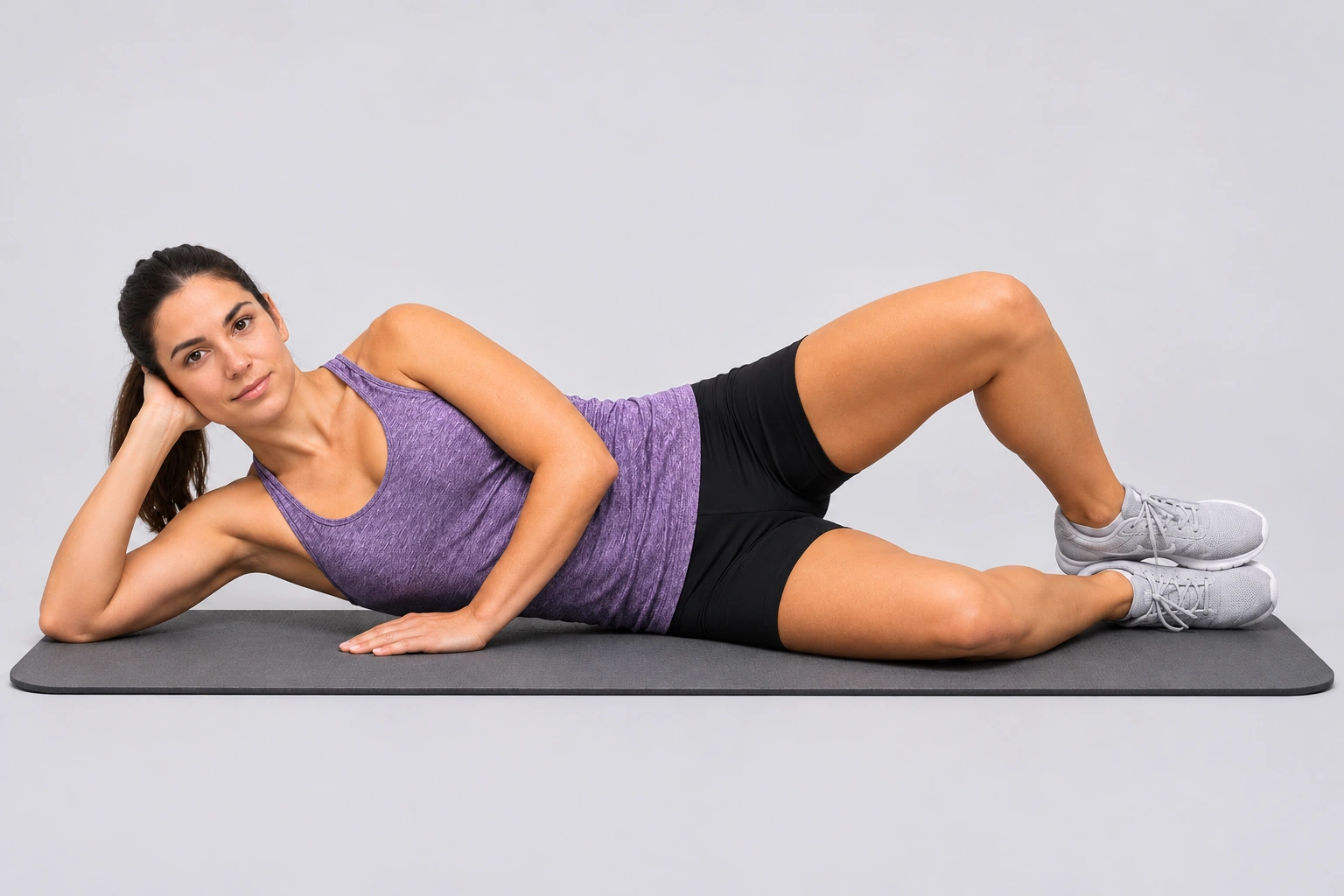
Clamshell
Lateral hip stability
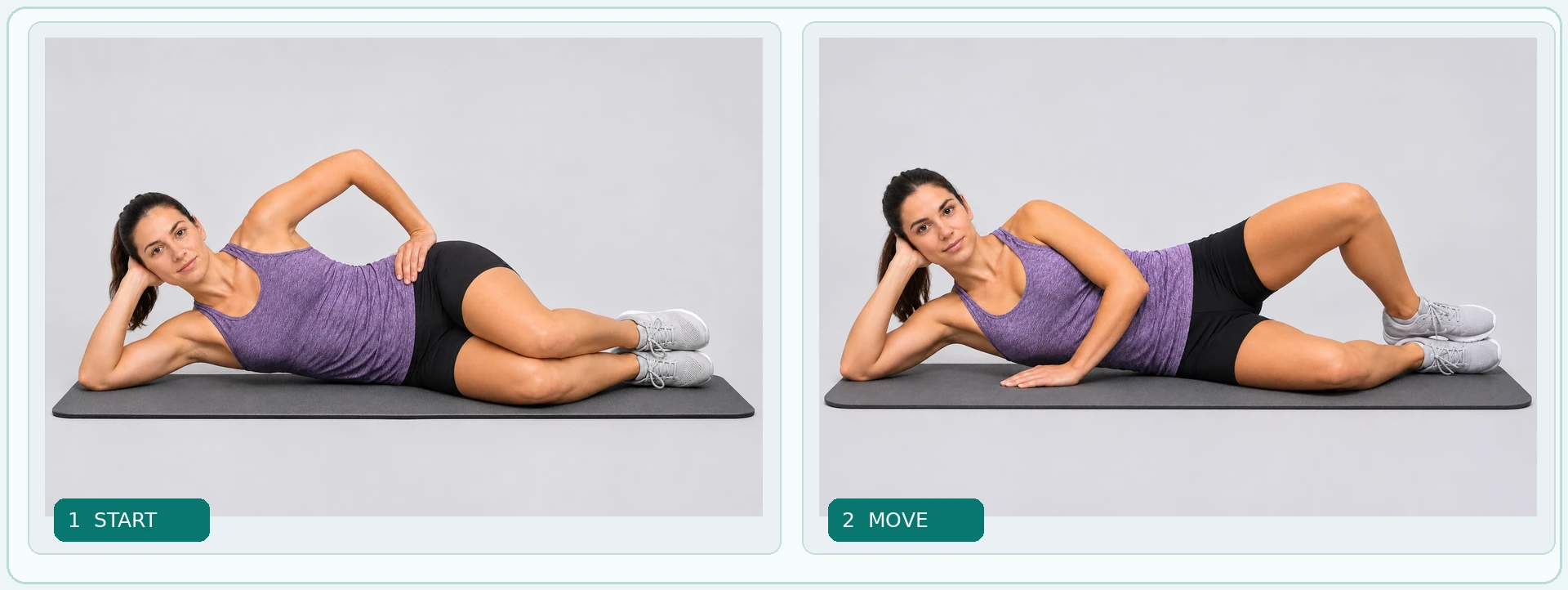
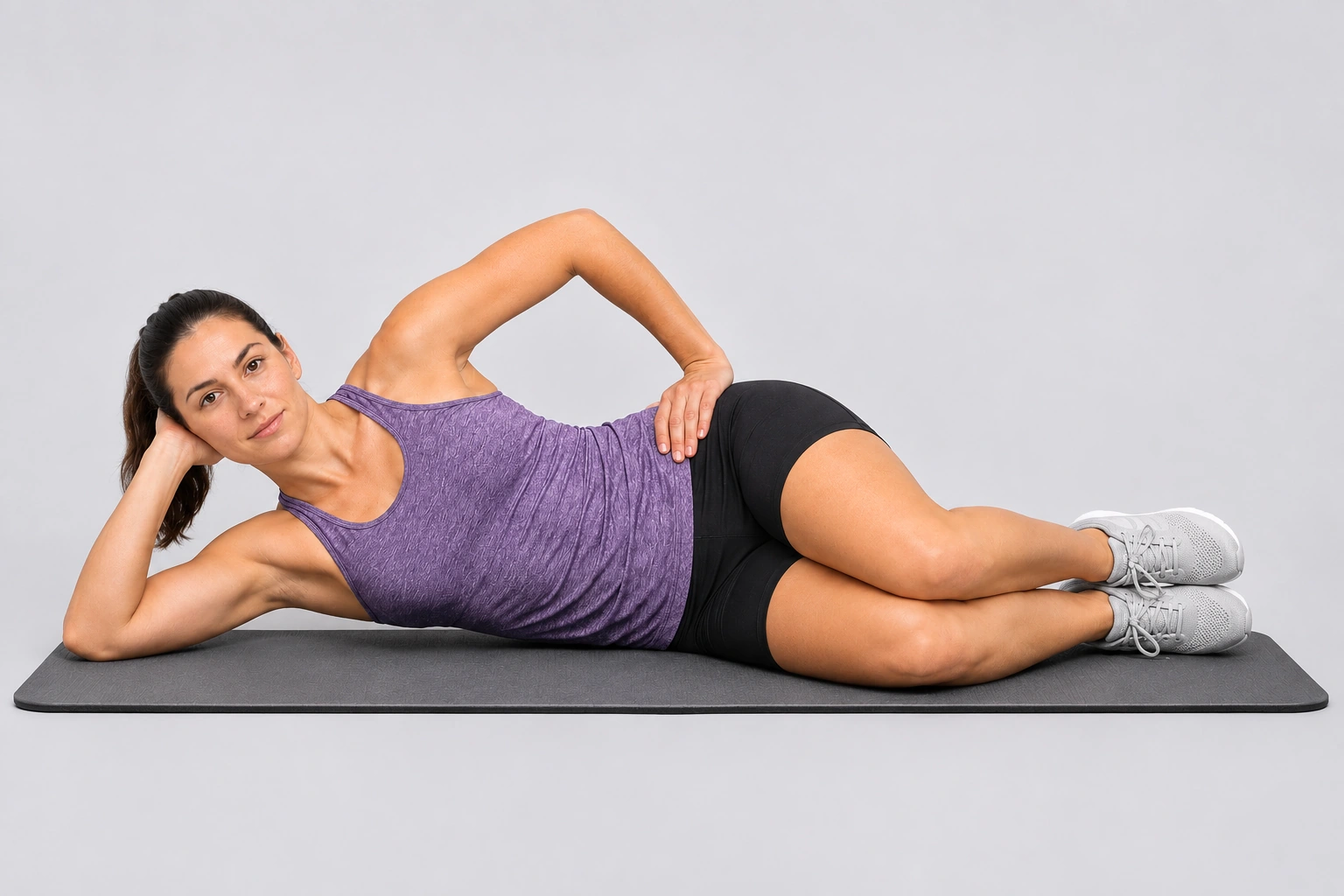
Lie on your side with your knees bent and pelvis stacked. Keep your feet together while lifting the top knee gently. Avoid rolling the pelvis backward; return with control.
View each exercise position separately
Controlled sit-to-stand
Functional knee control
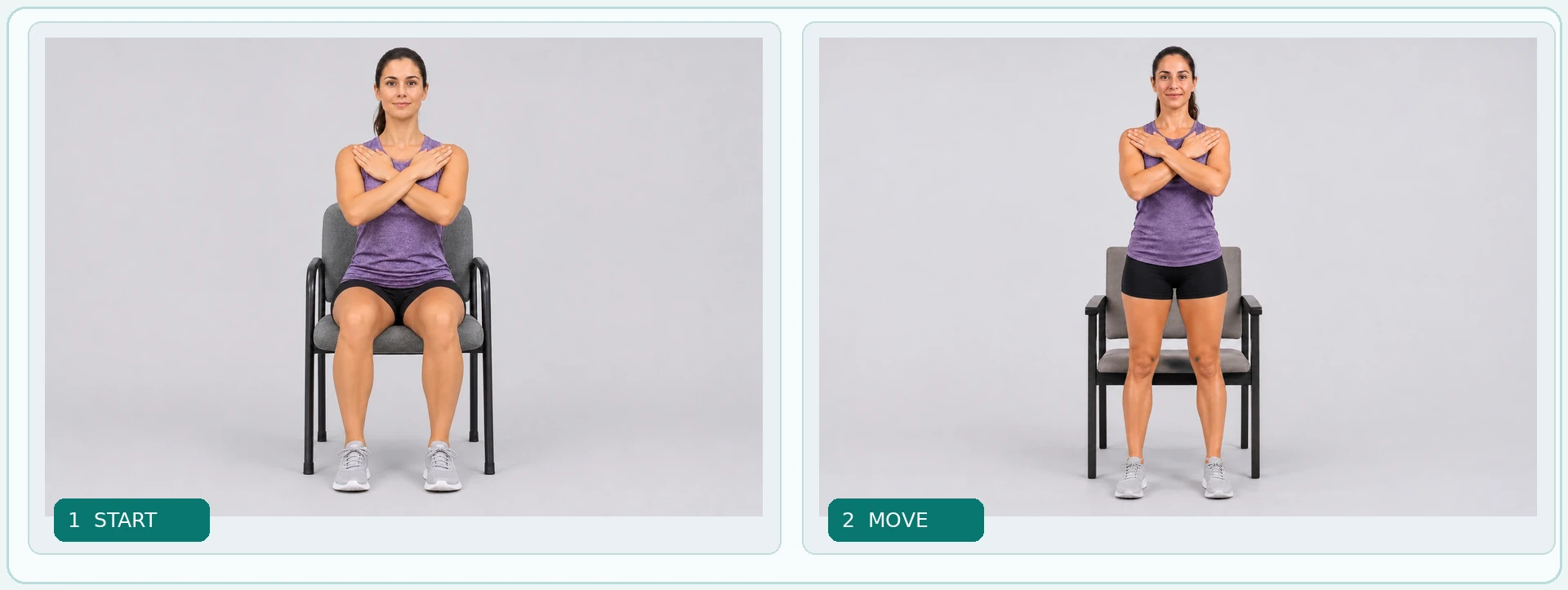
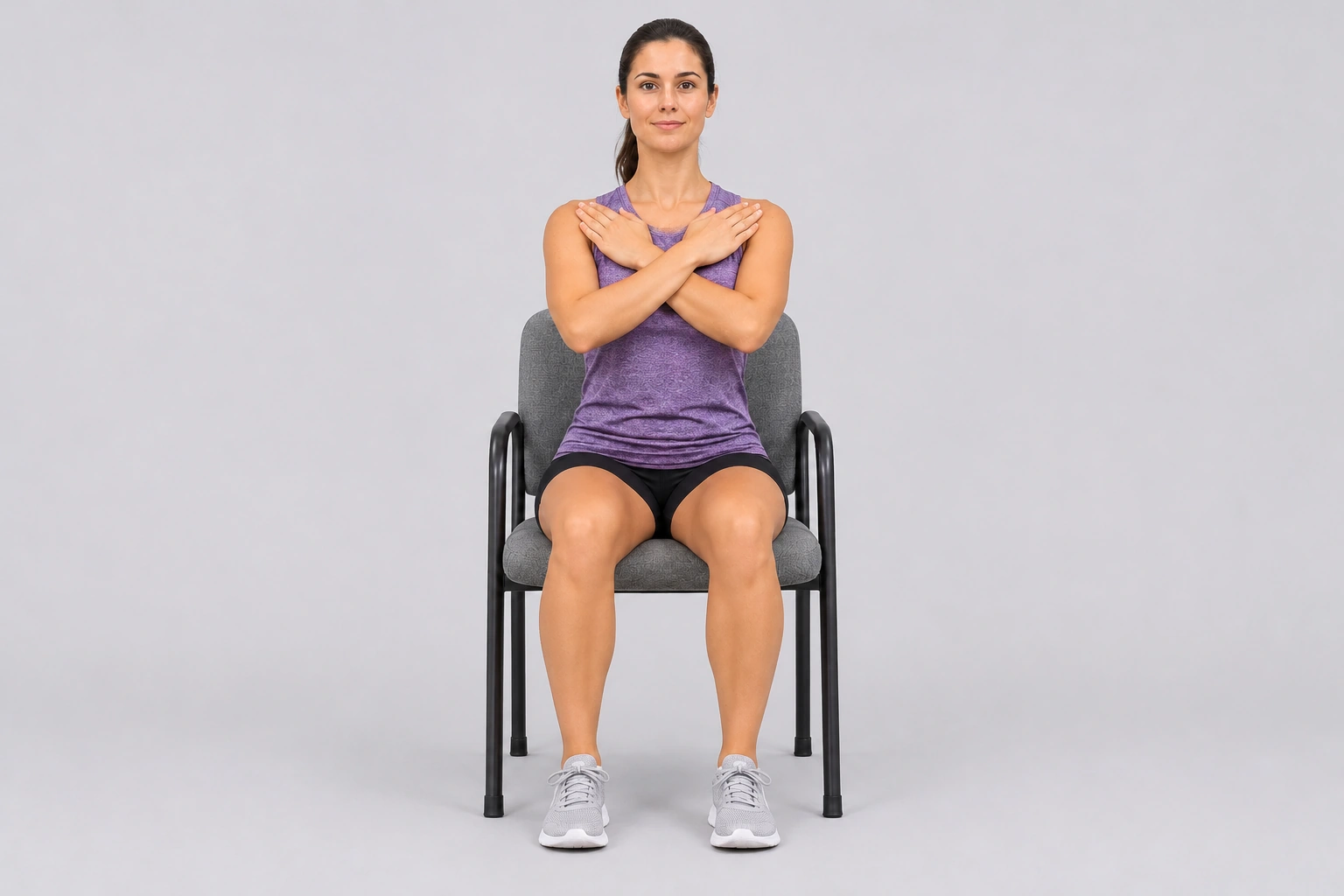
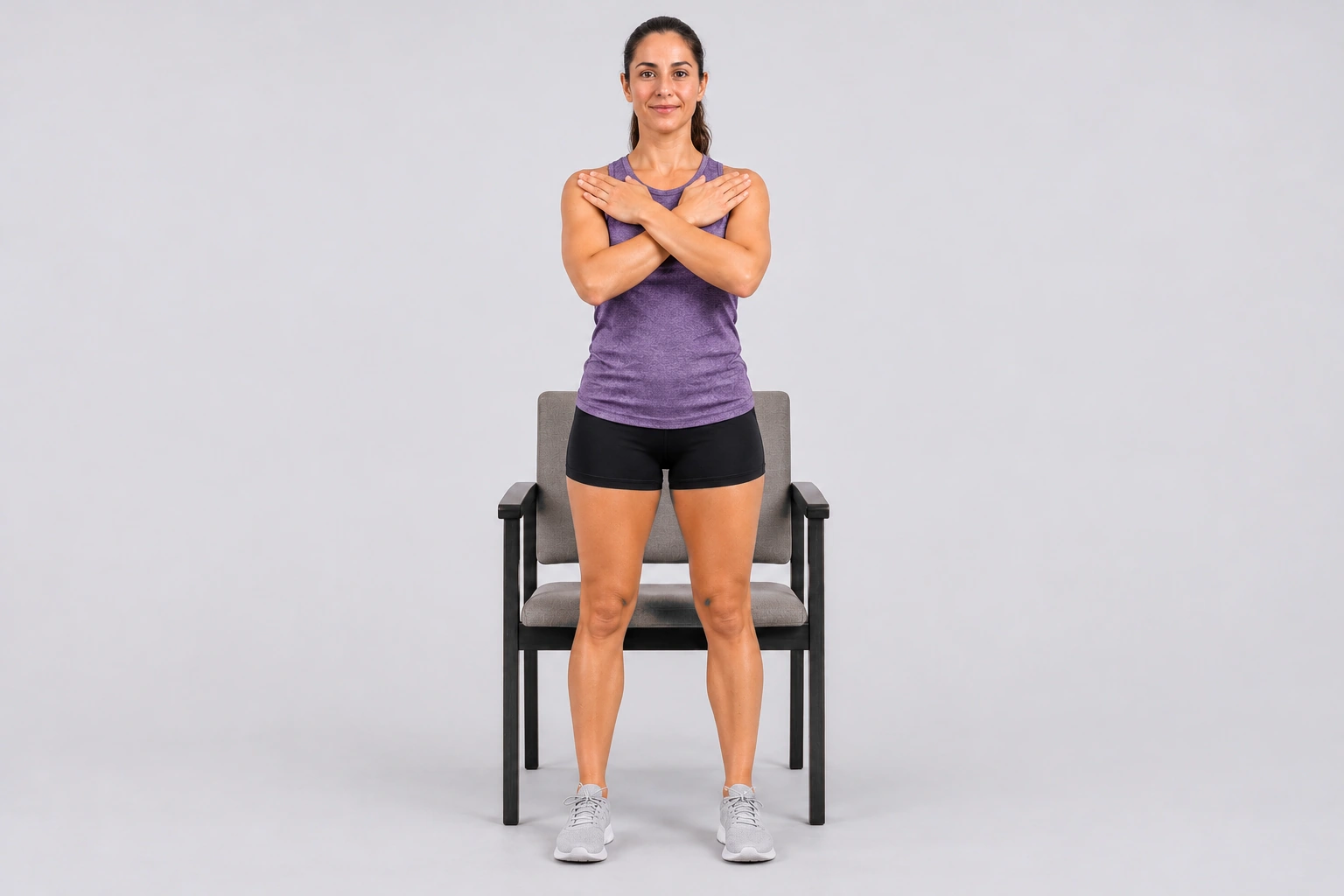
Sit on a stable chair with feet about hip-width apart. Stand using your legs, then return slowly. Let knees move generally in line with the feet without forcing them outward.
View each exercise position separately
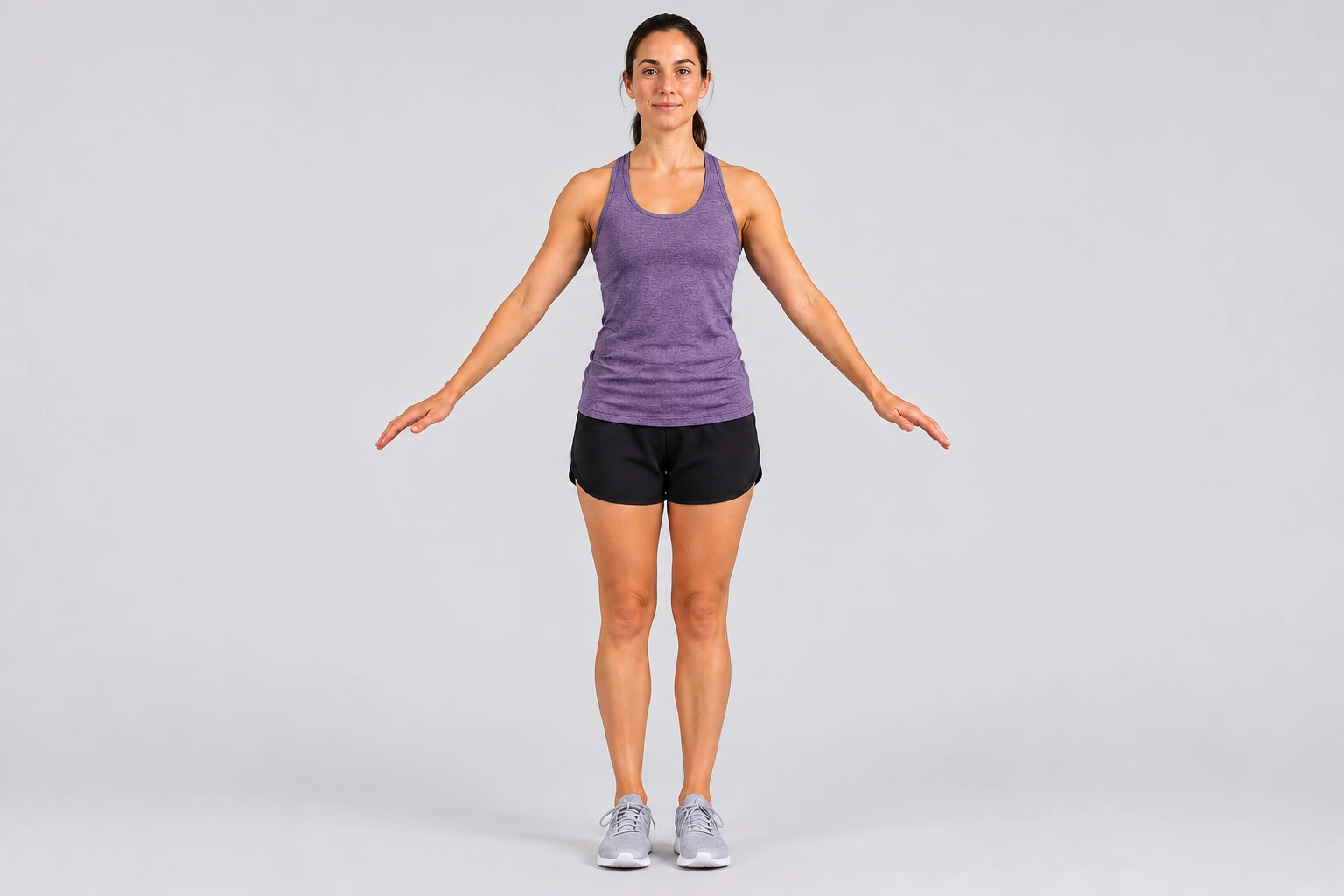
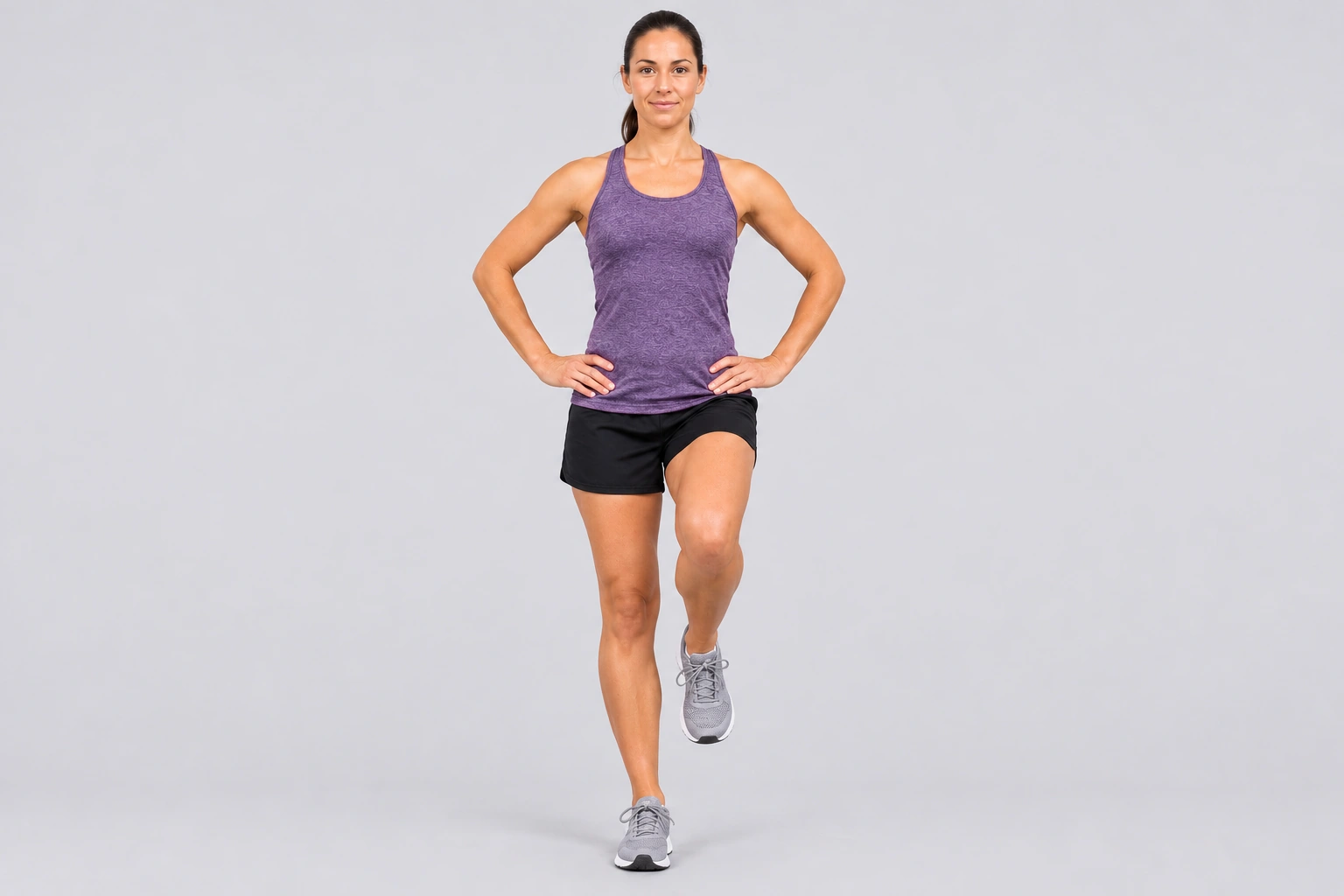
Supported single-leg balance
Balance and proprioception
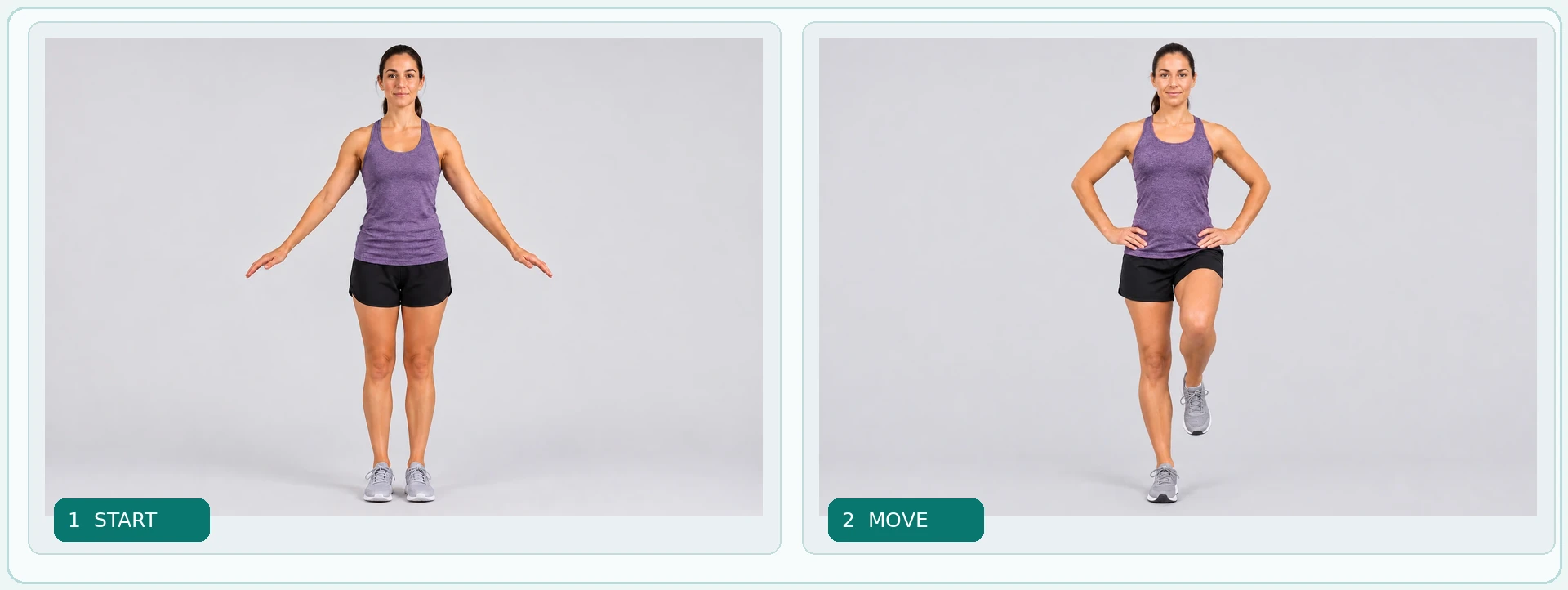
Stand beside a counter or chair for support. Shift weight onto one leg, lift the other foot slightly, and keep the trunk steady. Switch sides.
View each exercise position separately
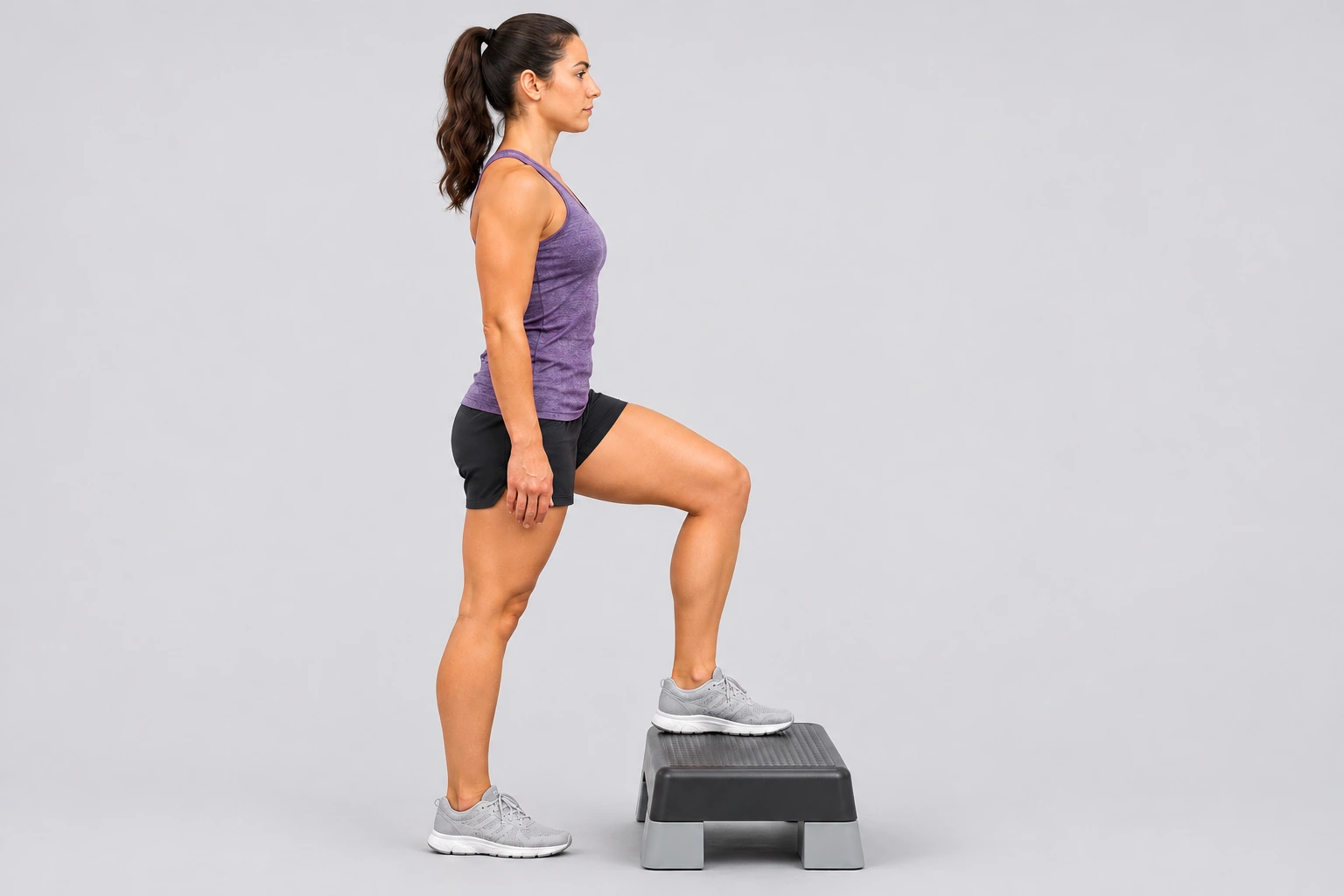
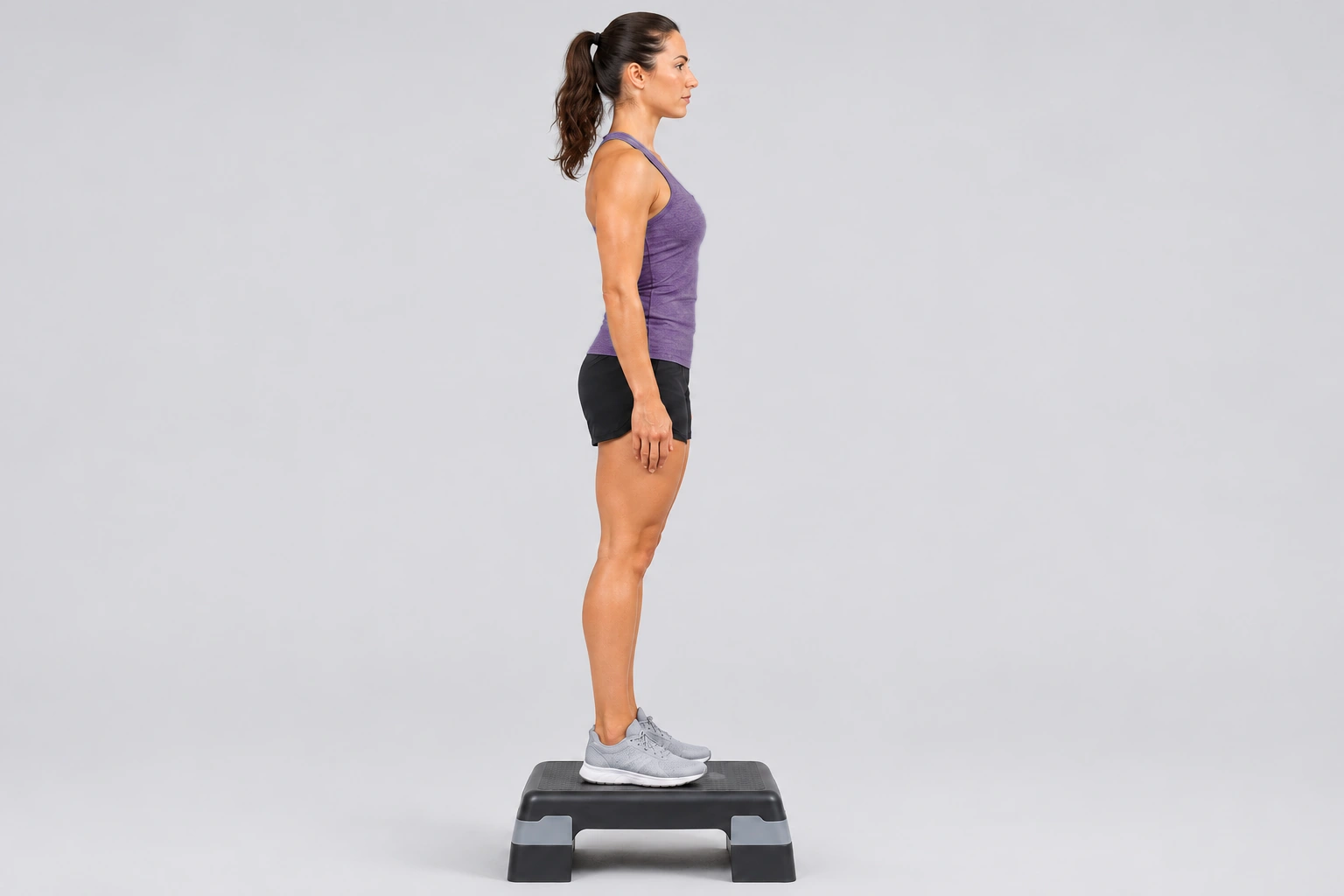
Low step-up
Functional leg strength
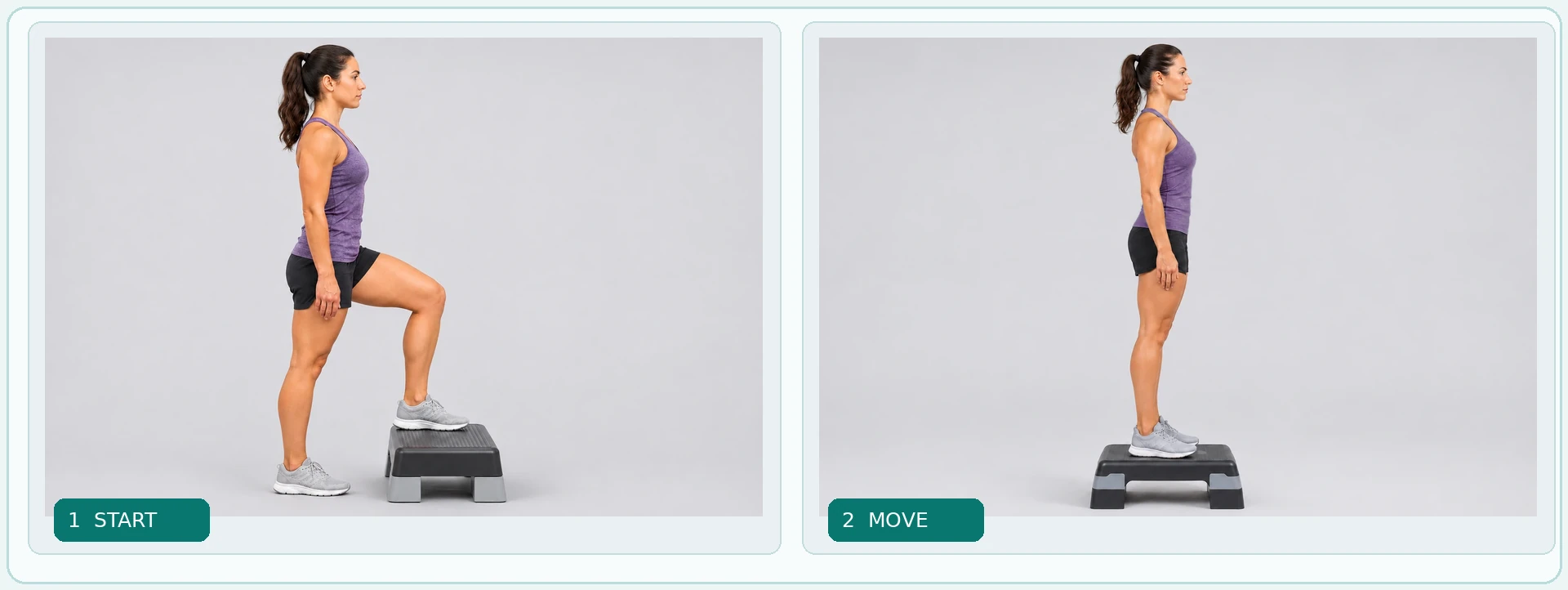
Place one foot on a secure low step. Push through that foot to rise, controlling the knee and pelvis. Step back down slowly. Use a handrail if needed.
View each exercise position separately
6. Which sports and activities are helpful?
No sport has been proven to correct a structural knock-knee deformity. Still, movement matters. Enjoyable activities can support aerobic fitness, leg strength, coordination, self-confidence, and a healthy body weight. Children with typical physiologic knock knees usually can participate in sports without restrictions.
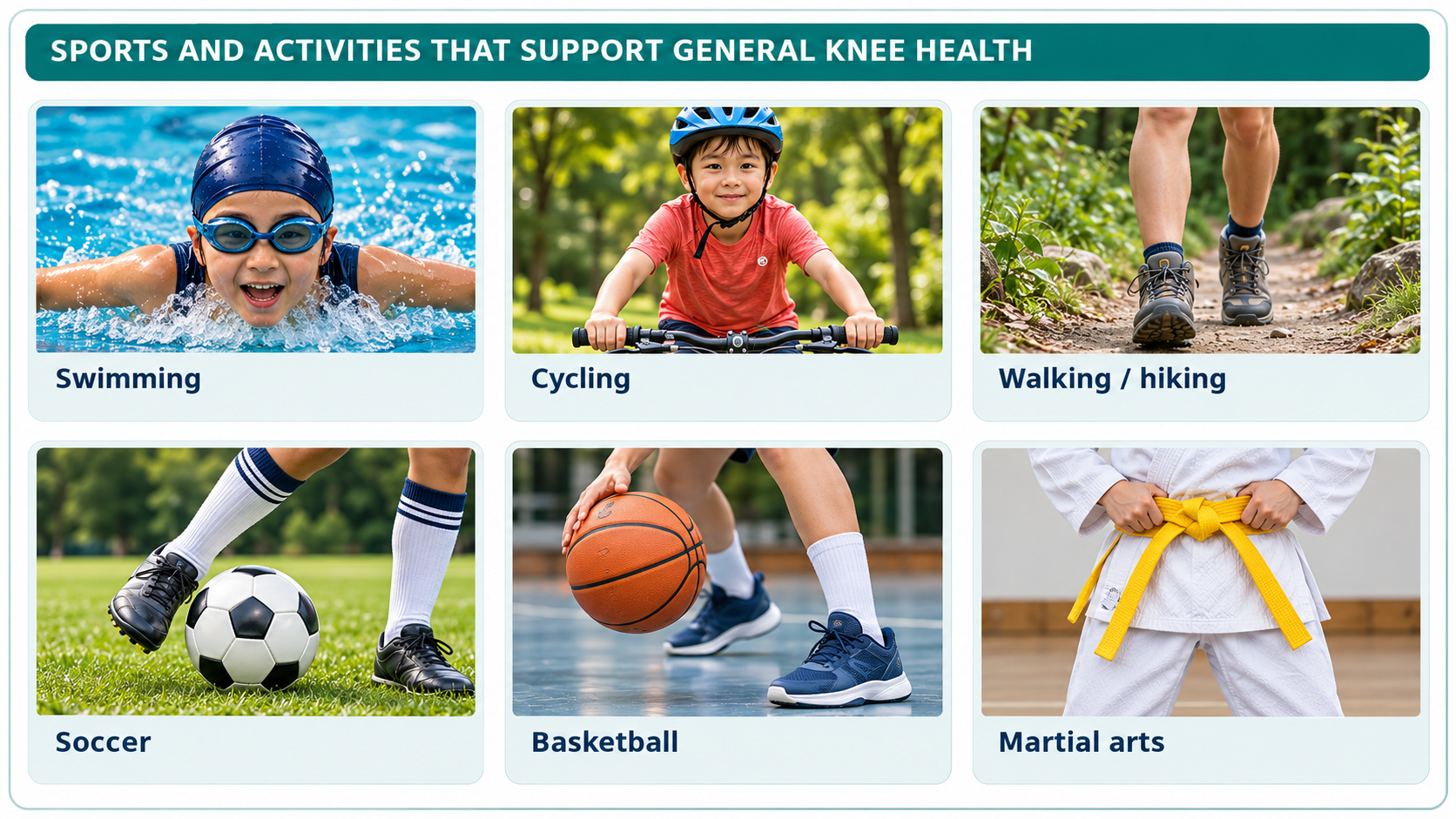
Swimming
Provides cardiovascular exercise with relatively little joint impact; a useful option when impact feels uncomfortable.
Cycling
Builds leg endurance through repetitive movement; proper bike fit and comfortable resistance matter.
Walking & hiking
Convenient weight-bearing activity that can be scaled to age, fitness, and symptoms.
Soccer & basketball
Offer agility and teamwork. Athletes with faulty landing or cutting mechanics may benefit from supervised technique training.
Martial arts
Can develop balance, coordination, and body awareness when instruction and intensity are age-appropriate.
7. Could persistent knock knees cause problems later in life?
It is important not to frighten parents about a normal developmental stage. Most children with physiologic knock knees improve naturally. That history by itself does not mean knee damage is inevitable.
In contrast, significant persistent valgus malalignment changes load distribution across the knee. Depending on severity and other factors, potential consequences include chronic discomfort, patellar instability or maltracking, functional limitations, and greater loading of the knee’s lateral compartment.
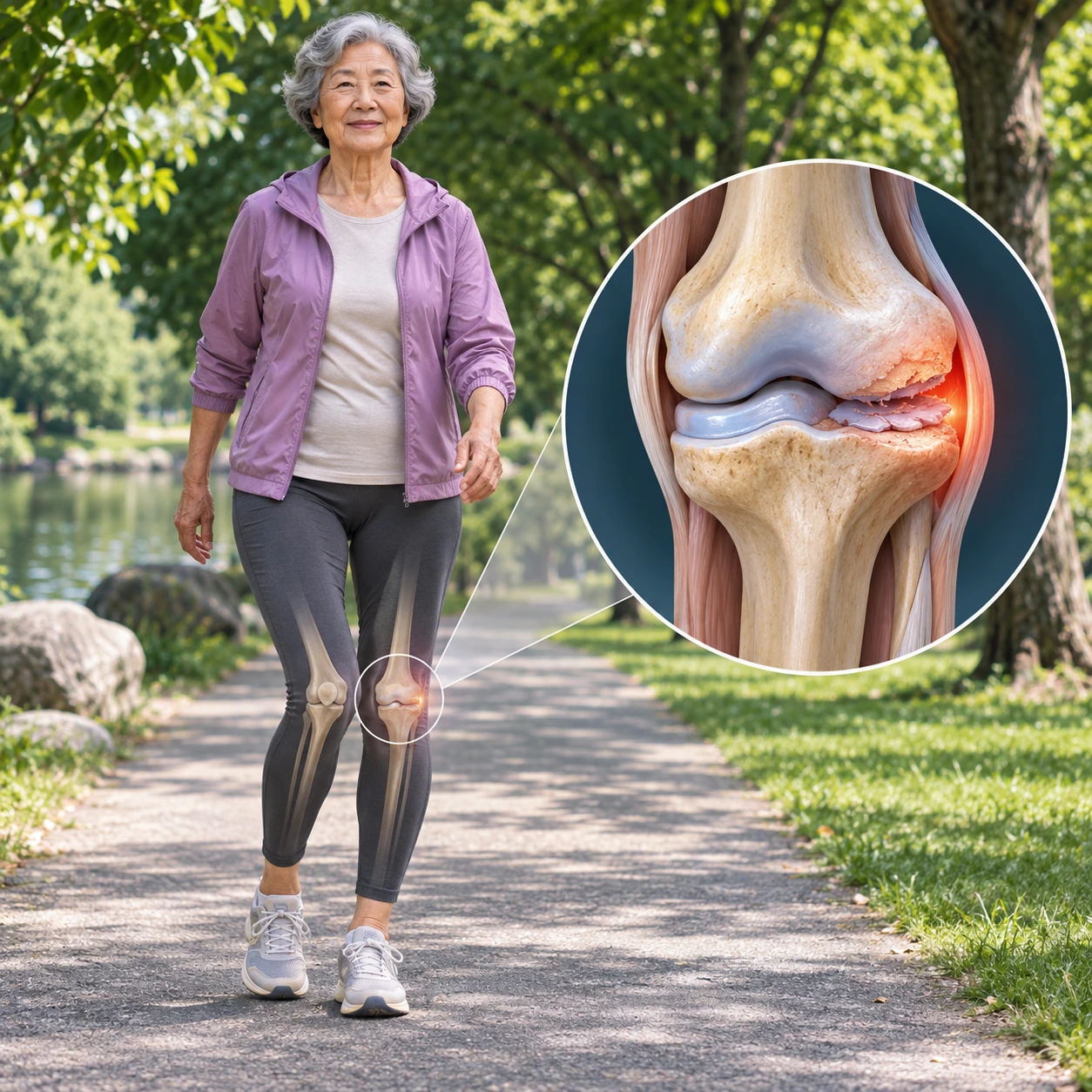
Kneecap tracking
Some patients with major valgus alignment experience discomfort or patellar instability.
Joint loading
Uneven mechanics can concentrate force across parts of the knee, especially the lateral compartment.
Osteoarthritis risk
Adult cohort studies associate valgus malalignment with lateral cartilage, meniscal, and osteoarthritis progression. This does not establish that childhood physiologic knock knees cause arthritis. [6]
8. When rehabilitation alone is not enough
Rehabilitation targets movement patterns, strength, and symptoms. If a child has persistent or progressive structural genu valgum, exercises alone are unlikely to change the bony alignment.
A pediatric orthopedic specialist may recommend observation, treatment of an underlying medical cause, or—for selected significant deformities—guided-growth procedures while growth remains. Skeletally mature individuals who need structural correction may be considered for a different operation, such as an osteotomy. No single intervention is appropriate for every patient. [1]
What parents should remember
- Most early-childhood knock knees are normal and improve naturally.
- Unilateral, worsening, painful, or persistent deformity deserves evaluation.
- Chiropractic rehabilitation may help movement control and musculoskeletal symptoms—not reshape bones.
- Sports can help fitness and coordination but are not structural corrections.
- Identifying true structural deformity before growth ends may preserve orthopedic treatment options.
Frequently asked questions
At what age should parents be concerned about knock knees?
Marked knock knees that persist or worsen beyond roughly age 7–8, or any pronounced asymmetry, pain, limp, or functional difficulty, merit assessment. Children vary, and the complete clinical picture matters more than age alone.
Do all children with knock knees need treatment?
No. Most children with typical physiologic knock knees need only observation and routine pediatric care.
Can home exercises or chiropractic adjustments straighten my child’s legs?
Home exercises can improve strength and movement control in appropriately selected children, but do not reliably correct structural bone alignment. Chiropractic adjustments are not an established correction for structural genu valgum.
Are soccer, basketball, or running unsafe?
Usually not for a child with typical painless developmental knock knees. Sports-specific coaching may help athletes with poor landing mechanics. Pain, instability, or progressive deformity should be evaluated.
Will knock knees cause arthritis when my child grows up?
Normal developmental knock knees do not imply future arthritis. Severe persistent valgus malalignment can change knee loading; adult studies show an association with lateral knee osteoarthritis, but the risk is individual rather than inevitable.
Concerned about knee alignment or movement?
We assess musculoskeletal function and guide individualized rehabilitation when appropriate. Children with suspected structural deformity should receive suitable pediatric or orthopedic evaluation.
Medical sources and further reading
- Pediatric Orthopaedic Society of North America (POSNA): Genu Valgum Study Guide. Development, examination, imaging, and indications for guided growth.
- American Academy of Pediatrics / HealthyChildren: Bowlegs and Knock-Knees. Normal variants, natural history, and warning signs.
- Angular and Rotational Lower Limb Alignment Variations in Children (2026). Pediatric assessment of alignment variation.
- Neuromuscular training and knee kinematics in athletes (2024). Small randomized study of dynamic knee valgus.
- Pilates vs. neuromuscular training for dynamic knee valgus (2026). Randomized exercise trial in young adults, not a treatment for bony deformity.
- Valgus malalignment and lateral knee osteoarthritis: MOST and OAI (2013). Adult cohort associations with cartilage and meniscal changes.
This article is educational, not a diagnosis, individualized rehabilitation prescription, or substitute for a clinician's examination. AI-generated clinical scenes and realistic-human exercise illustrations are educational; they are not actual clinic patient photographs or diagnostic images.