
ACE California Health Clinic • Santa Clara, California • Clinical education • Published November 13, 2026
Not every sideways spinal curve is the same. Some curves are functional (nonstructural): the spine bends as a response to something else, such as a substantial leg-length difference or a temporary painful muscle spasm. Other curves are structural: the spine has a more persistent, three-dimensional change that typically includes vertebral rotation. Knowing the difference matters because the evaluation, monitoring, and treatment goals are not identical. [1]
This guide explains what families can look for during growth, how chiropractic care may fit into a responsible scoliosis plan, and which movements may help with comfort and function. No stretch or adjustment should be presented as a guaranteed way to prevent or reverse a structural curve.
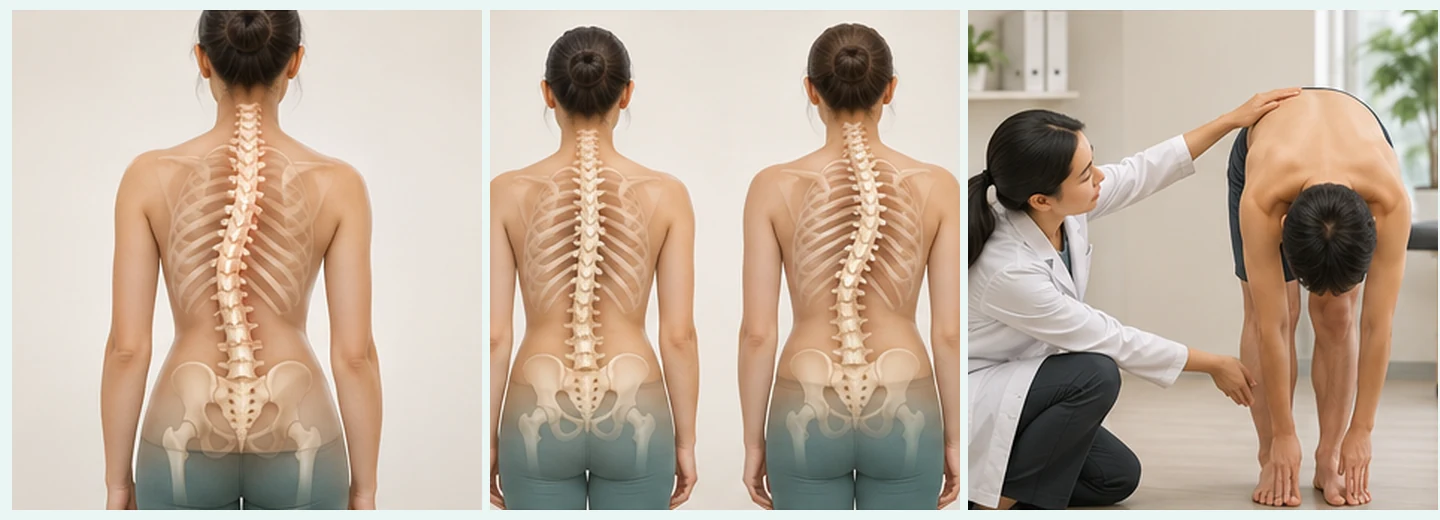
Key takeaway: A flexible functional curve may improve when its underlying cause is corrected. A structural curve deserves monitoring based on its size, the patient's growth stage, symptoms, and progression risk. Chiropractic care and exercise may support comfort and movement, but they do not replace curve-specific assessment, bracing when indicated, or referral.
Functional vs. structural scoliosis: what is the difference?
Doctors use the word scoliosis for spinal curvature, but the cause and behavior of a curve are as important as its appearance. Structural scoliosis is generally defined by a measurable lateral curvature, commonly a Cobb angle of 10° or more on standing X-ray, together with rotational features. A simple lean or uneven posture is not automatically structural scoliosis. [2]
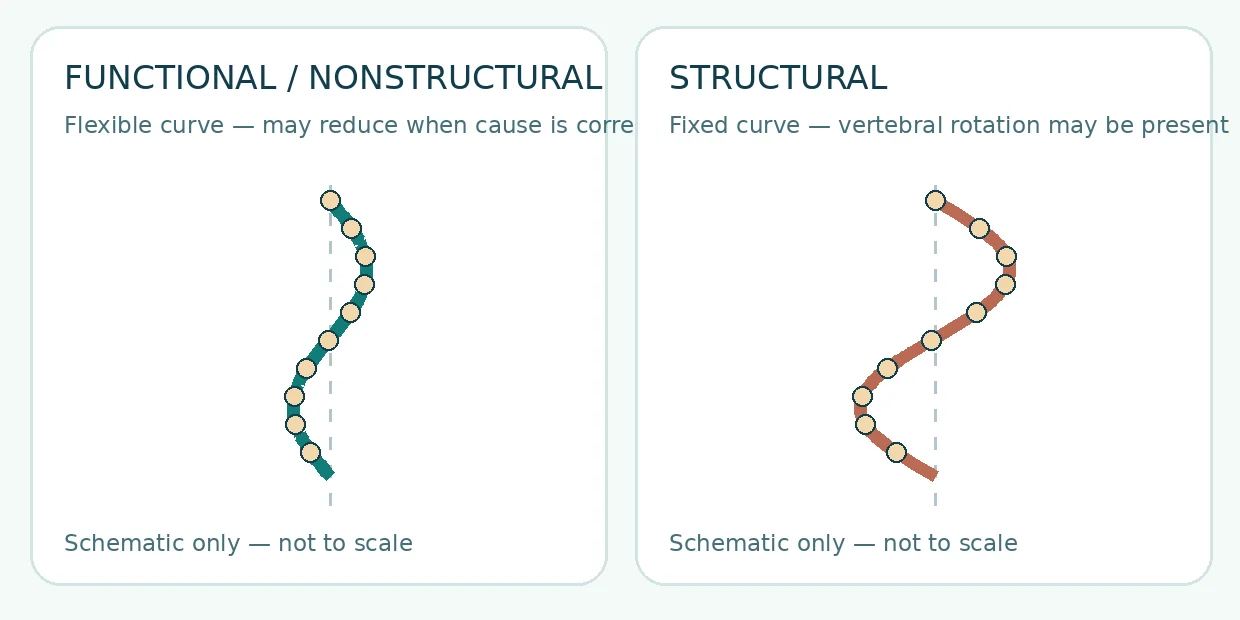
| Question | Functional / nonstructural curve | Structural scoliosis |
|---|---|---|
| What changes? | A flexible spinal position or compensation | A more persistent, three-dimensional spinal curve |
| Does position affect it? | Often improves or disappears after changing position or correcting the contributor | Typically persists with changes in posture |
| Is vertebral rotation present? | Usually no fixed vertebral rotation | Rotation is characteristic |
| Possible contributors | Significant leg-length inequality, painful spasm, antalgic posture | Adolescent idiopathic, congenital, neuromuscular, degenerative, or other causes |
| Main care priority | Find and address the underlying contributor; restore comfortable function | Measure and monitor the curve; manage symptoms and growth-related progression risk |
| Can exercises straighten it? | A flexible curve may reduce if its cause is successfully treated; no one exercise works for every cause | General exercises help conditioning and symptoms; they cannot be relied upon to reverse the curve |
What functional scoliosis means in everyday life
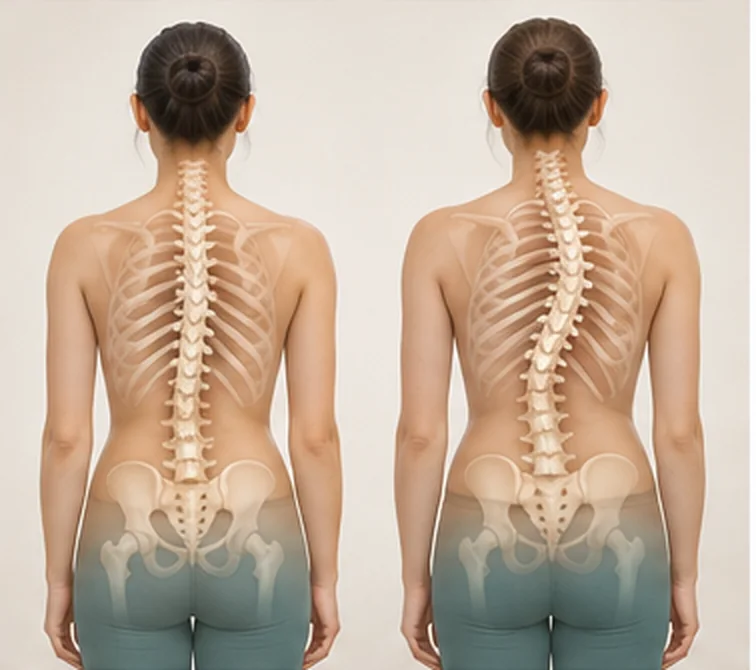
Imagine a patient who temporarily leans away from a painful lower-back muscle spasm. Their spine may look curved while standing, yet become straighter when the spasm settles. Another person may compensate for a clinically meaningful difference in leg lengths. In these situations, the curve is secondary to another issue. The first question is not which side to stretch; it is why the curve is appearing.
Importantly, poor posture, heavy backpacks, or routine sports participation are not established causes of adolescent idiopathic structural scoliosis. Families should not blame a child for developing a structural curve. [1]
What structural scoliosis means
Structural scoliosis involves the spine and trunk in three dimensions. In adolescence, many cases are idiopathic, meaning a single cause is not known. A curve may be painless, yet can progress during rapid growth. Adult structural scoliosis may be longstanding or may arise with age-related degeneration. The treatment plan depends on age, curve location and size, growth remaining, symptoms, and neurological findings—not on appearance alone. [2]
Why early scoliosis recognition matters
A child with a progressing curve may feel completely well. The absence of back pain does not rule out scoliosis. A parent may notice one shoulder is higher, a shoulder blade sticks out more, the waist looks uneven, one hip appears more prominent, or a shirt hangs asymmetrically. None of these observations confirms scoliosis, but they can justify a professional examination. [2]
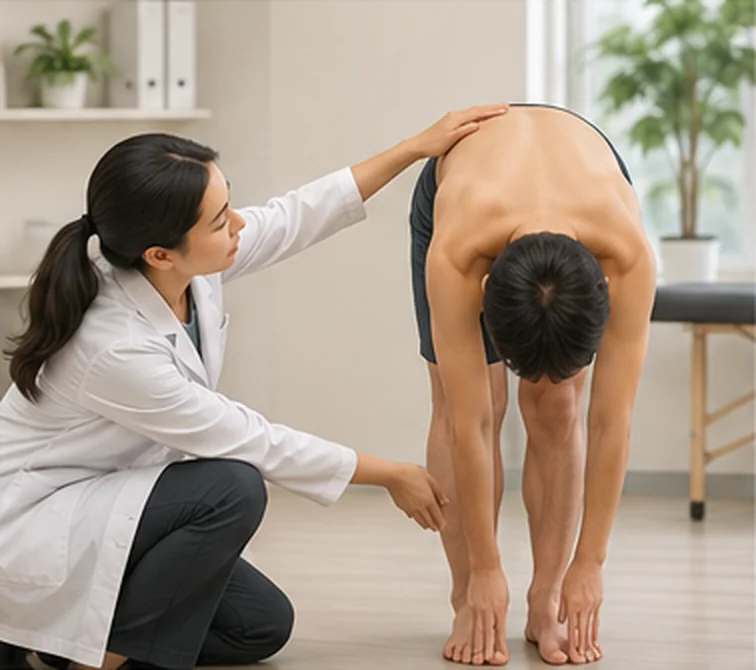
Clinicians commonly use the Adams forward-bend test, sometimes with a scoliometer, to look for trunk or rib prominence. If findings warrant it, a standing spinal X-ray can measure the Cobb angle; skeletal maturity and interval change help assess progression risk. The decision to image is individualized so that unnecessary radiation and unnecessary labeling are avoided. [3]
The Scoliosis Research Society suggests screening girls at approximately ages 10 and 12 and boys at ages 12–13, during years when curves may first become apparent. However, experts differ on universal screening: the U.S. Preventive Services Task Force finds insufficient evidence to determine whether routine screening of adolescents without symptoms does more good than harm. That is not advice to ignore visible asymmetry; children with concerning findings should be evaluated. [1] [3]
Early recognition creates treatment options—not a guarantee of prevention
For a growing adolescent, observation may be appropriate for a small stable curve. A specialist may consider bracing for an approximately 25°–45° curve while growth remains, or in some lower-angle curves that demonstrate progression. Braces aim to limit worsening, not magically erase the existing curve. Larger or rapidly progressing curves may need surgical consultation. These are general ranges; clinicians individualize the decision. [2]
What can chiropractic care contribute?
The goal should be specific and measurable: less pain, better movement, improved activity tolerance, and identification of referral needs—not an unsupported promise of permanent curve correction.
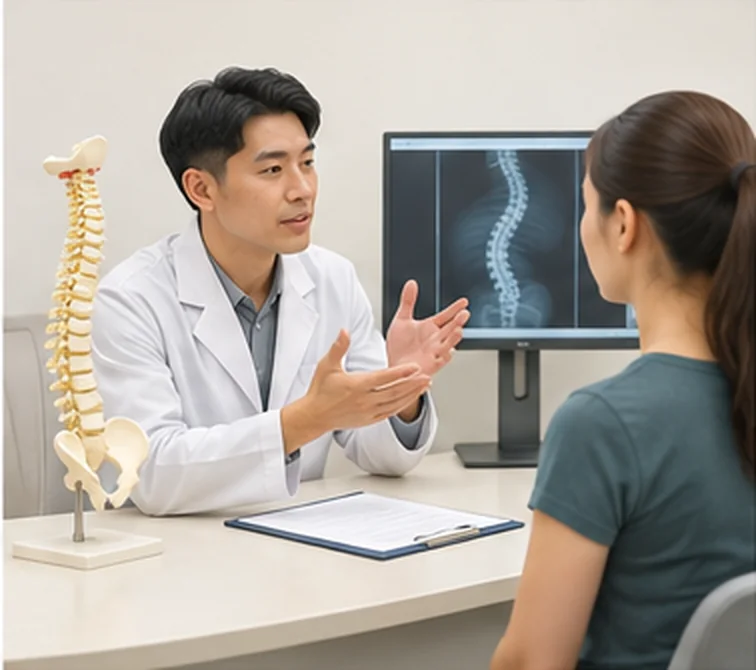
For a functional curve
A chiropractic examination may assess spinal and joint mobility, muscle guarding, lower-extremity alignment, gait, and the possible role of a leg-length discrepancy. If a flexible curvature is related to a modifiable mechanical problem, conservative care may include symptom management, activity modification, rehabilitation, and follow-up of the underlying condition. Some patients may benefit from carefully selected manual treatment for associated musculoskeletal pain or restriction. Correcting the cause—not simply pushing on the curved spine—is what may allow the flexible curve to resolve.
For structural scoliosis
Chiropractic treatment may be considered to address associated back discomfort or mobility limitations in selected patients. It is not proven to correct structural scoliosis or prevent its progression. Scoliosis organizations and orthopedic guidance make this distinction clearly. A responsible clinician monitors for progression, coordinates with the patient's primary physician or scoliosis specialist, and does not let symptomatic relief delay bracing or other indicated treatment. [4] [5]
At ACE California Health Clinic, an individualized musculoskeletal plan may include chiropractic care, rehabilitative exercises, and home-care guidance when appropriate. If examination suggests a structural or progressive curve, referral for specialist assessment is an important part of good care. We do not describe adjustment as a cure or prevention method for idiopathic scoliosis.
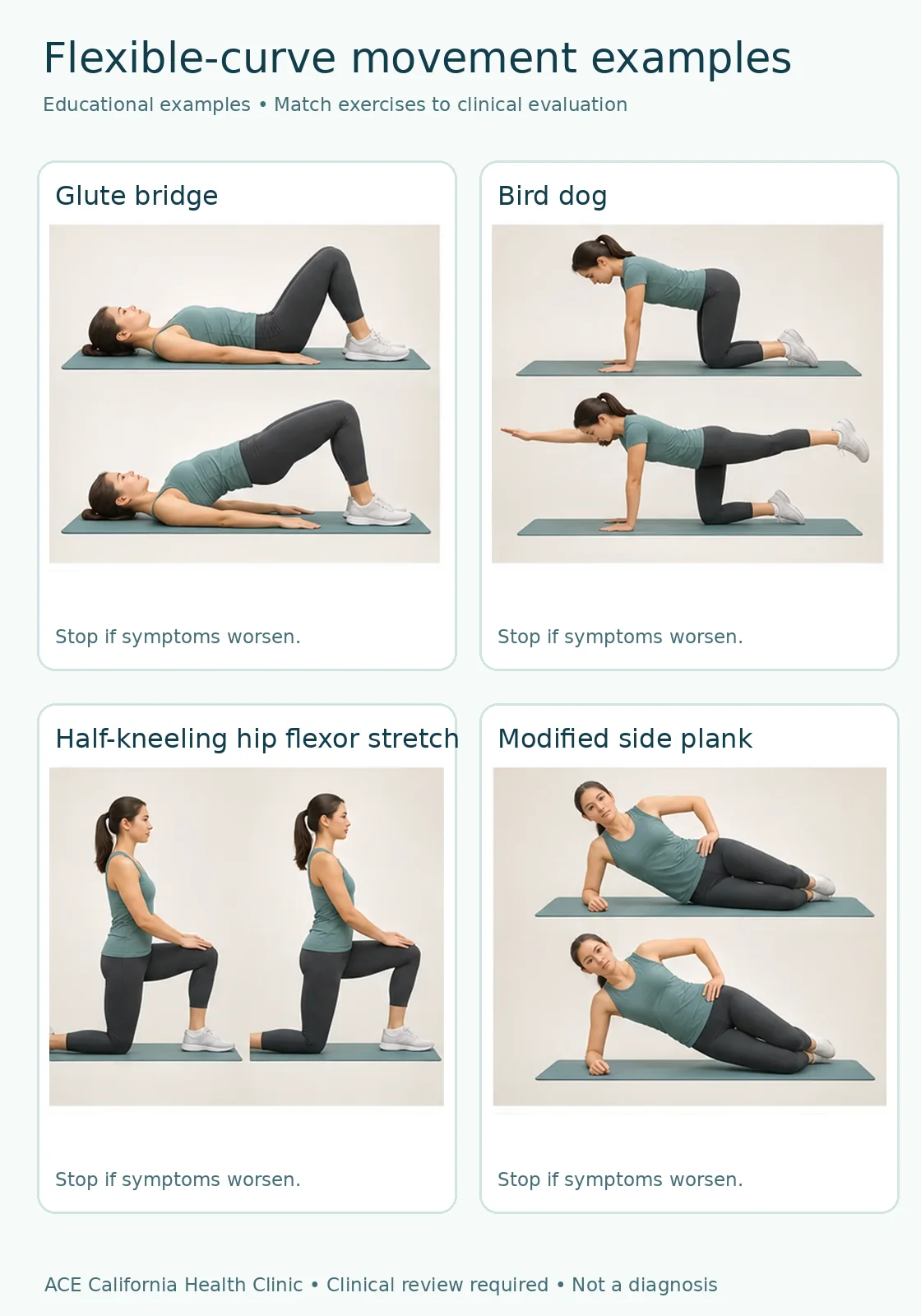
Four movement examples for functional or flexible curves
First, identify the reason for the curve. The following are general conditioning examples, not universal corrective exercises. They may improve trunk control, hip mobility, and endurance when appropriate. An adult with a temporary pain-related curve and a growing adolescent with a true leg-length difference may need very different treatment. Begin at an easy level, breathe naturally, and stop or modify any movement that worsens pain, radiating symptoms, dizziness, or weakness.
1. Glute bridge — build hip and trunk control
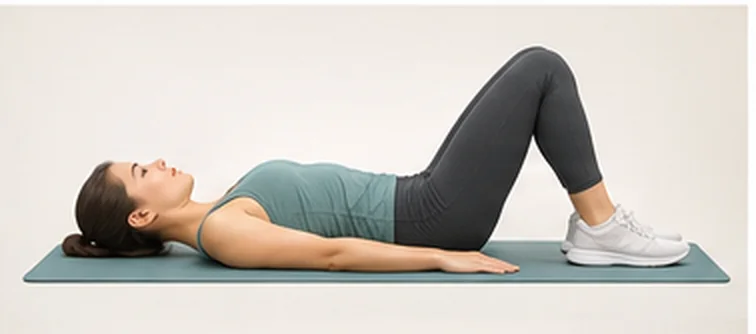
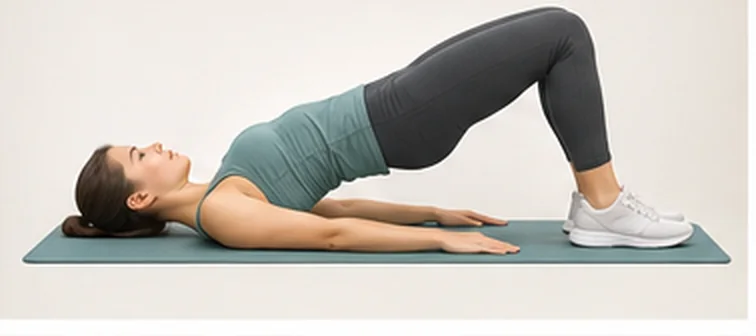
Lie on your back with knees bent and feet flat. Gently tighten the abdomen and squeeze the buttocks. Lift the hips without arching the lower back, pause briefly, then lower with control. Starter example: 8–12 repetitions, as tolerated. The goal is gluteal activation and controlled movement, not forced spinal straightening.
2. Bird dog — practice stable movement
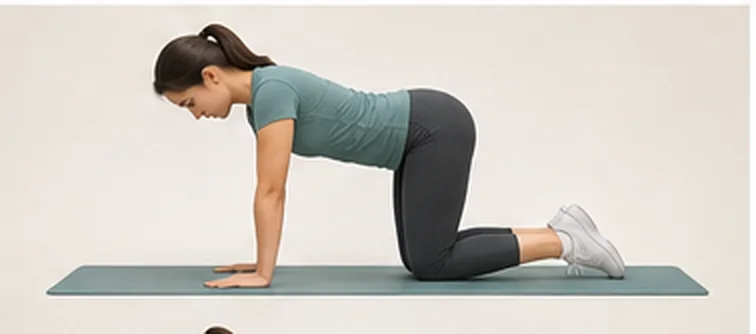
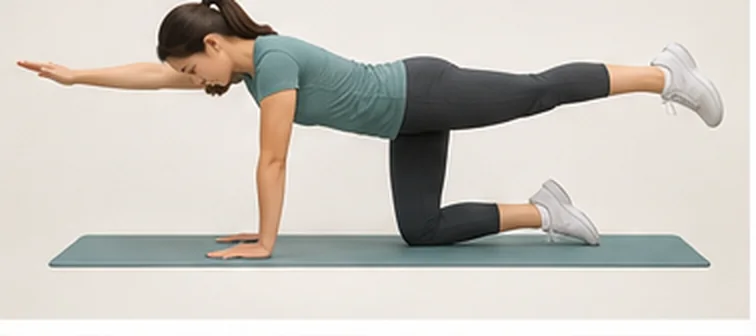
Start on hands and knees. Reach one arm forward and the opposite leg back, keeping the hips and trunk steady. Return slowly and switch sides. Starter example: 6–8 controlled repetitions each side. Shorten the reach if balance or pain makes it difficult.
3. Half-kneeling hip flexor stretch — improve comfortable hip extension
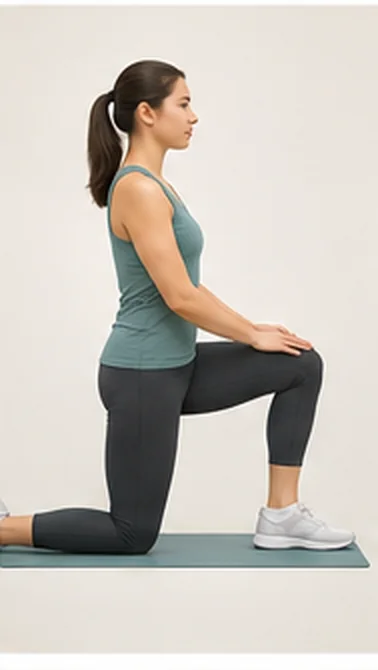
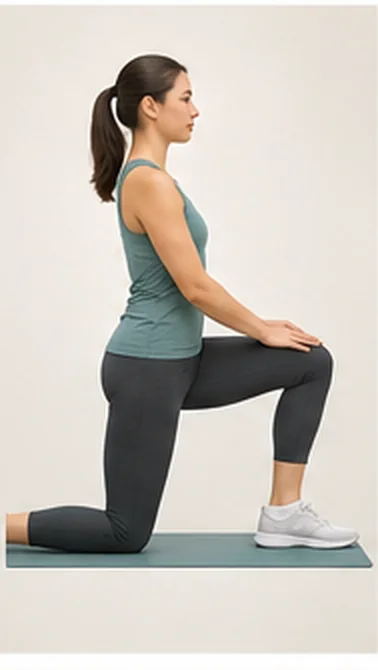
Place one knee on a padded surface and the other foot in front. Gently tuck the pelvis and shift forward until there is a mild stretch in the front of the trailing hip. Avoid leaning far backward. Starter example: hold 15–30 seconds per side. Stretch only where tightness is actually present; do not presume one side is always the “short” side.
4. Modified side plank — improve lateral trunk endurance
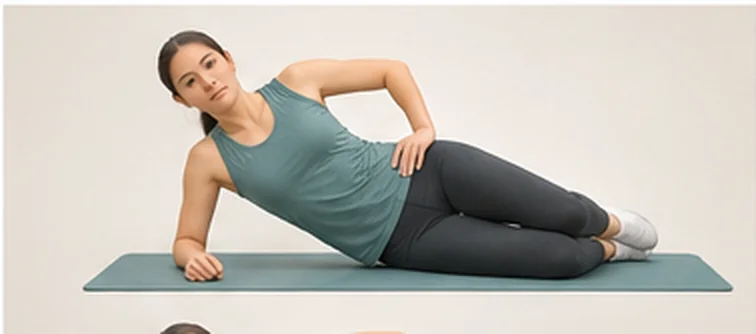
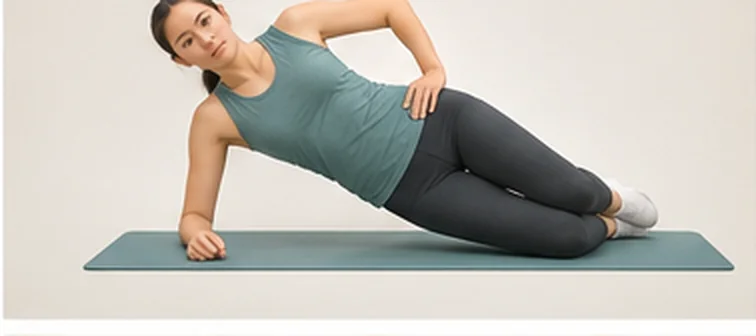
Lie on one side with knees bent and elbow below the shoulder. Lift the hips slightly and hold a straight line from shoulder to knee. Lower and repeat. Starter example: 10–20-second comfortable holds. A clinician may adapt which side to train and how hard to work after examining the patient.
Stretching and exercise to ease symptoms with structural scoliosis
Structural scoliosis has a different goal. In adults, appropriate physical activity and guided back exercises may help pain and everyday function even if the spinal curve does not change. For adolescents, specialized scoliosis rehabilitation may also be used as part of coordinated treatment, but generic stretches should never replace prescribed bracing or curve monitoring. [6]
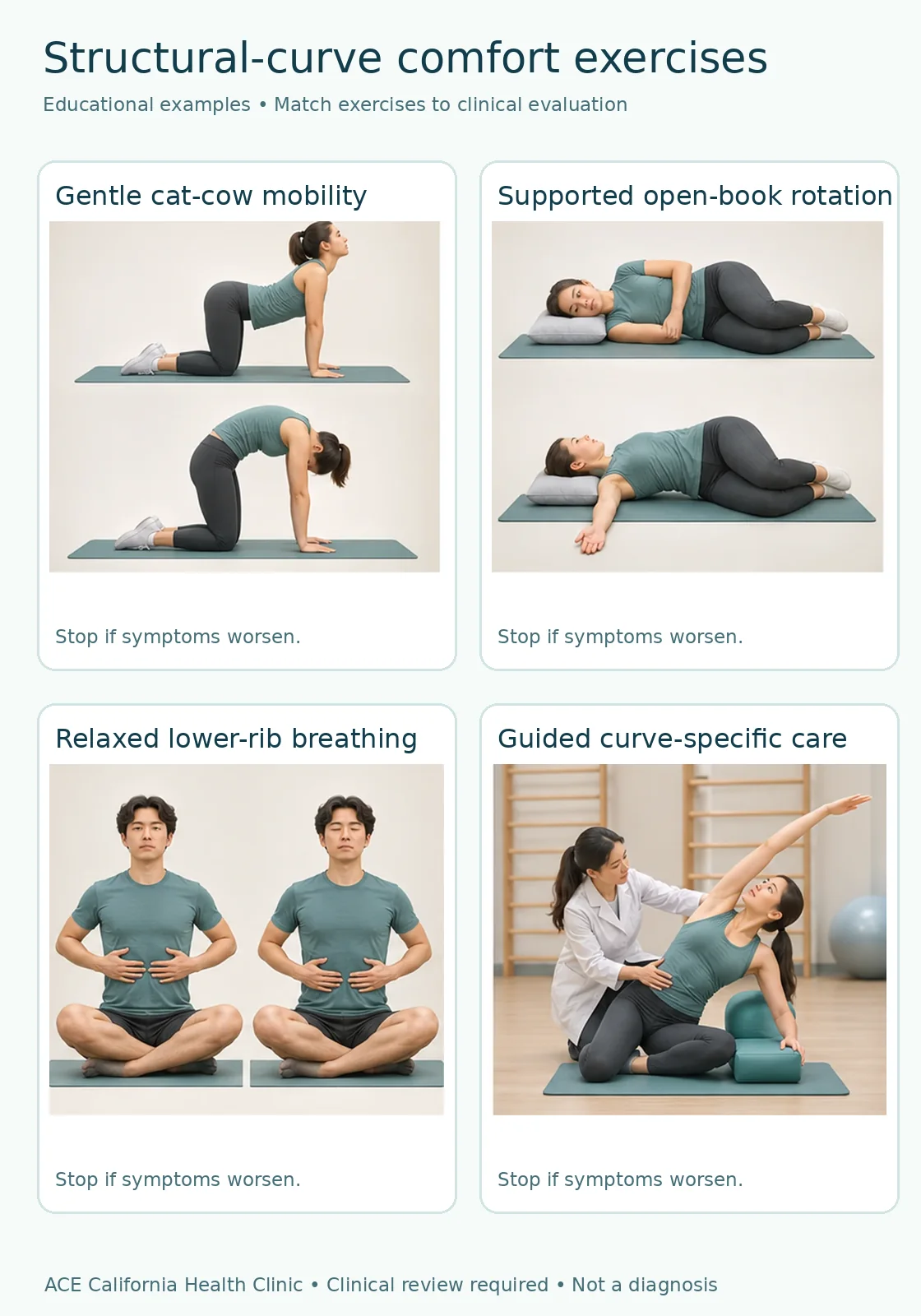
5. Gentle cat-cow — move within a comfortable range
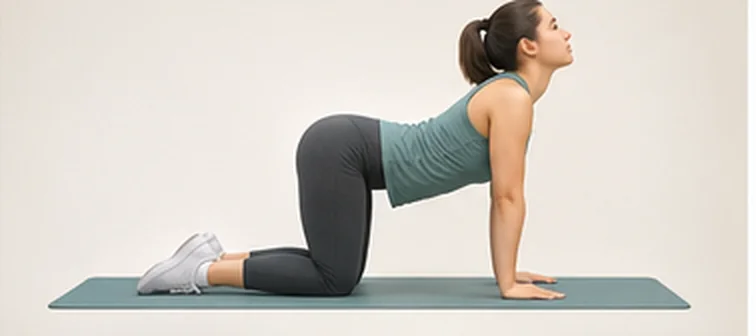
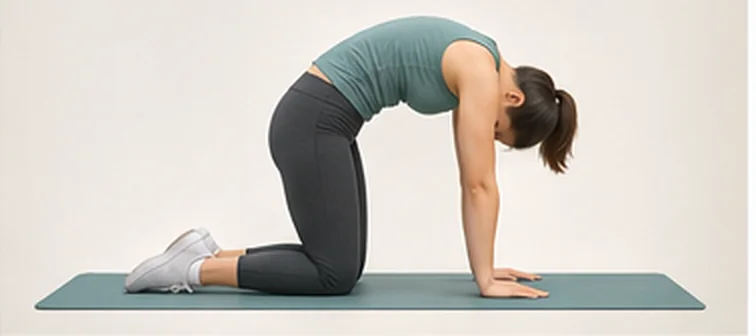
On hands and knees, slowly move between gentle spinal extension and rounding. Avoid pushing into pain or trying to force a particular curve segment to change. Starter example: 6–10 easy repetitions.
6. Supported open-book rotation — relieve upper-back stiffness
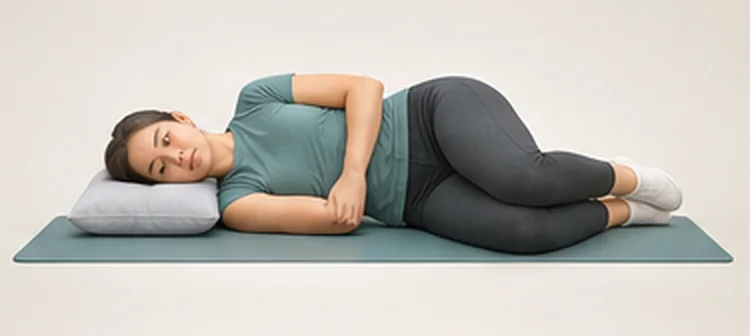
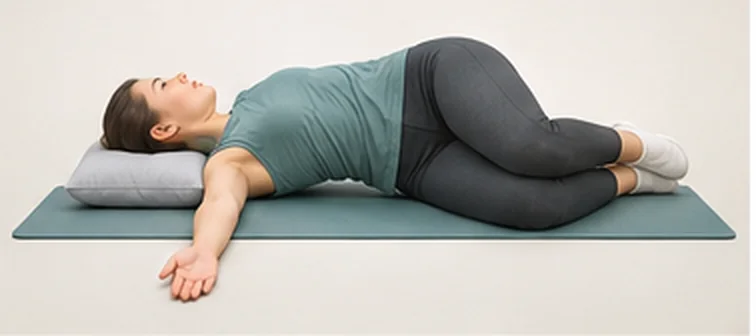
Lie on your side with knees bent, supported by a pillow if needed. Rotate the upper arm and upper trunk gently away from the floor, following the movement with your eyes if comfortable. Keep the pelvis relatively quiet. Starter example: 5–8 slow repetitions per side. Reduce the range if it causes pain.
7. Relaxed lower-rib breathing — promote comfortable breathing awareness
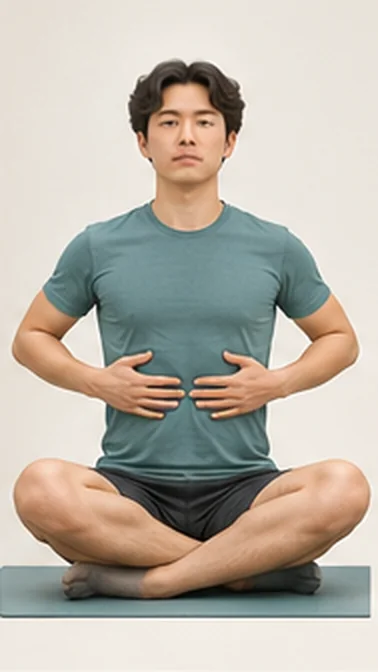
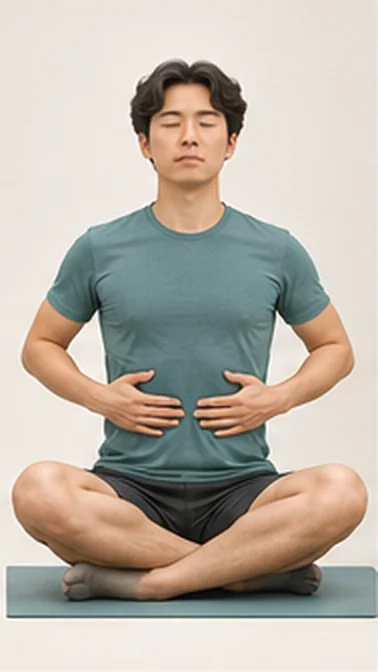
Sit or lie supported. Place your hands on your lower ribs and take several comfortable, unforced breaths, allowing the rib cage to expand. Do not try to direct breathing into a specific concavity without individualized training. Starter example: 5–10 relaxed breaths. This is a symptom-management and awareness exercise, not a substitute for formal scoliosis-specific breathing techniques.
8. Physiotherapeutic scoliosis-specific exercises — individualized, not generic
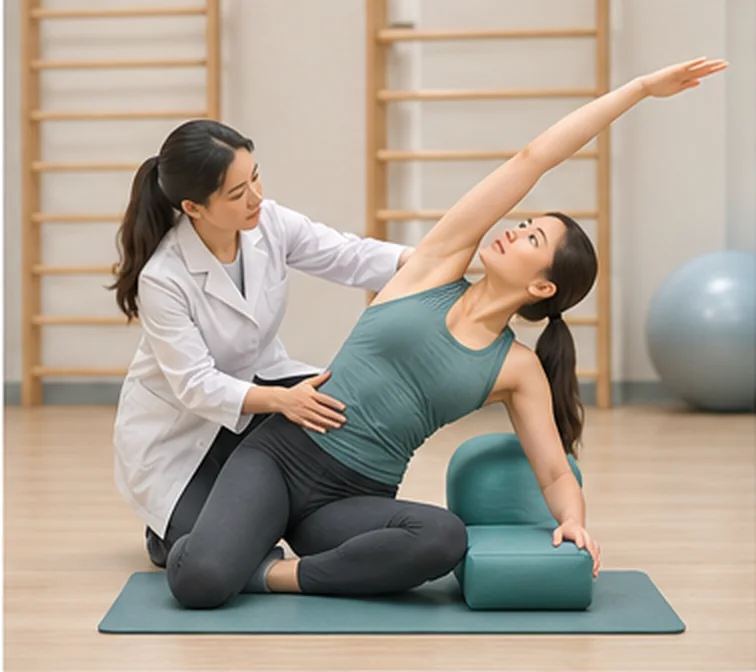
Scoliosis-specific methods such as Schroth may use three-dimensional self-correction, breathing, and stabilization based on the patient's actual curve pattern. Such exercises should be taught by a trained clinician; they cannot be prescribed correctly from a generic picture. Research is promising for some outcomes, but systematic reviews vary in their conclusions and the certainty of evidence is limited. Bracing remains important when indicated. [7] [8]
A word about exercise safety
These illustrative positions may not match every body or type of curve. Ask a healthcare professional before beginning a new program—particularly if you have osteoporosis, prior spinal fusion, severe pain, neurological symptoms, a growing child's progressing curve, or other major health concerns. Stop an exercise that causes worsening pain, tingling, numbness, weakness, or breathlessness.
When to seek a scoliosis or medical specialist
Arrange a prompt examination for a child with noticeable spinal asymmetry, increasing rib prominence, rapid height changes accompanied by a changing posture, or known scoliosis that appears to be progressing. Younger children with a suspected curve, particularly those under age 10, deserve specialist assessment. Persistent or severe pain, pain that wakes someone from sleep, fever, unexplained weight loss, significant trauma, or neurological symptoms should not be attributed to uncomplicated scoliosis without evaluation.
Seek emergency care for new severe leg weakness, loss of bowel or bladder control, numbness in the groin/saddle area, or serious breathing difficulty. Chiropractic visits and home exercises are not substitutes for emergency assessment.
Frequently asked questions
Can poor posture or a backpack cause structural scoliosis?
No evidence shows that ordinary poor posture or carrying a backpack causes adolescent idiopathic structural scoliosis. Posture and muscle guarding can influence how a person stands, but that is different from causing a fixed structural curve. [1]
Can a chiropractor straighten scoliosis?
Chiropractic care may help selected patients manage associated musculoskeletal discomfort. It is not proven to reverse structural scoliosis or stop curve progression. Flexible curves may improve if the underlying problem is corrected, which is different from treating a fixed rotated curve. [4] [5]
If my child has no pain, should I still check an uneven shoulder or rib hump?
Yes. Many children with structural scoliosis have little or no pain. A qualified clinician can determine whether a finding is positional or warrants additional assessment. Screening itself is not a diagnosis. [2] [3]
Can stretching replace a brace?
No. When a growing adolescent meets criteria for bracing, exercises should not be substituted for the brace without specialist guidance. Curve-specific rehabilitation may sometimes complement bracing. [2] [7]
Do adults with structural scoliosis benefit from exercise?
Many do. Appropriately selected activity and strengthening may help manage pain, mobility, and conditioning. The goal is often improved quality of life—not necessarily a smaller Cobb angle. [6]
The bottom line: identify the type of curve before choosing care
Scoliosis is not one diagnosis with one exercise routine. Functional curves deserve investigation of the condition making the spine lean. Structural curves need assessment of growth, progression risk, neurological findings, and appropriate monitoring. Chiropractic care and home exercise may contribute to comfort and function, while scoliosis-specific rehabilitation, bracing, or specialist referral may be necessary for particular patients.
If you or your child have noticed uneven shoulders, a changing waistline, a rib prominence, or ongoing back discomfort, ACE California Health Clinic can discuss a musculoskeletal assessment and whether referral or imaging is appropriate.
ACE California Health Clinic
345 Saratoga Ave, Santa Clara, CA 95050
Phone: (408) 984-6000
Chiropractic care · Rehabilitation therapies · Contact the clinic
Medical information notice: This article is for general education and is not individualized diagnosis, medical advice, or an exercise prescription. Treatment selection varies based on a clinical examination and relevant medical history. Illustrations are AI-generated educational examples, not photos of clinic patients, diagnostic images, or anatomical proof. Exercise positions and medical content were reviewed for educational publication by the clinic owner on November 13, 2026.
Medical references
- Scoliosis Research Society — Scoliosis: common questions and screening.
- American Academy of Orthopaedic Surgeons — Idiopathic Scoliosis in Children and Adolescents.
- U.S. Preventive Services Task Force — Screening for Adolescent Idiopathic Scoliosis, January 2018; 2025 surveillance noted.
- AAOS — Nonsurgical Treatment Options for Scoliosis.
- Scoliosis Research Society — Complementary treatment and coping questions.
- NHS — Scoliosis: Treatment in Adults.
- Cochrane Database of Systematic Reviews (2024) — Therapeutic Exercises for Idiopathic Scoliosis in Adolescents.
- SOSORT 2016 Guidelines — Rehabilitation Treatment of Idiopathic Scoliosis During Growth.