
Why Your “Hamstring Stretch” Can Feel Like Nerve Tension
A stretch can load muscle, nerve, or both. Burning, tingling, numbness, electric pain, or symptoms traveling farther down the leg deserve a different response than a mild muscular pull.
In this article
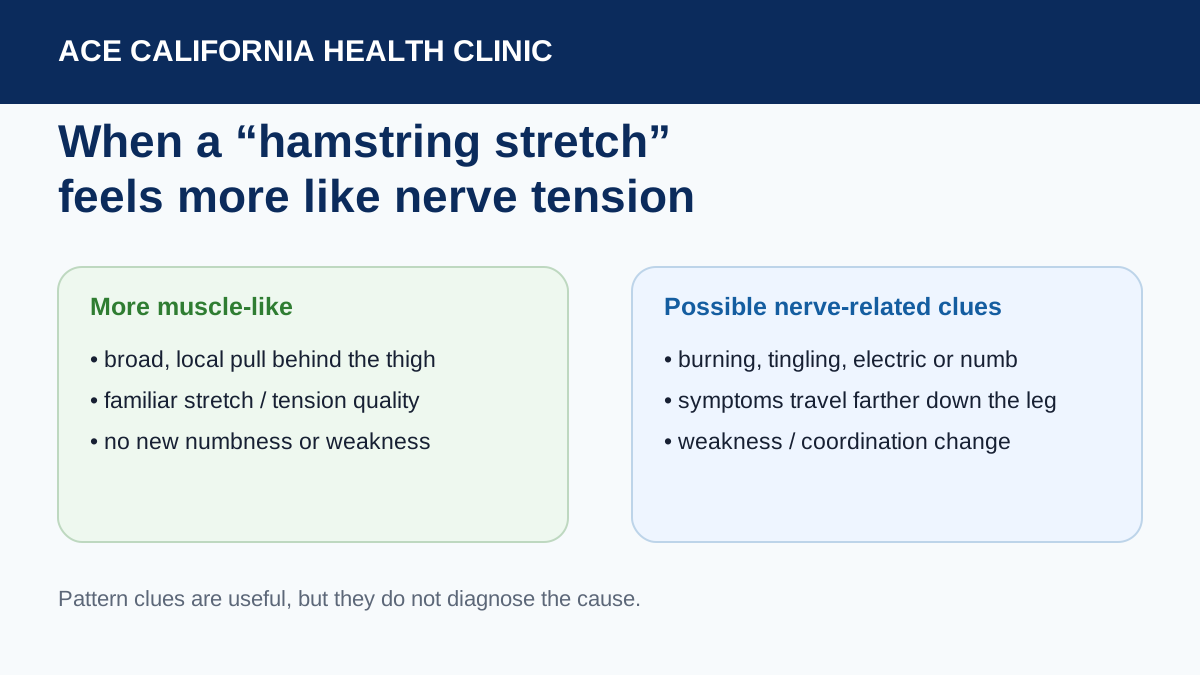
1-page visual summary
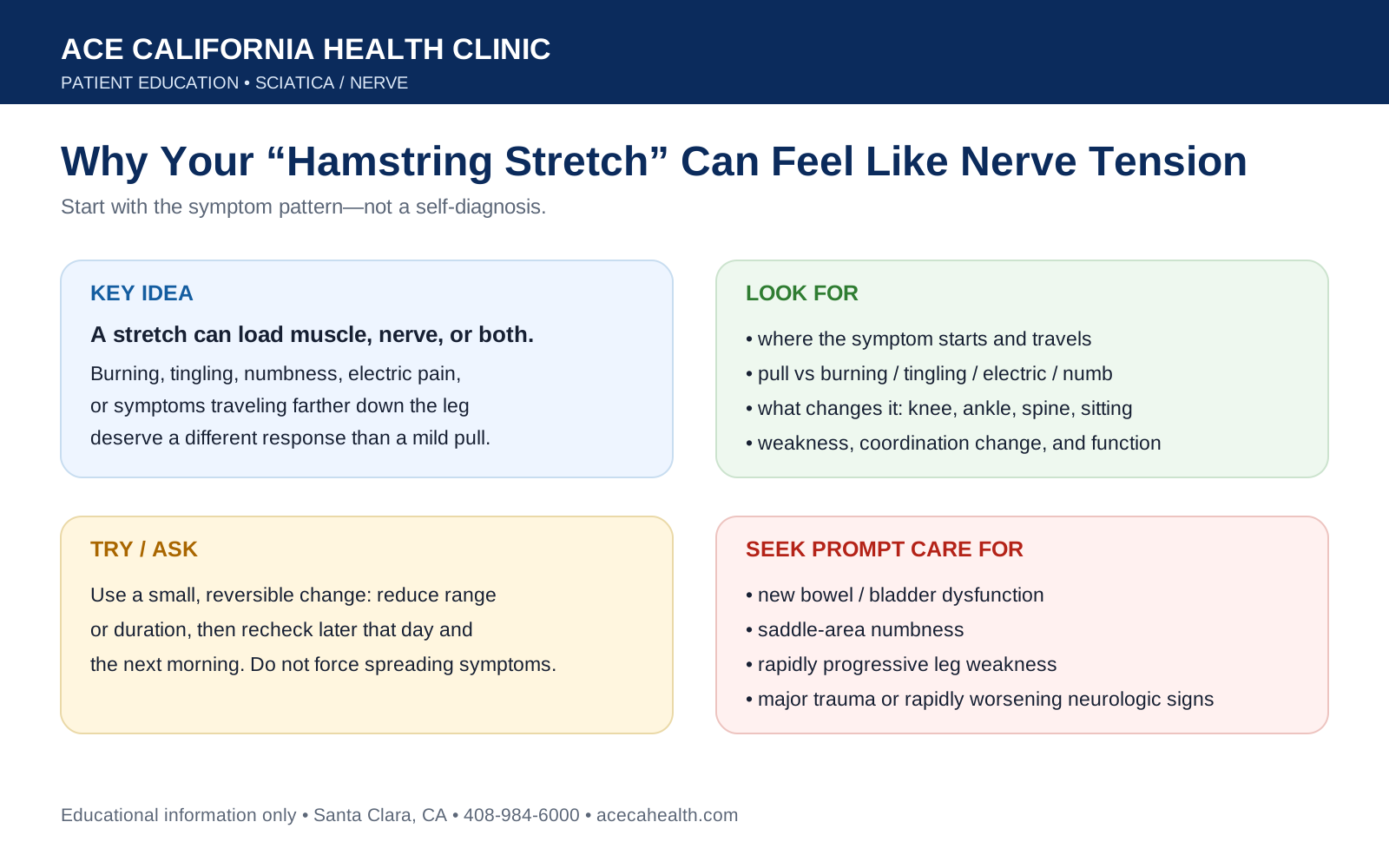
The short answer: “tight” does not always mean short muscle
When you straighten the knee, flex the hip, change ankle position, or bend the spine, the hamstrings are not the only structures that experience load. Neural tissues also need to tolerate movement and excursion. In a small laboratory study of healthy adults, adding a neural-loading position to a passive hamstring stretch reduced available range and increased resistance to stretch even without an increase in hamstring EMG activity.3 That helps explain why a person can feel “hamstring tightness” even when the limiting sensation is not purely muscular.
This does not mean every intense hamstring stretch sensation is a nerve problem. It means the quality, location, behavior, and associated neurologic symptoms matter. Neurodynamic tests such as the straight-leg raise also have meaningful measurement error and should be interpreted with structural-differentiation maneuvers and the rest of the examination rather than by a single angle or cutoff.4
Start with the pattern, not the label
Before deciding that a hamstring is “too tight,” describe the symptom. Where does it start? Where does it travel? Is it a dull pull, burning, tingling, electric, numb, or cramping? What happens if the knee bends slightly, the ankle relaxes, the spine changes position, or you stop the stretch?
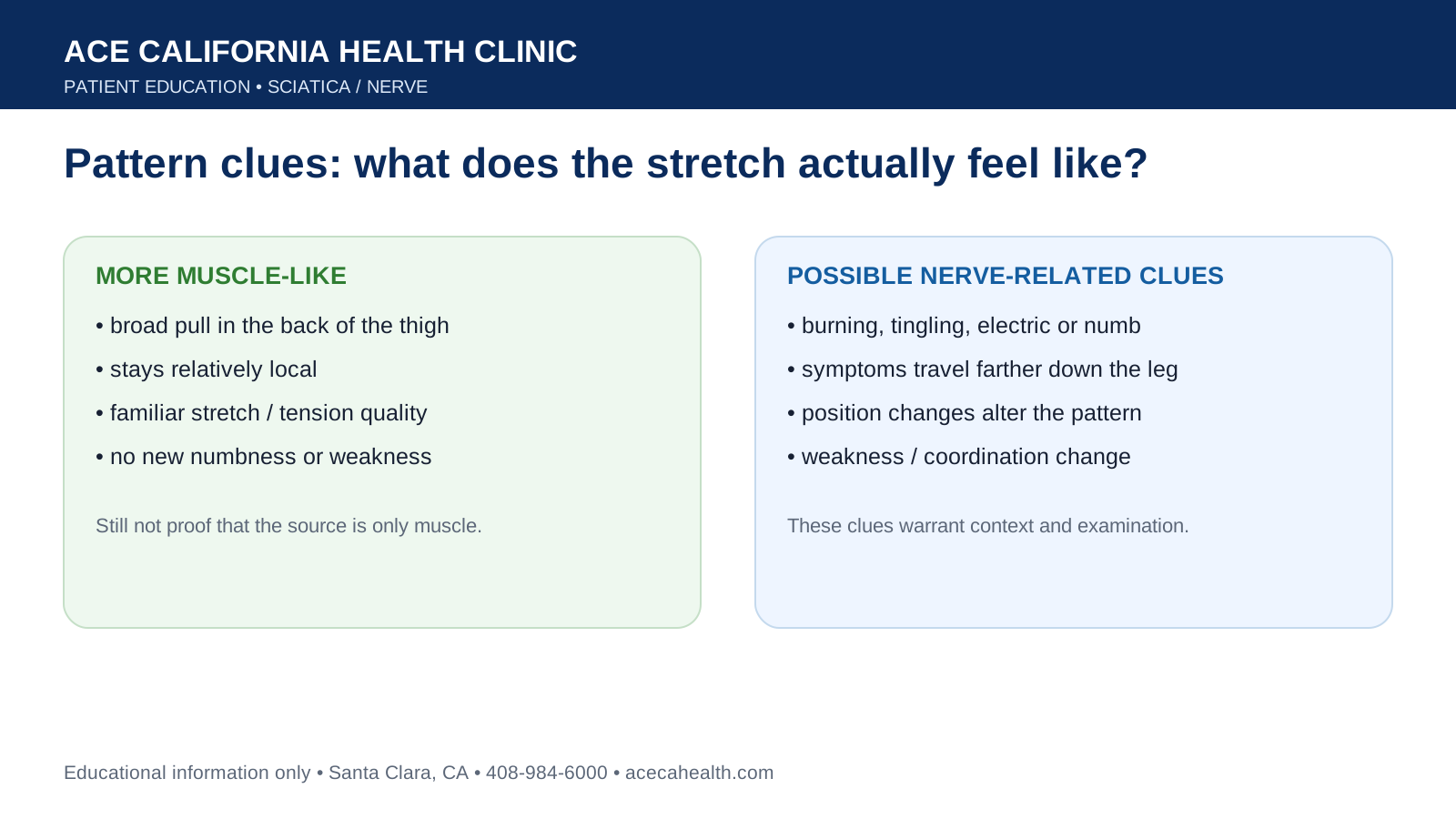
More muscle-like clues
- Broad, local pull behind the thigh
- Familiar stretch sensation rather than electric pain
- Remains relatively local
- No new numbness or weakness
Possible nerve-related clues
- Burning, tingling, electric, or numb sensation
- Symptoms travel farther into the calf or foot
- Small position changes noticeably alter the symptoms
- Weakness or coordination change accompanies the pain
These are clues, not a home diagnostic test. Hamstring, hip, spine, nerve-root, and other factors can overlap.
What may be going on?
The sciatic nerve and the nerve roots that contribute to it move and tolerate load as the hip, knee, ankle, and spine change position. Clinicians sometimes use neurodynamic tests such as the straight-leg raise or slump test to see whether symptoms change when neural load is altered. But these tests load multiple tissues and are not stand-alone diagnoses.4
Pay closer attention when a stretch reproduces symptoms that travel farther down the leg, become electric or tingly, or add numbness, weakness, foot slapping, or a change in coordination. Those features do not prove a specific diagnosis, but they make a neurologic examination more important.
A back-related leg symptom may also change with sitting, standing, walking, bending, coughing, or repeated movement. The useful clinical question is not simply “Does it hurt?” but “What reliably changes the pattern?”
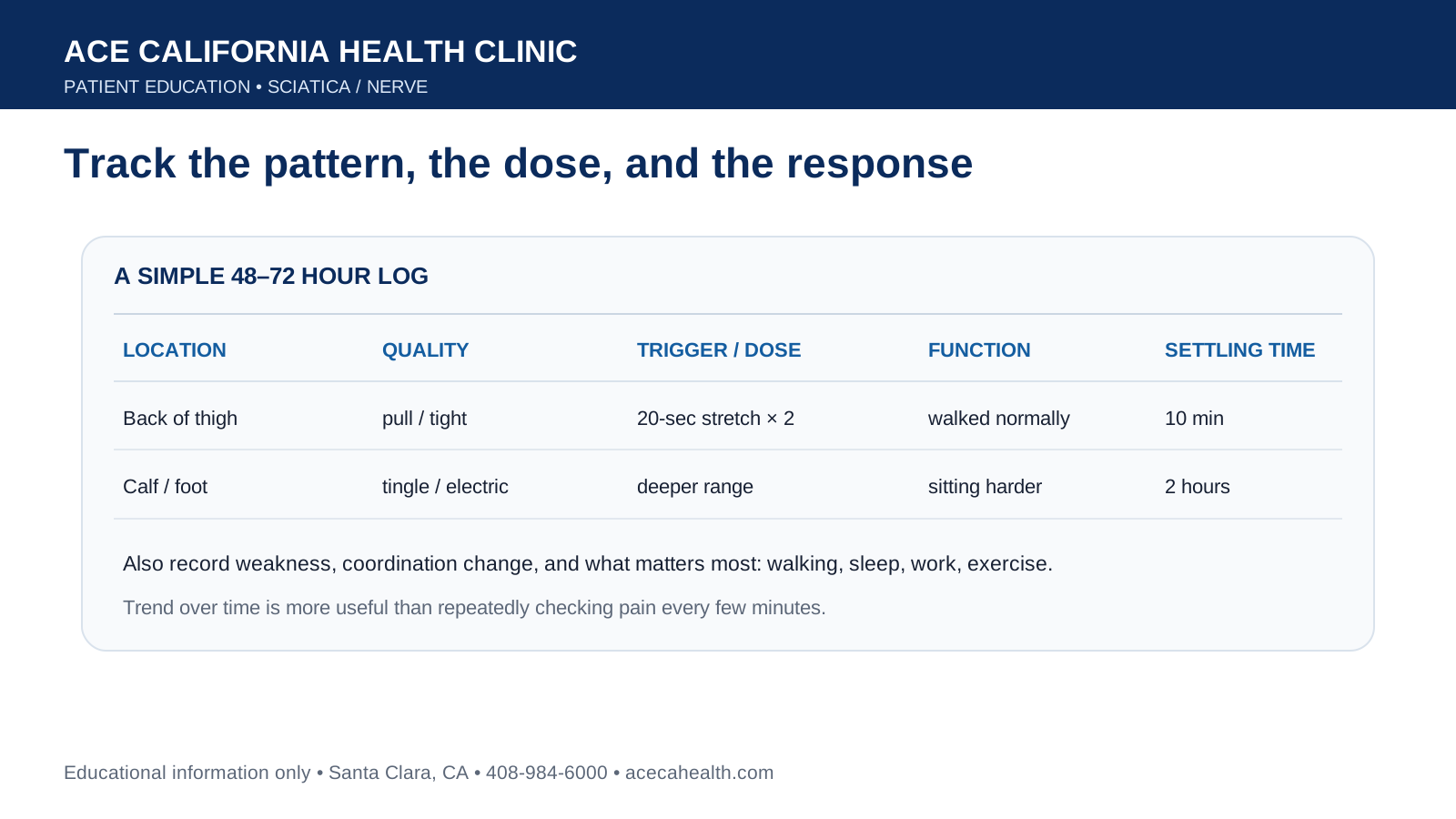
What to track for 48–72 hours
A simple log often gives more useful information than repeatedly testing the same painful stretch. Record the location, quality, trigger and dose, functional effect, and settling time. Also note any weakness, coordination change, or altered sensation.
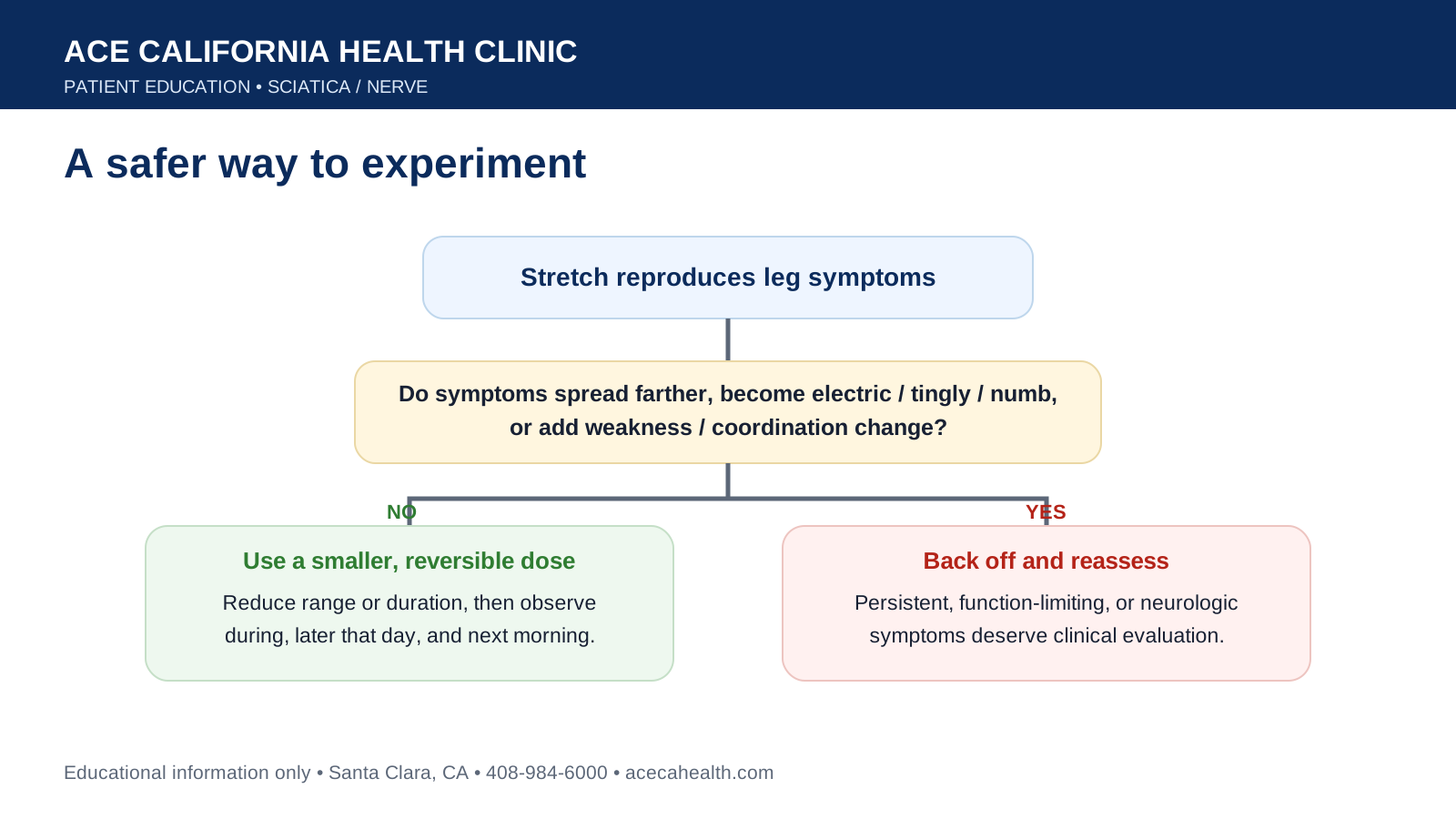
A safer way to experiment
If there are no urgent warning signs, make a small, reversible change rather than forcing the stretch. Reduce the range or duration, observe the response during the movement, then check again later that day and the next morning. If symptoms consistently spread farther down the limb, become neurologic, or take progressively longer to settle, stop repeatedly provoking the pattern and arrange an evaluation.
- Do not keep “testing” the same painful stretch every few minutes.
- Keep comfortable walking or normal activity when it does not progressively worsen neurologic symptoms.
- Change one variable at a time so you can learn from the response.
- Seek evaluation for persistent, function-limiting symptoms or numbness/weakness.
What an evaluation may include
A useful evaluation looks beyond one tender spot. Depending on the complaint, it may include strength, sensation, reflexes, range of motion, repeated movement, gait or balance, and neurodynamic testing. The clinician should also ask what you need to get back to—sleep, work, sitting, walking, lifting, exercise, or sport.
There is no single straight-leg-raise angle that can diagnose the cause by itself. Reliability data support using structural differentiation, and range-of-motion measurement error can be large enough that the number alone should not drive a diagnosis.4
Do you need an X-ray or MRI?
Not automatically. NICE recommends against routine imaging for low back pain with or without sciatica in a non-specialist setting and suggests imaging in specialist care only when the result is likely to change management.1 The American College of Radiology similarly rates routine initial imaging as usually not appropriate for uncomplicated low-back pain with or without radiculopathy when no red flags are present.2
The threshold changes when there is major trauma, concern for cauda equina syndrome, progressive neurologic loss, infection, cancer, fracture, or another serious condition. Imaging shows anatomy; it still has to be interpreted in the context of the history and examination.
Treatment is a plan, not a single technique
For low-back pain and sciatica, NICE emphasizes self-management and exercise; when manual therapy is used, it is recommended as part of a package that includes exercise rather than as a stand-alone solution.1 The exact plan should match the presentation, risk profile, goals, preferences, and response.
ACE California Health Clinic offers chiropractic and acupuncture services, but this article does not assume that either is appropriate for every person with leg symptoms. The first job is to screen for urgent problems, identify the most plausible pattern, and decide whether conservative care, medical referral, imaging, or another pathway makes sense.
When to seek prompt medical care
Do not use a stretching article to self-clear a serious problem.
Seek urgent or emergency medical evaluation for new bowel or bladder dysfunction, saddle-area numbness, rapidly progressive leg weakness, major trauma, severe or rapidly worsening neurologic symptoms, or fever/systemic illness with significant back pain. These patterns require a different level of assessment than routine stretching advice.
Questions to ask before you book in Santa Clara
About the clinical plan
- What does the first visit include?
- What are the most likely explanations, and what remains uncertain?
- How will progress be measured in function?
- What would change the plan or trigger a referral?
About the logistics
- What does the visit cost and include?
- When will the plan be reassessed?
- Will you coordinate imaging or referral if indicated?
- What should make me call sooner?
Want this pattern evaluated?
Bring a short symptom timeline, medication list, relevant records, and the activities that matter most to you.
Call (408) 984-6000Book an appointmentFrequently asked questions
Can I tell whether it is muscle or nerve from symptoms alone?
Usually not with confidence. Symptom quality and location help, but the history, neurologic examination, response to position, and other findings are important.
Should I stop all activity until I am pain-free?
Not automatically. Modify the provoking activity and keep tolerable movement when appropriate. Major trauma, progressive neurologic change, or other red flags change that advice.
Do I need an MRI?
Not for every episode. Imaging is most useful when there is a specific clinical question and the result is likely to change management.
How hard should I stretch?
A harder stretch is not automatically a better stretch. If increasing the dose makes symptoms spread, become electric or numb, or produces weakness, back off rather than forcing through it.
Related reading
References
- NICE — Low back pain and sciatica in over 16s: assessment and management.
- American College of Radiology — Appropriateness Criteria: Low Back Pain.
- McHugh MP, Johnson CD, Morrison RH. The role of neural tension in hamstring flexibility. Scand J Med Sci Sports. 2012;22(2):164–169.
- Reliability of the straight leg raise test for suspected lumbar radicular pain: a systematic review with meta-analysis. Musculoskelet Sci Pract. 2022.
Medical disclaimer: This article is general educational information, not a diagnosis, treatment prescription, or substitute for examination by a qualified health professional. Seek urgent care for severe, rapidly worsening, neurologic, or post-trauma symptoms.